

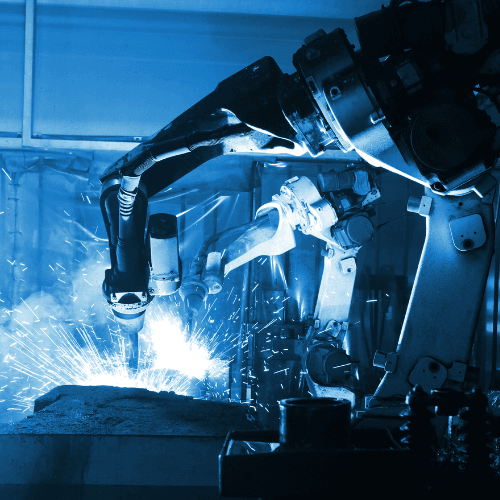
The Human Welding Art
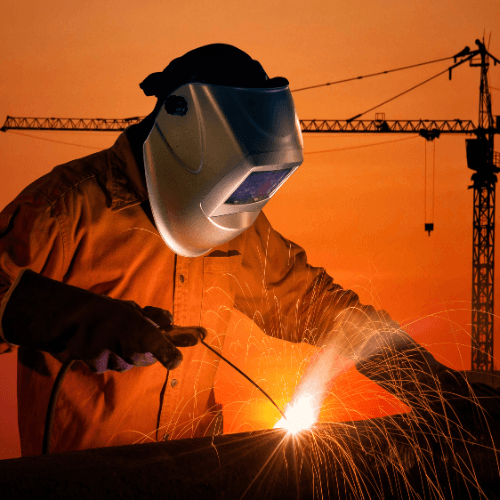
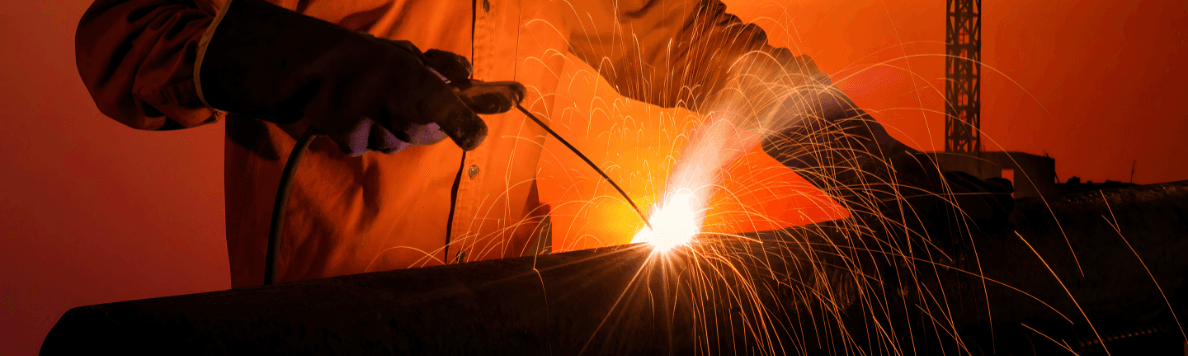
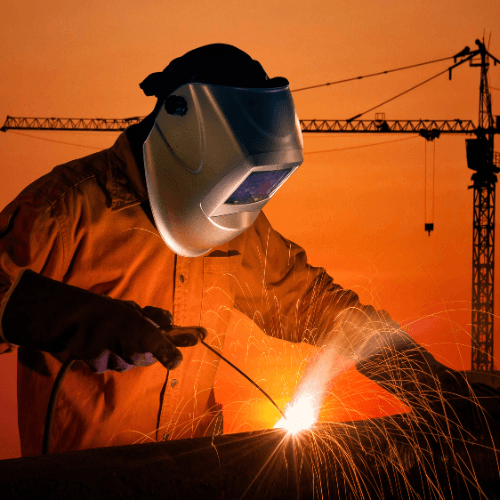
A crucial procedure in industrial, construction, and manufacturing settings is welding. Given their experience, versatility, and problem-solving skills, human welders continue to be essential in many sectors, even as robotic welding has grown in popularity. Human welding is a skillful, experienced, and resilient technique that can withstand harsh conditions.
1. Expertise and Background
Human welders go through a rigorous training program and gain experience via years of practical application. In contrast to robotic systems that adhere to preset instructions, proficient welders get an intuitive grasp of the several aspects that affect the quality of the weld, including
– Material Properties: Different metals, such titanium, stainless steel, and aluminum, react differently to heat and need methods to work well.
– Positions for Welding: To guarantee accuracy and strength, human welders must modify their methods while welding flat, horizontal, vertical, and above.
– Environmental Conditions: Weld penetration and quality can be affected by variables including temperature, humidity, and ventilation. Welders with experience can predict and account for these factors.
2. Flexibility and resolving problems
The capacity of human welders to adjust in real time is one of their main benefits over automated technologies. Working with defective materials, misaligned joints, or erratic circumstances are common in welding. Expert welders can
– Adjust techniques: To ensure correct fusion and strength, modify methods in response to surface defects in the metal.
– Modify welding speed and angle: Adjust the welding angle and speed to account for contaminants, warping, and unforeseen gaps.
– Respond to environmental changes: such as how wind affects outside gas-shielded welding operations.
3. Welding in Difficult Situations
Because of the intricacy of their welding settings, certain businesses rely significantly on human welders:
– Shipbuilding and Aerospace: Human accuracy is needed for welding in tight areas, curved surfaces, and challenging angles. Such surroundings make it difficult for robots to reach and move.
– Pipeline and Structural Welding: Human welders must dynamically modify their posture since large infrastructure projects frequently include different joint configurations.
– Artistic & Custom Fabrication: Handcrafted welding processes are necessary for many architectural and artistic metalworks, and they cannot be replicated by robots.
4. Difficulties Human Welders Face
Human welders have several difficulties that affect their consistency, productivity, and well-being despite their skill.
1. Weariness and Regularity
Welding is a physically taxing process that calls for extended periods of focus and accuracy. Fatigue may result in:
– decreased concentration, raising the possibility of mistakes.
– uneven welding quality, particularly in settings with large production levels.
2. Human Error
Even experienced welders can make errors because of:
– distractions in a hectic workplace.
– poor decisions on material compatibility or heat settings.
Robotic Welding Precision
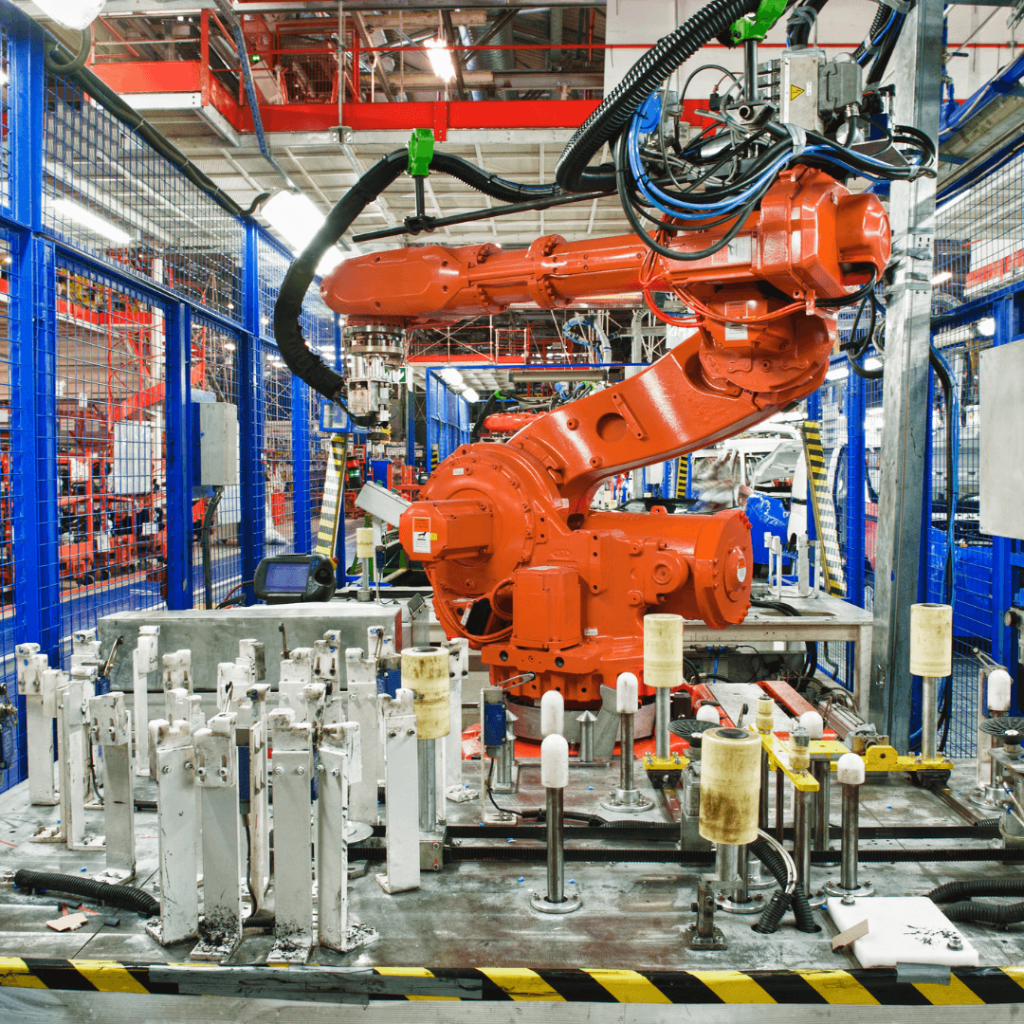
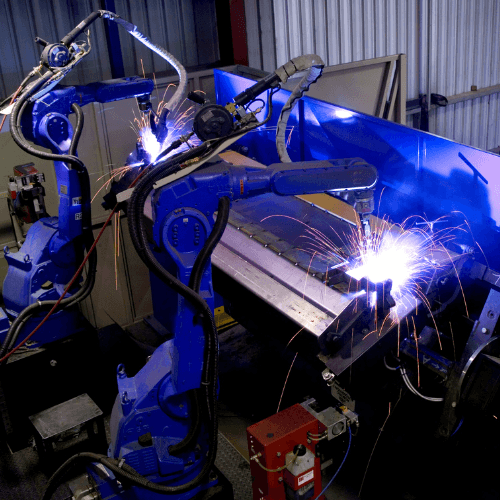
Modern production now requires robotic welding as firms strive for increased productivity and quality requirements. These automated systems are perfect for high-volume production settings because they provide unmatched speed, accuracy, and consistency. Although there are certain difficulties with robotic welding, the welding business is changing because of its benefits in efficiency and data-driven quality control.
1. Accuracy and Automation
Robotic welding systems are designed to carry out repetitive welding operations with a high degree of accuracy. Robotic welders work consistently, unlike human welders who could fluctuate because of weariness or environmental conditions. Among the main benefits are:
– Pre-programmed Precision: Robots adhere to carefully thought-out welding routes with little variation, guaranteeing consistency throughout all welds.
– Reduced Defects: Robotic welders reduce typical problems including porosity, undercut, and spatter by maintaining constant heat input and arc duration.
– Increased Strength and Durability: Structurally sound joints result from consistent weld penetration, which lowers the risk of weld failures.
2. Quickness and Effectiveness
The capacity of robotic welding to work constantly without interruption is one of its biggest benefits. Because robotic systems don’t get tired as human welders do
– Higher Production Rates: Robots can weld much more quickly than people, which significantly increases output.
– Uninterrupted Workflow: Because machines can operate around-the-clock, they are perfect for production settings with high demand.
– Decreased Labor Costs: By automating repetitive activities, robotic welders reduce long-term labor costs, despite the hefty initial investment.
To improve the quality of the welding, contemporary robotic welding systems combine sensors , artificial intelligence (AI), and real-time monitoring. These sophisticated characteristics make it possible for
– In-Process Defect Detection: Sensors keep an eye on heat input, arc stability, and weld penetration to spot irregularities before they result in defects.
– Adaptive Welding Technology: AI-powered devices can optimize variables like voltage and travel speed in real time.
– Extensive Data Gathering: Robots produce performance reports that enable firms to examine patterns and enhance procedures over time.
4. Challenges Faced by Robotic Welders
Although robotic welding has many benefits, there are drawbacks as well. Important difficulties include
1. High Initial Cost
– Capital Investment: The equipment, software, and training needed to set up robotic welding systems must be purchased in advance.
– Cost of Integration: Robotic welding requires manufacturing lines to be modified, which can be costly and time-consuming.
2.Restricted Flexibility
– Struggles with Irregular Welds: Robots may have trouble with non-standard or specialized welding applications, but they excel in standardized, repetitive activities.
– Difficulty in Tight Spaces: Robotic arms may not be as adept at negotiating in tight spaces or complicated situations as human welders.
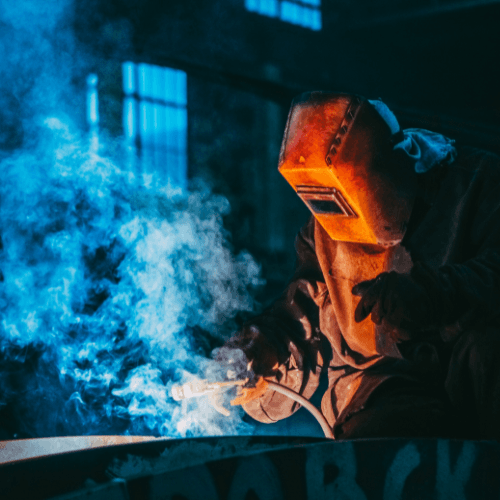
Comparative Evaluation of Machine and Human Welding Quality
The argument between robotic welding systems and human welders is still going strong as companies try to strike the ideal balance between accuracy, productivity, and affordability. Although each has advantages and disadvantages, the ideal option will vary depending on the particular need. A thorough analysis of the main elements that determine welding performance may be seen below.
1. Accuracy and Regularity
Machine was the winner.
Why?
– Robotic welders ensure consistent, flawless welds by little deviating from pre-programmed pathways.
– By maintaining constant heat input, they lessen frequent problems including undercut, porosity, and spatter.
– Despite their competence, humans can add small variances because of manual irregularities, environmental conditions, or exhaustion.
2. Flexibility and Adaptability
human was the winner.
Why?
– Expert welders can modify their methods in real time to account for erratic circumstances, challenging joint angles, and unusual materials.
– Human dexterity is frequently needed in complex welding locations (such above or confined places).
– Welding non-standard parts or surfaces that need last-minute adjustments is difficult for robots.
When Does Robotic Welding Win?
When doing repetitive operations in regulated settings using standardized materials.
Flexibility is increased by AI-driven robotic systems with adaptive learning; however, it is still inferior to human adaptability.
3. Productivity and Speed
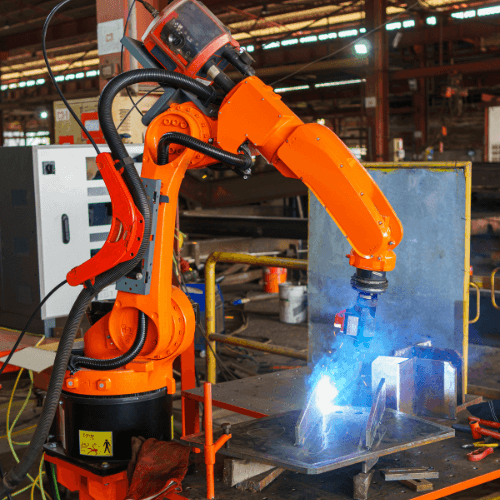
Machine was the winner.
Why?
– Robots can weld continuously without stops, tiredness, or shifts and can work at faster rates.
– The ability of automated systems to operate around-the-clock significantly increases throughput in high-production sectors like the automobile industry.
– Productivity is slowed down by human needs for breaks, shift changes, and time to become used to new welding.
When Is Human Welding Successful?
When welding calls for complex configurations that would be too time-consuming for machines to program.
When flexibility is more important than speed.
4. Cost Efficiency
Winner: It Depends
Welding Robots
– High upfront costs for integration, programming, and equipment.
– Decreased long-term labor expenses because of a smaller workforce.
– Produces uniform, flawless welds, reducing material waste.
Human Welding
– Reduced setup costs since it is less expensive to hire and train qualified welders than to build robotic equipment.
– Increased recurring expenses because of pay, benefits, and possible retraining.
– Possibility of material waste in the event of mistakes.
When Does Robotic Welding Win?
– When there is a need for large production volumes (e.g., automotive, aerospace).
– When labor costs in large production are an issue.
When Does Human Welding Win?
– When specialized fabrication or small-batch manufacturing are needed.
– While working in fields like on-site construction welding, where robotic automation is not yet practical.
Future Trends: Welding’s Hybrid Approach
The industry is working toward a balanced solution—one that combines robotic accuracy with human expertise—as the argument between robotic and human welding rages on. A hybrid strategy, in which technology augments human talents rather than replaces them, is becoming more popular. By enhancing productivity, accuracy, and training techniques, this collaboration is influencing the direction of welding.
1. Collaborative Robotics: Improving Accuracy and Efficiency
The purpose of cobots is to assist human welders, not to take their place. By doing repetitive and physically taxing jobs like workpiece placement and continuous welding, these robots free up professional welders to concentrate on more complex and important facets of the operation.
– Increased Productivity: Automating repetitive chores boosts production and decreases tiredness.
– Greater Accuracy: By producing consistent welds, Cobots cut down on mistakes and material waste.
– Worker Safety : Reduces exposure to dangerous gases and intense heat for workers.
2. AI and Machine Learning: More Intelligent Welding Mechanisms
By empowering robots to learn, adapt, and improve welding processes, artificial intelligence (AI) and machine learning (ML) are transforming welding automation. These systems use real-time data analysis to improve accuracy and productivity.
– Adaptive Welding: Robots using artificial intelligence (AI) can adapt to changes in material thickness and placement through adaptive welding.
– Defect Detection: AI algorithms and sophisticated sensors can recognize defects and make immediate corrections.
– Data-Driven Insights: Over time, continuous learning reduces waste and rework by improving weld quality.
3. Augmented Reality (AR): Revolutionizing Education and Developing Skills
With its immersive and interactive teaching experiences, augmented reality technology is revolutionizing welding education. It helps close the skills gap for new hires by allowing welders to train in a virtual setting prior to using actual equipment.
– Realistic Simulations: In a risk-free environment, trainees may see welding pathways and procedures.
– Quicker Skill Development: AR-assisted training boosts confidence and quickens learning curves.
– Cost-Efficiency: By permitting virtual practice, it lowers material waste and equipment wear.
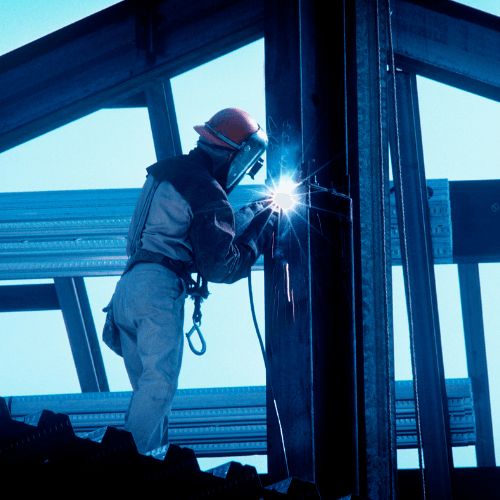
There is no victory in the fight for greater welding quality. Robotic welding is perfect for large-scale manufacturing because it excels in accuracy, speed, and consistency. But for specialized, intricate, and flexible welding jobs, human welders are still essential.
Combining robotic efficiency and human experience to provide the best of both worlds is the ultimate answer. The welding business will continue to change as technology develops, moving toward a future that is inventive and collaborative.