

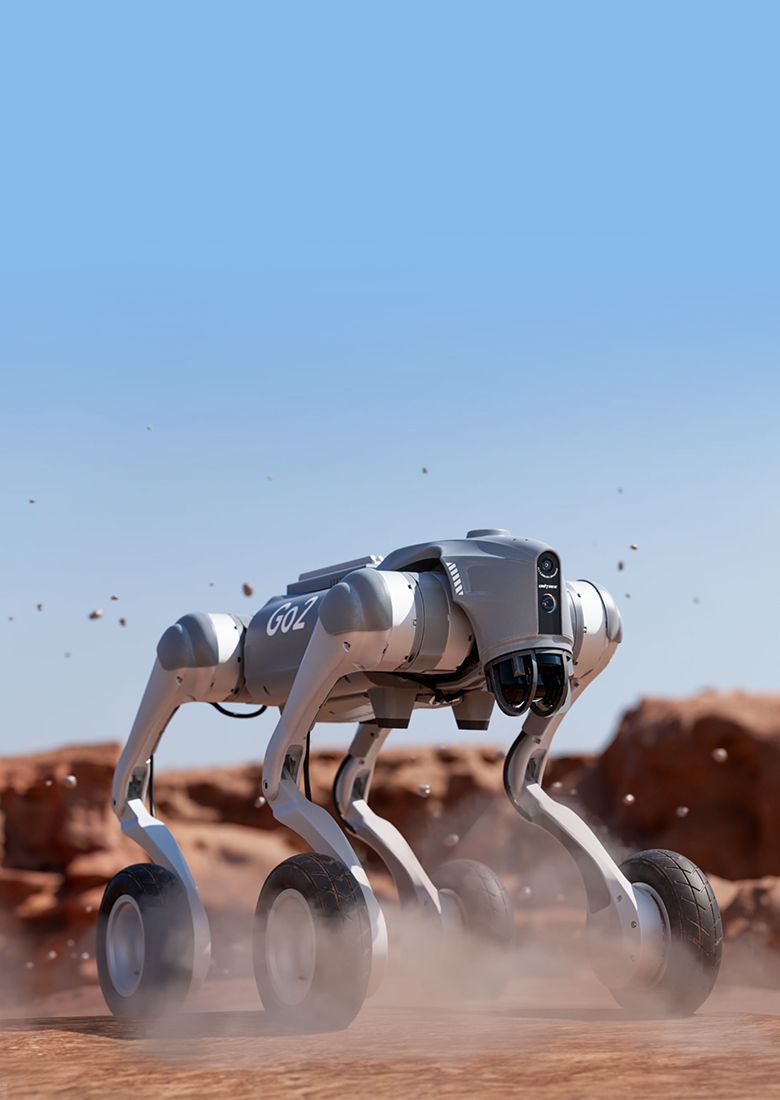
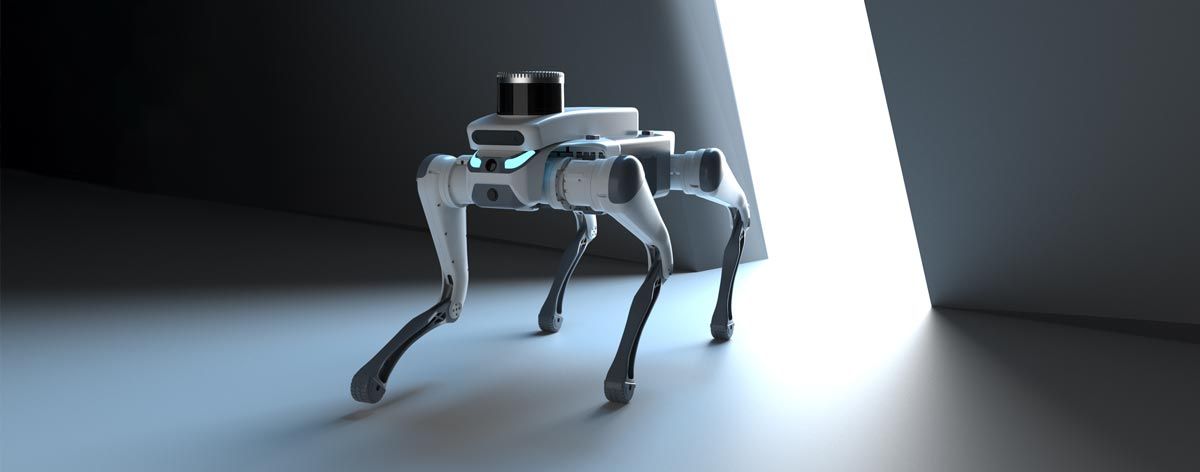
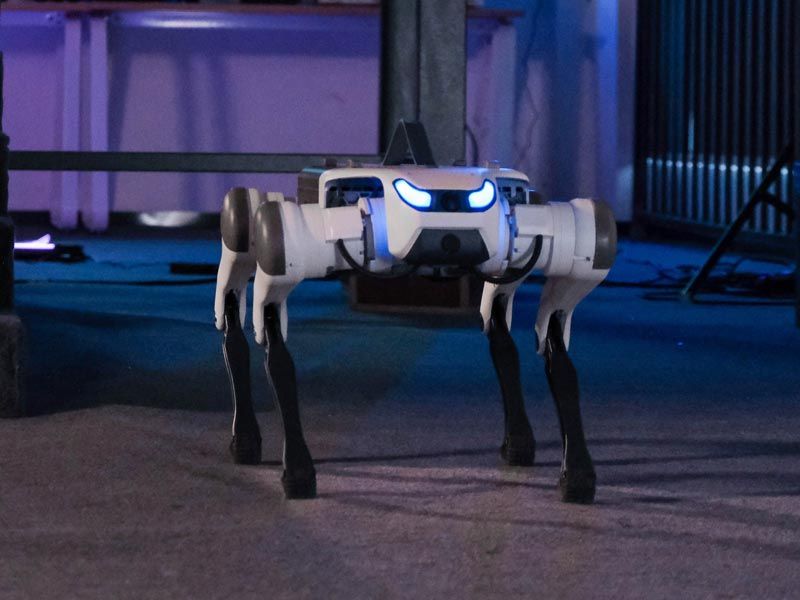
Industrial inspection has always been one of the toughest, riskiest, and most critical parts of manufacturing, energy, oil & gas, mining, and infrastructure operations. Ensuring that machines, pipelines, electrical systems, structures, and production floors are functioning smoothly requires regular monitoring often in hazardous, remote, or human-restricted environments.
For decades, industries have relied on manual inspection teams and stationery or wheeled robots. But as facilities grow more complex and safety standards rise, traditional inspection methods are no longer enough.
This is where revolutionary technology is stepping into Quadruped Robots for Industrial Inspection, popularly known as robot dogs.
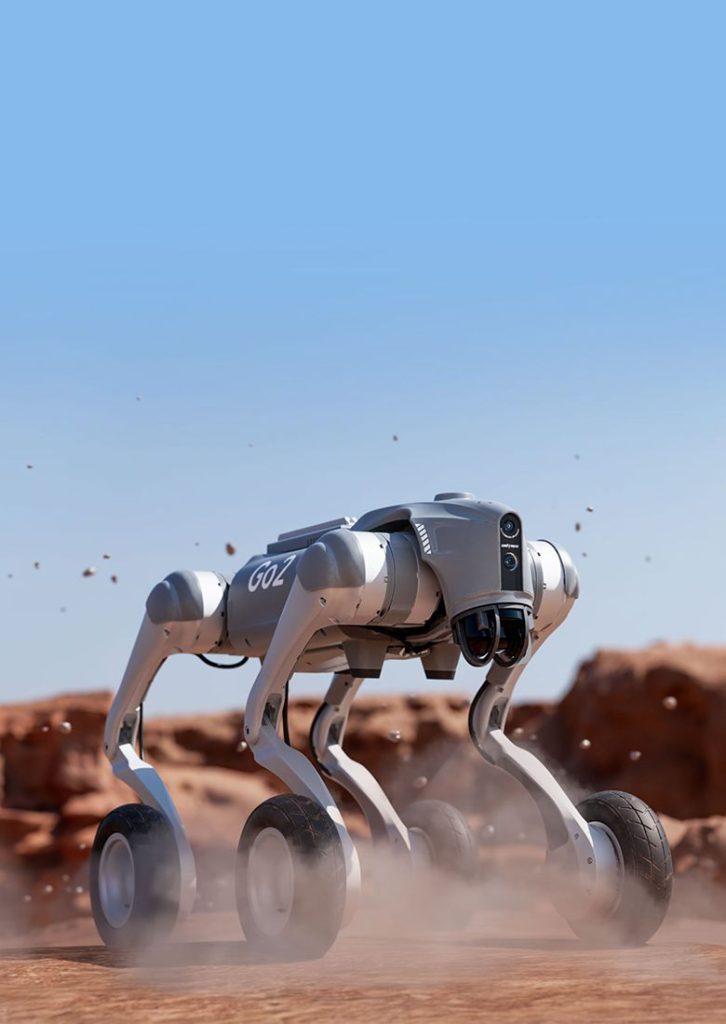
These extremely competent, clever, and nimble machines are rapidly becoming the foundation of contemporary industrial maintenance; they are not only futuristic fads. Their capacity to walk, climb, maneuver through challenging environments, and function independently is establishing a new benchmark for precision, security, and effectiveness.
In this article, we examine why companies all around the world are quickly embracing quadruped robots as the next big thing in industrial inspection.
Unbox Industry Your One-Stop Destination for World-Class Quadruped Robots
As industries move toward smarter, safer, and more automated inspection systems, Unbox Industry is leading the transformation by bringing some of the world’s most advanced quadruped robots directly to the Indian market. Whether you’re looking for high-end performance, reliable autonomy, or innovative AI-driven mobility, Unbox Industry provides the perfect quadruped robot to match your industrial needs.
At Unbox Industry, you can explore powerful global brands, each known for redefining what robot agility and intelligence can achieve:
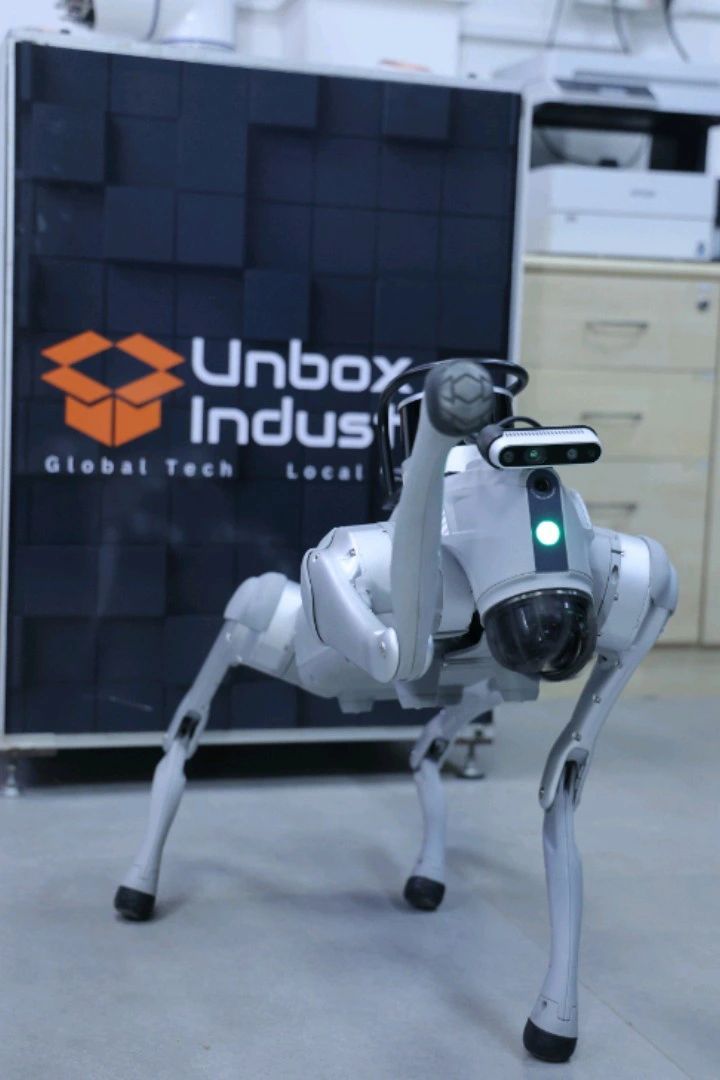
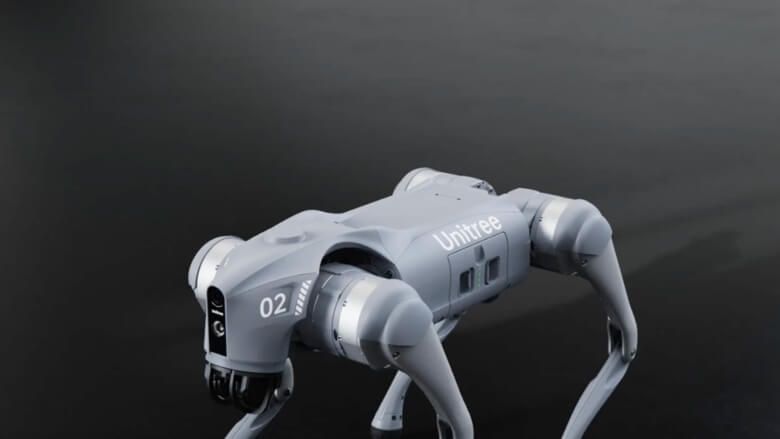
Unitree Quadruped Robots: Quickness, Stability, and Intelligence
Unitree is a well-known business across the world that produces quadruped robots that are quick, steady, and incredibly intelligent. They are excellent in research applications, logistics, security, and industrial inspection. They are a great option for companies implementing robotic mobility because to their sophisticated AI navigation and reasonably priced performance.
Deep Robotics Quadruped Robots Designed for Harsh Industrial Settings
Heavy-duty quadruped robots designed to endure harsh industrial environments are supplied by Deep Robotics . These robots are designed to operate continuously in dangerous environments, such as mining sites, power plants, and oil and gas plants. They are perfect for mission-critical jobs because of their unparalleled resilience.
Why Choose Unbox Industry for Quadruped Robots?
At Unbox Industry, we don’t just supply robots we help businesses adopt the future of industrial automation. When you choose us, you get:
– Access to top global brands in quadruped robotics
– Expert guidance on choosing the best robot for your application
– Dedicated onboarding, demo support, and training
– After-sales support, spare parts, and technical assistance
– Custom payload integration and mission design
We ensure that every business from manufacturing to energy, from research labs to defense, can harness the true power of next-generation quadruped robots.
The Industrial World Is Getting More Complex and More Dangerous
These days, industrial zones are growing quickly, becoming bigger, more interconnected, and highly automated. New difficulties arise during inspections because of this increasing complexity
1. Many inspection locations are challenging to get
Manual inspections are dangerous and slow when equipment is hidden beneath pipes, platforms, or small areas.
2. Certain settings are dangerous for people.
Workers are at significant risk for health problems in areas with hazardous gasses, intense heat, radiation, or chemical exposure.
3. Equipment is frequently positioned in challenging areas
Movement is challenging for both people and conventional wheeled robots because to high platforms, steep steps, restricted passageways, and low-clearance crawl spaces.
4. Industries now require ongoing, real-time surveillance
The requirement for consistent, accurate data cannot be met by manual examination.
In many industrial settings, human inspection is no longer feasible or safe due to these difficulties. Even conventional ground robots have trouble, frequently becoming stuck because of wires, uneven flooring, garbage, or multi-level constructions.
This is where quadruped robots stand out.
Built like agile four-legged animals, quadruped robots can:
– Navigate rough, uneven, or obstacle-filled terrain
– Climb stairs and move through tight spaces
– Maintain stability even in hazardous environments
– Reach inspection points that humans or wheeled robots cannot
Their design makes them perfect for modern industrial inspections, where flexibility, safety , and mobility are essential.
Quadruped robots provide unparalleled mobility by imitating biological movement
Quadruped robots have an inherent advantage over conventional wheeled or tracked devices since they are made to move like animals. They can navigate settings that are too complicated, uneven, or unexpected for conventional robots because of their four-legged construction.
Because of their exceptional mobility, they can:
– Climb stairs effortlessly
– Walk across uneven and unpredictable terrain
– Cross gravel, mud, wet floors, and slippery surfaces
– Navigate tight industrial pathways and narrow spaces
– Maintain balance even when pushed, bumped, or exposed to vibrations
These qualities have made quadruped robots an effective tool for harsh industrial settings like:
– Power plants
– Factories and manufacturing floors
– Offshore oil & gas rigs
– Mining tunnels and underground sites
– Construction zones
– Warehouses and logistics hubs
With their animal-like agility and ability to adapt to challenging conditions, quadruped robots are quickly becoming indispensable tools for industrial inspection, safety monitoring, and autonomous data collection.
Superior Sensors Make Quadruped Robots Smarter Than Human Inspectors
Compared to human inspectors, quadruped robots are significantly more adept at seeing, sensing, and comprehending their surroundings because of their robust sensor suite. Among these sophisticated sensing instruments are:
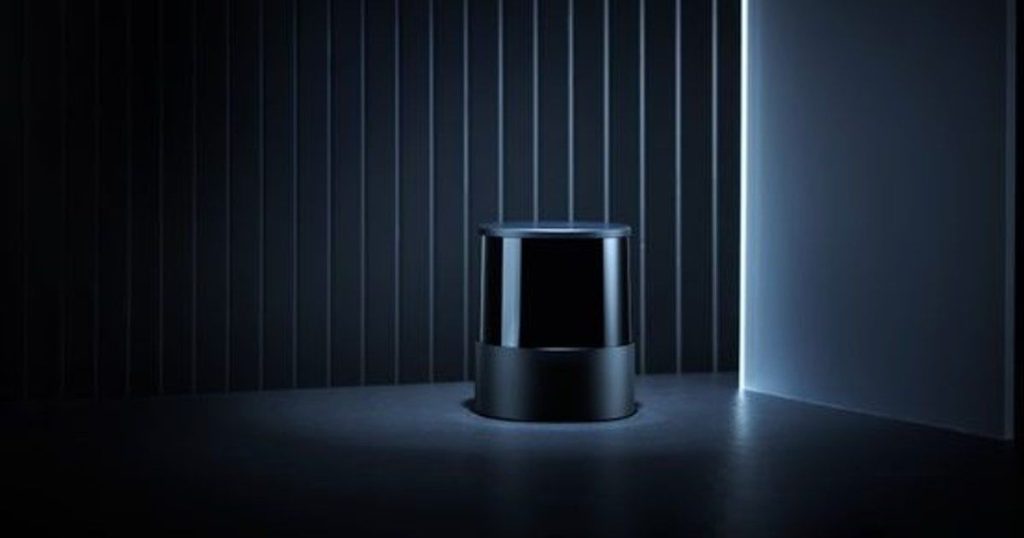
– LiDAR scanners: Produce intricate three-dimensional maps with millimeter accuracy.
– Thermal cameras : Identify temperature changes that indicate equipment failure or overheating.
– RGB and depth cameras: Record sharp images and depth data for precise inspections.
– Gas detection sensors: Quickly identify dangerous or imperceptible gas leakage.
– Ultrasonic sensors: Find structural flaws or fissures that are invisible to the human eye.
– SLAM navigation systems: Assist the robot with independent movement and real-time mapping of unknown areas.
These sensors enable quadruped robots to work in challenging conditions — complete darkness, smoke, dust, fog, or confined spaces — where humans struggle to inspect accurately.
Real-world examples of their capability
A thermal camera can spot an overheating motor or electrical panel before it becomes a fire risk.
A gas sensor can detect tiny leaks in pipelines or storage tanks that are invisible to the human eye.
All the data collected can be processed instantly and integrated into digital twins, IoT dashboards, and predictive maintenance software, making inspections faster, safer, and significantly more accurate.
24/7 Autonomous Patrol and Continuous Monitoring
Quadruped robots are transforming industrial safety and inspection with their ability to operate continuously something humans simply cannot do. Unlike human guards or inspectors, these robots:
– Never get tired
– Don’t require breaks
– Follow procedures consistently
– Avoid exposure to dangerous environments
With round-the-clock mobility, they can patrol facilities nonstop and deliver highly reliable operational insights. During each patrol, quadruped robots capture and generate:
– Real-time inspection reports for instant visibility
– High-resolution images and videos to assess equipment and surroundings
– Detailed equipment health data through integrated sensors
– Automatic alerts for anomalies so teams can act immediately
This continuous, automated monitoring helps reduce downtime, prevent accidents, and maintain seamless operational continuity, making industrial environments safer, smarter, and more efficient.
A Game-Changer for Hazardous Environments
Industries often operate in locations where human entry is extremely risky or not possible at all. Some of the most dangerous industrial zones include:
– Chemical plants filled with toxic gases and corrosive fumes
– High-voltage substations and inspection areas
– Oil rigs and refineries with high explosion risks
– Deep underground mines with unstable terrain and low visibility
– Radiation-exposed zones inside nuclear power facilities
Sending human workers into these environments is not just dangerous, it’s costly, time-consuming, and sometimes completely unfeasible.
This is where quadruped robots change the game
Built with rugged, IP-rated bodies, these robots can confidently navigate dust, heat, humidity, vibrations, chemicals, and uneven surfaces. They move like animals, allowing them to climb stairs, walk over debris, and maintain balance where wheeled robots fail.
By entering high-risk zones and capturing real-time, high-precision data, quadruped robots protect human workers while improving operational efficiency.
In short, they are emerging as the ultimate industrial safety robots capable of going where humans can’t and doing what humans shouldn’t.
Flexibility for Multiple Industrial Applications
Quadruped robots are multi-purpose solutions that can be used for:
Routine Industrial Inspection
Daily or weekly monitoring of:
– Pipelines
– Pumps
– Valves
– Tanks
– Motors
– Electrical systems
Emergency Response
When disasters strike fires, leaks, explosions quadruped, robots enter first.
They provide live data to help rescue teams prepare a safer strategy.
Security and Surveillance
Equipped with night vision and AI recognition, they act as walking CCTV systems.
Asset Management
They tag, record, and update asset health status in real time.
Mapping & 3D Scanning
Perfect for construction firms, mining companies, and energy plants.
Their flexibility is unmatched.
Case Studies How Industries Are Benefiting
Here are some real examples (generalized):
1. Oil & Gas Plants
Robot dogs inspect pipelines and detect methane leaks faster than humans, reducing risks of explosions.
2. Manufacturing Units
Factories use them to inspect boilers, furnaces, and robotic assembly lines without stopping operations.
3. Power & Energy Plants
Quadruped robots monitor transformers, turbines, and generators — preventing overheating and failures.
4. Mining Companies
They navigate underground tunnels to detect cracks, air quality issues, and machinery health.
5. Construction Sites
– They generate 3D maps and daily progress reports that help project managers track work efficiently.
– These success stories prove that quadruped robots are reshaping the inspection ecosystem globally.
Conclusion
Quadruped robots are transforming industrial inspection by making processes safer, faster, and more precise. They operate round-the-clock, reducing downtime, improving efficiency, and enabling data-driven maintenance all while keeping workers out of hazardous environments. With their superior mobility and intelligence.
These robots represent the next major leap in industrial monitoring, helping businesses achieve smarter operations, safer workplaces, and higher productivity.