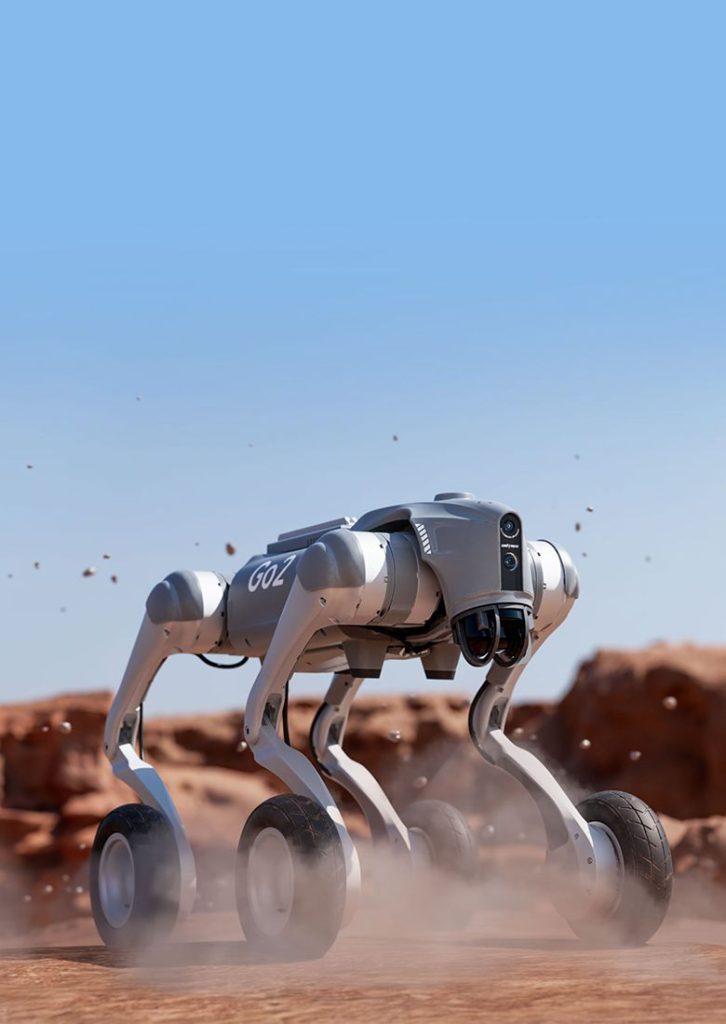



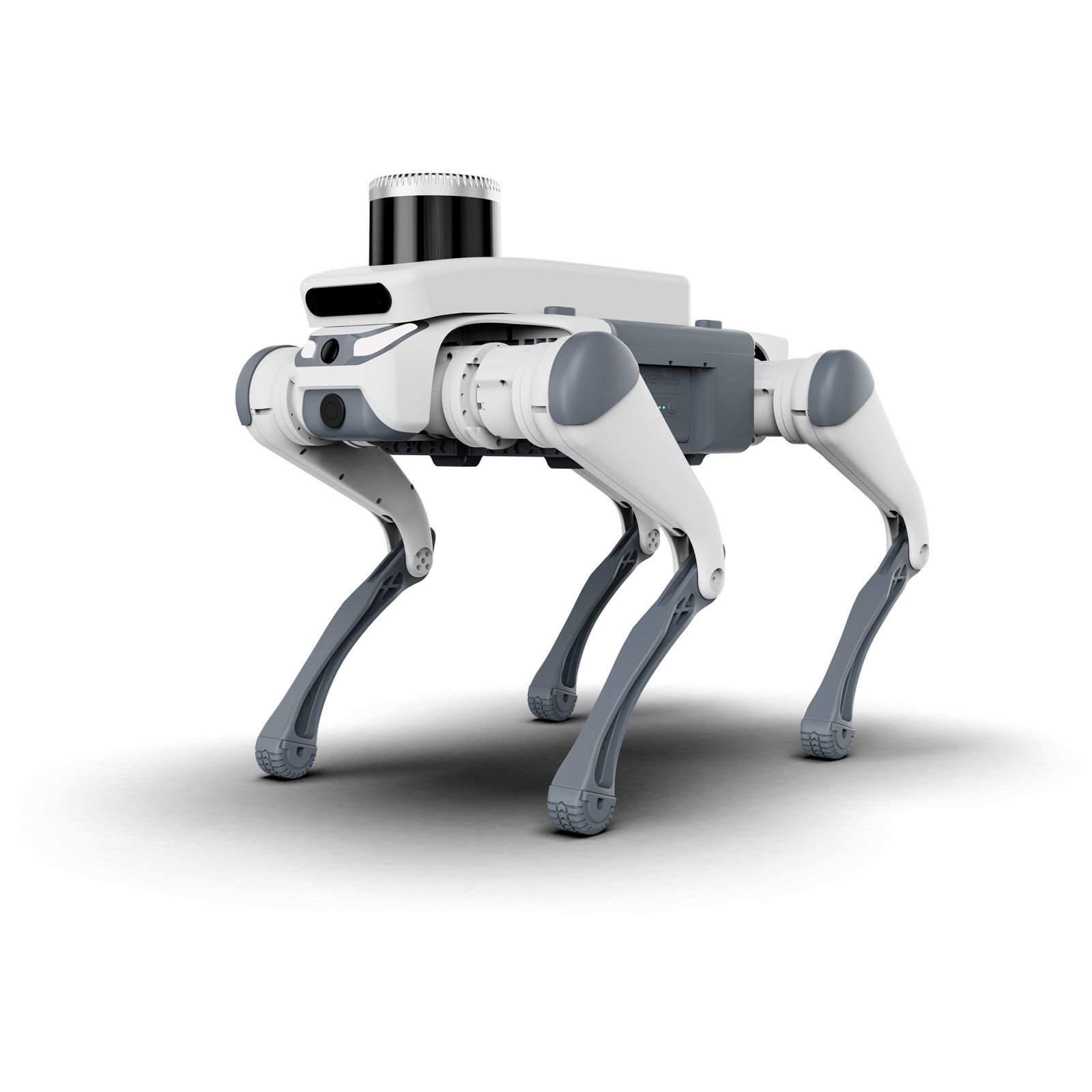
The sorts of sensors employed, the function of machine learning and decision-making, and practical uses of this potent technological combination will all be covered in this article as we investigate how sensors and AI cooperate to drive the movement of quadruped robots.
The Evolution of Quadruped Robotics
Understanding the reason for quadruped robots is crucial before delving into the technological aspects. Conventional wheeled robots have trouble in rough, natural settings like mountains, woods, or disaster areas. Because of their legs’ increased flexibility, agility, and mobility, quadrupeds are more suited for challenging outdoor settings.
It’s challenging to create a robot that can walk like an animal, though. Legs require constant changes depending on the terrain, in contrast to wheels that follow predetermined routes. AI-based control systems and sophisticated sensors are useful in this situation..
Sensors: Giving Robots the Power to Perceive
Sensors allow quadruped robots to sense their body and environment, much like their sensory organs. The robot’s perception-decision-action loop begins with this perception, which is a critical first step. Together, several sensor kinds enable intelligent robot navigation, balancing, and interaction with their surroundings.
1. Inertial Measurement Units (IMUs)
Acceleration, angular velocity, and direction are all measured using inertial measurement units, or IMUs. They are crucial for preserving equilibrium, keeping an eye on posture, and facilitating movement. To ensure steady mobility, IMUs are essential for detecting if a robot is tilting, sliding, or falling.
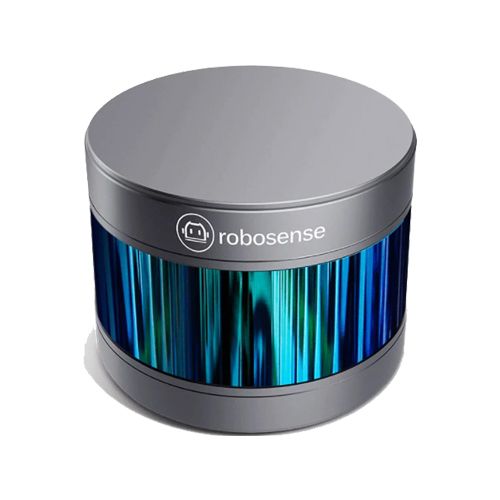
2. LIDAR (Light Detection and Ranging)
Laser beams are used in LIDAR (Light Detection and Ranging) to create a three-dimensional map of the environment. Robots can measure distances, identify obstacles, and create safe navigation pathways thanks to this sensor. For SLAM (Simultaneous Localization and Mapping), which enables the robot to map and comprehend new situations, LIDAR is particularly crucial.
3. Cameras (RGB & Depth)
Like human vision, cameras—including RGB and depth cameras provide visual input. While depth cameras gauge the distance of things in view, RGB cameras take pictures for object recognition and visual clues. By using these sensors for visual odometry, object identification, and terrain categorization, the robot is better able to comprehend its surroundings.
Usually, the robot’s feet or joints have force and torque sensors mounted on them. They assist the robot in determining if a leg is making firm touch or sliding by measuring the force of contact with the ground. These sensors are essential for balance and terrain adaptability.
5. Ultrasonic and Infrared Sensors
Infrared and ultrasonic sensors use light or sound waves to identify objects and surfaces in their immediate vicinity. They are frequently employed for short-range navigation and edge recognition, which aids the robot in avoiding obstacles like drops and stairs.
6. GPS
Geographic position information is provided by GPS sensors, which is particularly crucial for outdoor navigation. GPS can provide more precise location and enhance the robot’s mobility in outside settings when paired with inertial sensors.
AI: The Brain Behind Quadruped Movement
Quadruped robots can feel thanks to sensors, but they can also understand and act thanks to artificial intelligence. Learning, decision-making, planning, and adaptation in uncertain situations are all made possible by artificial intelligence.
1. Perception and Sensor Fusion
– AI systems combine information from several senses (sensor fusion).
– Aids in the robot’s development of a cohesive perception of its surroundings.
– Identifies abnormalities, filters noise and makes up for missing data.
2. Classification of Terrain
– The robot recognizes several types of terrain (grass, gravel, steps, and mud) using computer vision and deep learning.
– Adjusts gait appropriately, lifting legs higher on uneven terrain and tiptoeing on slick areas.
3. Planning the Route and Avoiding Obstacles
– AI creates the best routes using sensor data and maps.
– When impediments arise, dynamic path planning modifies paths instantly.
– Robots learn to find safe, effective routes using reinforcement learning.
4. Optimizing Gait
– Robots with quadruples may walk, trot, or gallop.
– Depending on the terrain, task, and speed requirements, AI chooses or combines different gaits.
– Animal movement can be replicated by deep learning models, which get better with time.
5. Reflexes and Balance
– AI keeps an eye on sensor inputs to keep things balanced.
– Neural networks steady the robot in milliseconds if it stumbles.
– Simulation and real-world input are used to train machine learning models.
The Symbiotic Relationship Between Sensors and AI
Both sensors and AI have strong capabilities of their own. But when combined, they make it possible for something bigger—real independence and flexibility.
– Sensors deliver raw data in real time. However, raw data frequently lacks context, is noisy, or is fragmented.
– AI analyzes this data, finds patterns, and comes to conclusions.
– Continuous repetition of this cycle enables the robot to adapt its behavior to the circumstances.
For Example, when a robot ascends stairs:
– Every step’s pressure is detected via force sensors.
– IMUs monitor leg orientation and tilt.
– The stair edges are recognized by cameras.
– AI integrates this data and dynamically modifies timing and step height.
AI is essentially the brain that understands and takes action, whereas sensors are essentially the eyes, hearing, and skin.
Applications in the Real World Driven by AI and Sensors
1. Search and Rescue
– Quadruped robots can navigate hazardous environments including trash.
– Sensors identify unstable surfaces, human presence, and gas leaks.
– AI talks to operators and develops rescue routes.
2. Industrial Inspection
– Defects and corrosion are detected using LIDAR and thermal cameras.
– AI detects irregularities and forecasts maintenance requirements.
3. Defense and military reconnaissance operations in difficult terrain.
– Awareness is provided via sensors.
– AI analyzes the environment to enable self-navigating vehicles.
4. Farming
– Fields are traversed by robots that gather data on crops and dirt.
– AI algorithms forecast yield, growth trends, and illnesses.
5. Delivery via Last Mile
– Real-time rerouting and obstacle recognition are features of urban delivery bots.
– AI manages road crossings and pedestrian interactions.
The Future: More Intelligent, Secure, and Flexible Robots
With the ongoing development of sensor technology and AI models, quadruped robots are on their way to becoming:
More Agile
– Faster and more seamless transitions between gaits are made possible by improved motion planning.
– Robots can navigate stairs, slopes, and dynamic terrain more easily thanks to adaptive locomotion.
– Rapid recovery from slips or impediments is made possible via real-time feedback.
More Aware
– Richer environmental data is provided by high-resolution sensors (such as LIDAR, depth cameras, and force sensors).
– To improve situational awareness, multimodal sensor fusion integrates vision, touch, and proprioception.
– Better SLAM (Simultaneous Localization and Mapping) facilitates traversing challenging or strange environments.
More autonomous
– AI models create walking tactics with little assistance from humans by using reinforcement learning.
– Robots adapt to new surfaces or objectives on the fly as they gain experience.
– Multiple robots may cooperate on coordinated activities and exchange information thanks to collaborative AI.
Greater Accessibility
– Due to the steady decline in hardware prices, quadruped robots are becoming feasible for non-military industries.
– These technologies are being adopted by a growing number of industries, including public safety , logistics, construction, and agriculture.
– Access for non-specialists is growing because to modular systems and user-friendly interfaces.
In conclusion
A quadruped robot’s elegant, adaptable mobility is the outcome of a sophisticated, precisely calibrated interaction between sensors and artificial intelligence. When combined, they provide electrical circuitry and metal limbs with the ability to see, feel, think, and act like sentient machines.
Quadruped robots driven by sensor-AI integration are spearheading the next generation of robotics, whether they are climbing rugged slopes, examining oil rigs, or investigating disaster areas. This dynamic pair will keep pushing the boundaries of what robots can accomplish as technology develops, bringing us one step closer to a future in which robotic companions live among us as intelligent, nimble partners rather than merely tools.