

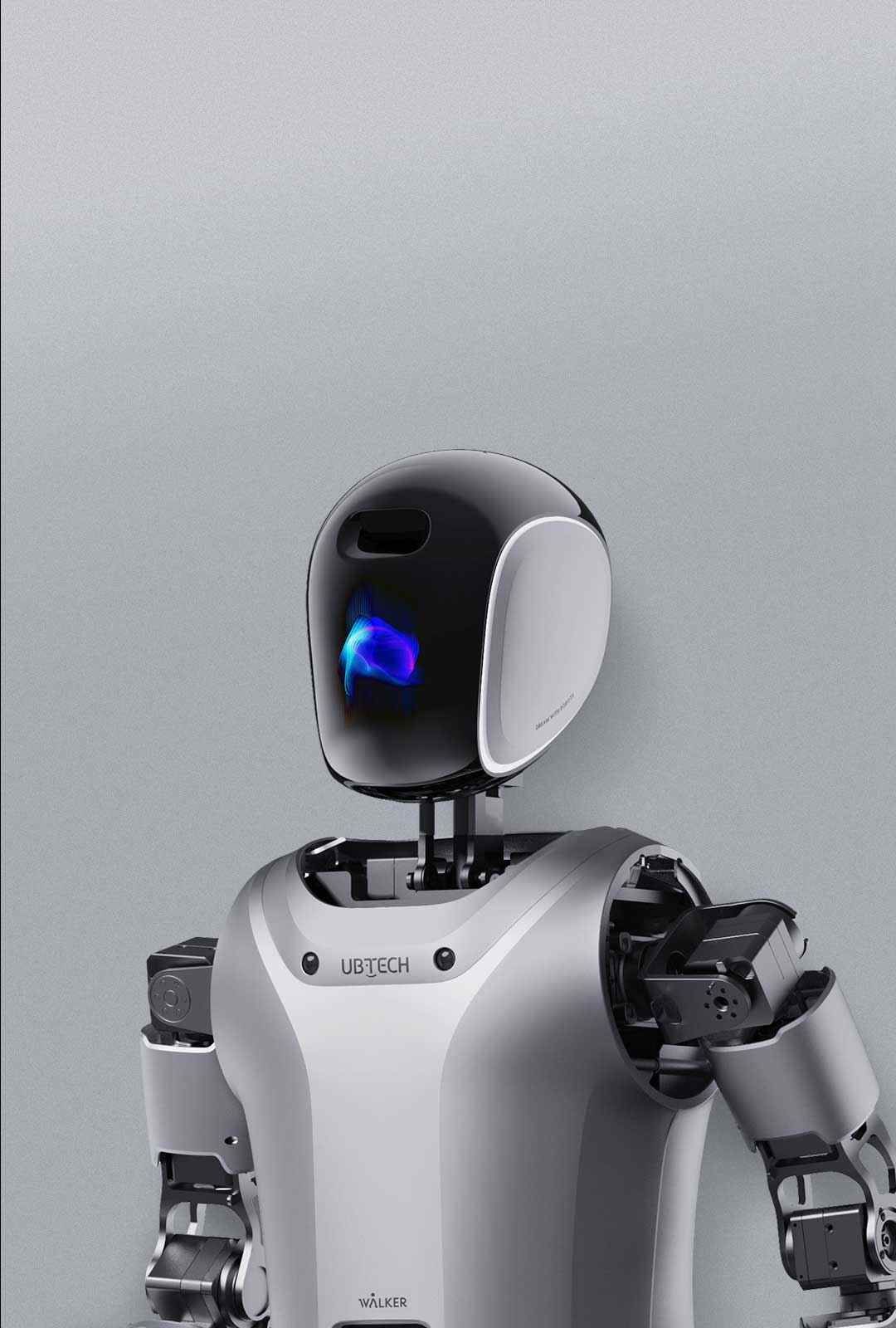
This blog explores Walker’s technological underpinnings, practical uses, industry collaborations, and how the emergence of AI-driven mobility is influencing robots in the home, business, and manufacturing sectors.
The Walker Evolution: From Concept to Reality.
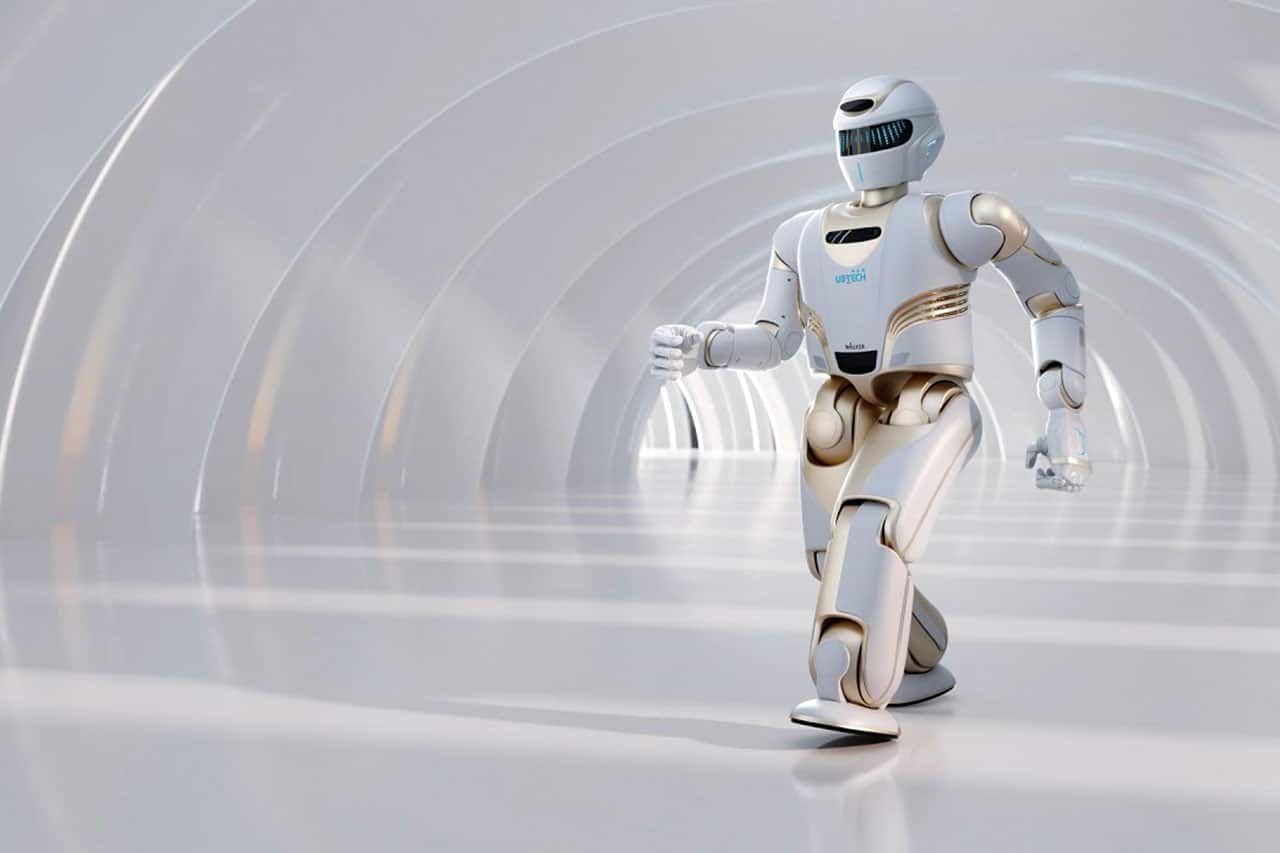
The first Walker prototype, a bipedal robot that can walk on smooth surfaces, was unveiled by UBTECH at CES in 2018. Walker has added a head, arms, hands, and torso by CES 2019, along with multimodal sensing (speech, touch, and vision) and 36 high-performance actuators for dexterity and self-balancing.
Walker was characterized by UBTECH as “an agile smart companion—an intelligent, bipedal humanoid robot ” that weighed 77 kg and stood around 1.45 meters tall.
Early demonstrations demonstrated push-recovery and object handling, however IEEE Spectrum warned that these experiments were carried out under ideal circumstances.
Introducing Walker from UBTECH
UBTECH: Who Is It?
UBTECH Robotics, a global pioneer in robotics, was founded in Shenzhen, China, in 2012. It first became well-known because to educational and consumer robots like Jimu kits and Alpha series. With a focus on commercial and corporate applications, UBTECH gradually revealed humanoid and service robots such as Cruzer, Walker, and Shannon, with plans to expand into the retail, hotel, and industrial sectors.
Features of the Hardware and Design
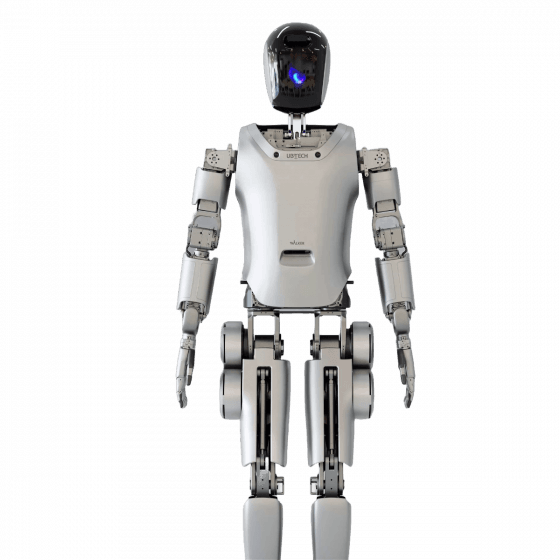
The full-size bipedal humanoid Walker from UBTECH is around 1.75 meters tall and weighs about 70 kg. Among its primary hardware attributes are:
– Articulated limbs include two hands, two arms with seven or more degrees of flexibility apiece, and nimble fingers.
– Lower-body actuation: precise balance control is made possible by six-axis legs with torque-controlled joints.
– Sensory array: force-torque sensors , IMU, LIDAR, 3D depth cameras (eyes), and foot pressure sensors.
– Depending on the demands of the application, the torso and upper body attachments are optional.
– Computing and connectivity: ROS compatibility, 5G/Wi-Fi, and GPU-capable onboard AI.
Walker’s human-scale interaction and mobility in unstructured interior environments are made possible by this combination.
The Core of Movement Driven by AI
Walker’s movements aren’t only mechanical; they’re coordinated by many AI systems.
1. Concurrent Mapping and Localization (SLAM)
Walker is able to localize itself inside its surroundings and create a 3D map of them thanks to SLAM. It continuously updates its mental map by creating point clouds and occupancy grids using LIDAR cameras and data sets. This guarantees that Walker is aware of its location, obstacles, and dynamic navigation techniques.
2. Semantic Understanding & Perception
Walker has a semantic understanding of its environment that goes beyond mapping:
– Detecting chairs, doors: and other items is known as object detection.
– Human pose estimation: monitoring individuals, identifying motions.
– Environmental context awareness: Recognizing spatial linkages and safety zones.
3. Planning Motion and Optimizing Footsteps
– Walker employs AI-based motion planners with its map and perceptual data to:
– Look for workable footstep patterns.
– Optimize your stride to save energy.
Make dynamic adjustments for balance, such as changing the step pattern in real time in reaction to disturbances.
These planners integrate simulation-trained learning-based adaptability with traditional techniques (RRT, A*, CHOMP).
4. Balance and Control Loops in Real Time
Data from the IMU, foot pressure, and joint torque are sent into a high-speed control loop that operates at hundreds of cycles per second. A feedback controller modifies support-phase dynamics, steps variability, and joint torques. Walker’s controller re-plans its steps in mid-step to prevent falls when it meets unforeseen disruptions.
Use Cases & Demonstrations
Walker from UBTECH is more than just an idea; it has been shown in practical pilot situations.
1. Picture Walker for Retail & Hospitality:
– Saying hello to guests at a hotel lobby
– Taking them to the elevator with you
– Delivering meals or packages to rooms.
It interacts with employees, maps hallways, communicates with building systems, and adjusts to human flow. The key is being able to walk human-scale distances on your own.
2. Remote Examining and Monitoring
Walker is capable of moving around industrial settings, such as factories and airports, on patrol, checking for leaks, or spotting irregularities. In areas where inspection is difficult, it can carry inspection tools, plug into outlets, or take the role of staff.
3. Education & Research
Walker provides a modular platform for biomechanics, robotics, AI, and human-robot interaction to labs and institutions. On top of Walker’s foundation, researchers construct unique manipulation techniques, perception algorithms, and autonomy research.
4. Applications Inspired by Pandemics
Robotics platforms were adapted for contactless duties at COVID-19, including cleaning, distribution, and interaction jobs. Walker’s humanoid appearance offers a sterile, lifelike presence that is helpful for clinic check-in, telepresence, and disinfection.
Developments in AI-Powered Mobility
1. The Sim-to-Real Transition
Walker uses digital twins to teach its DRL controllers. In order to achieve faster iterations and safer development cycles, developers simulate walking on a variety of terrain with disruptions. Real-world transfer is accomplished by domain randomization and fine-tuning.
2. Methods of Sensor Fusion
Walker ensures reliable state estimation even in the event of sensor failure or occlusions by combining camera, LIDAR, IMU, and foot sensors with Bayesian filters and deep sensor models.
3. Co-Design of Hardware and Software
The tight integration of the robot’s control software and mechanical compliance allows for:
– Controllers for elastic joints
– Loops of feedback dependent on torque
– Gaits that recuperate energy
– Safety using collision detection and soft actuators
4. Compute Optimization & Edge AI
Onboard GPU/TPU inference engines power Walker. Because the models are quantized and designed for sub-100 ms inference, perception and planning may operate locally, which is essential in situations when the network is slow or unreliable.
Walker & Beyond’s Future
Expectations for Collaborative Multi-Robot Systems Walker will function as a component of intelligent ecosystems, collaborating with:
– Drones for delivery
– AGVs
– Kitchens that operate automatically
– Remote operators
1. Ongoing Education and Adjustment
UBTECH intends to use cloud-based analytics for self-improvement, federated learning, and remote over-the-air model upgrades.
2. Manipulation & Physical Contact
Walker versions in the future will include delicate finger control for:
– Taking care of kitchenware
– Patient support in medical treatment
– Upkeep of the property
3. Reduced Expenses, Greater Use
Commercialization lowers prices as the hardware becomes commoditized, enabling adoption in households, public institutions, and smaller companies.
Comparing Walker to Other Bipedal Robots
1. Boston Dynamics’ Atlas
– Atlas by Boston Dynamics features dynamic parkour, leaps, and nimble flips.
– Walker prioritizes modular payload, intelligence, and skillful manipulation.
– Both use torque-based walking, DRL, and SLAM, while Walker adds business
– Ready apps and a human-facing design.
2. Digit from Agility Robotics
– Digit has a strong emphasis on mobility and warehouse logistics.
– When it comes to grabbing, navigating in human-oriented surroundings, and social contact, Walker outperforms Digit.
3. REEM-C from PAL Robotics
– With ROS-based navigation and manipulation demonstrations, REEM-C is a research-focused platform.
– Walker’s enterprise-ready, durable, and flexible design positions it for commercialization.
Conclusion
Walker from UBTECH is a prime example of how a new class of humanoid robots that assist us—greeting, carrying, assisting, and even entertaining—are made possible by intelligent, AI-driven mobility. Platforms like Walker are demonstrating their value outside of labs by infiltrating real-world venues with human-scale agility and social awareness, despite ongoing issues with cost, regulation, dependability, and public confidence.
Walker-like robots are predicted to transition from restricted pilots to dependable partners in hospitality, healthcare, logistics, and other industries over the course of the next ten years. Human trust, safety regulations, and ethical frameworks will all influence their development. The power of AI-driven movement—robots that walk, think, sense, and evolve like humans—will be at the core.