



Quote automation not only enhances the efficacy of sales teams in finalizing quotes but also ensures optimal engagement with prospective clients. In this discourse, we delve into the intricacies of the quoting process workflow, underscore the imperative need for automating the management of quotations, and elucidate the pivotal role of automated quoting in bolstering business operations.
Exploring Quotation Process Automation
Within the sales realm, two pivotal components constitute the sales process: the quotation process and the subsequent order management process. The quotation process encompasses the stages of submission, approval, and acceptance of quotes.
Often termed as the “quote-to-order” process, the sales journey is intricately intertwined with quotation management. The complexity and duration of the quotation process vary depending on the business model in question.
Moreover, the quotation process exhibits variability based on the channel of origin, be it initiated through an e-commerce platform, employee referrals, or newspaper advertisements. Additional steps, such as on-site visits or inventory allocation, may be incorporated into the workflow as necessitated.
For instance, while the quotation process for certain products like furniture may not mandate on-site visits, installations like ventilation systems might necessitate them. Notably, not all businesses integrate the quotation process into their sales models, preferring direct customer ordering processes.

Stages in the Quoting Process
The progression of steps in the quotation processing flow varies across companies, contingent upon their unique business models and the specific products or services requested for quoting. Nevertheless, certain fundamental steps in the quoting process remain consistent across diverse enterprises and offerings.
1. Quote Submission:- The primary avenue for submitting quotes typically involves utilizing forms accessible on company websites. These forms may range from generic “Contact Us” portals, where visitors provide their details and a brief message to initiate the quoting process, to more tailored forms linked to specific products or services. These forms often include targeted questions aimed at aiding the sales team in crafting precise quotes. Alternatively, clients may directly email the sales team, leveraging existing relationships to streamline the quoting process. Effective quote preparation hinges upon the sales form’s ability to capture essential client information accurately.
2. Quote Request Acknowledgment:- Upon receipt of a quote request, a member of the sales team acknowledges the inquiry. Requests originating from prominent industry players with the potential for substantial revenue generation typically receive priority attention. Otherwise, requests are handled on a first-come, first-served basis. Acknowledgment of the request initiates further processing, transitioning the “quote request” into a formal quote. Internally, the quote undergoes creation and approval in accordance with company policies, with considerations such as deal size and estimated profitability influencing the internal approval process.
3. Customer Acceptance or Rejection:- Upon reviewing the quote, the customer decides whether to accept or reject it based on their expectations. Rejection of the quote signifies a lost opportunity. This step often involves negotiations with the customer before final approval or rejection. Negotiations may lead to modifications of the original quote to accommodate discussed terms.
4. Quote Transformation into an Order:- Upon acceptance by the customer, the quote evolves into an order, initiating subsequent steps in order processing. Once the customer approves either the original quote or any negotiated amendments, a contract may be signed between the parties involved. The company then proceeds with the project or sale outlined in the received sales order.

Challenges in Manual Quote Processing
The quoting process, integral to the sales funnel, encompasses the submission, approval, and acceptance of tenders. However, manual quoting often encounters inefficiencies due to the absence of standardized policies and procedures governing quotation management. This manual approach is prone to frequent errors and delays at each stage of the quotation process.
1. Outdated Information:- Manual processes commonly rely on spreadsheets for managing contracts, price lists, and related data. However, discrepancies arise when team members use different versions of templates or forms, leading to uncertainty regarding the latest document version. This confusion results in quoting incorrect prices and diminishes profitability.
2. Lack of Real-Time Tracking:- Manual processes lack real-time tracking capabilities, causing delays in quote processing as responsibility assumptions lead to inaction. The absence of visibility into request status or priority causes requests to slip through the cracks, or multiple team members may unknowingly duplicate efforts on the same proposal.
3. Pricing Errors:- Decentralized data in manual processes heightens the risk of errors, especially when multiple channels are involved. These errors encompass data entry mistakes and pricing inaccuracies, posing significant obstacles in the quotation process. Human error predominates in the manual quotation process flow, leading to instances where outdated or miscalculated information results in either overcharging or undercharging clients or partners.
Missed Upsells and Cross-Sells
When sales personnel become engrossed in repetitive tasks such as verifying and rectifying quotes or seeking approval updates, their focus shifts away from maximizing sales impact. Manual quotation processing detracts from the ability to capitalize on opportunities for cross-selling or upselling to existing customers. Instead of nurturing these relationships and exploring new business avenues, sales representatives are consumed by mundane tasks.
Excessive Discounting
Discounts serve as a powerful tool to attract customers and cultivate long-term relationships, fostering receptivity to future business endeavors. However, frequent and excessive discounts can undermine profitability and brand value. These situations often stem from the absence of a robust system to calculate discounts tailored to individual buyer profiles. In organizations lacking centralized purchase, cost, and discount guidelines to assist the sales team, determining appropriate pricing becomes challenging.
Lengthy Quoting Processes
An optimal quotation process strikes a balance between thoroughness and efficiency, affording sales teams flexibility at each stage. Manual processes, however, are characterized by prolonged back-and-forth communication, clarification requests, and errors, leading to potential discrepancies in client expectations. Such protracted processes hinder agility and may deter clients due to perceived inefficiency.

5 Ways to Speed Up Quote Process
Accelerating the Quotation Approval Process: Key Steps
1. Thorough Understanding of Customer Needs:- Kickstarting an effective quotation process entails a comprehensive grasp of customer requirements, ensuring tailored solutions at optimal pricing. Investing time in understanding product specifications, delivery timelines, and budget constraints establishes a solid foundation for mutual understanding. Customizing quotes to enhance clarity aids customers in making well-informed decisions.
2. Automation of Quoting Procedures:- Enhancing the efficiency of the quoting process involves eliminating redundancies and automating routine tasks. Managing quotations via traditional methods like emails or spreadsheets can lead to fatigue and overlooked opportunities. Automation not only saves time but also minimizes errors and oversights, ensuring seamless processing of sales quotes. Automated systems facilitate tracking of negotiations and prompt updates to reflect changes accurately.
3. Streamlined Approval Procedures:- Efficient quotation approval necessitates a streamlined process that fosters swift decision-making. Automation aids in expediting approvals by issuing reminders and alerts to relevant stakeholders, reinforcing the impression of proactive engagement. Automated systems ensure adherence to approval deadlines, enhancing customer satisfaction and confidence in the sales team’s proficiency.
4. Utilization of Collaborative Tools:- Effective sales processes often require seamless collaboration among diverse teams. Manual methods often create communication barriers and hinder data exchange. Leveraging collaborative tools fosters cohesion among teams, facilitating the exchange of pertinent information. These tools simplify document creation, editing, and sharing, enhancing overall productivity and synergy.
5. Solicitation and Integration of Feedback:- The quotation process extends beyond customer approval, necessitating ongoing feedback collection and responsiveness to queries. Incorporating customer suggestions and adjustments before contract finalization ensures alignment with expectations. Automation aids in expediting quote revisions, ensuring agility and accuracy throughout the sales cycle.
Difference Between Quote and Proposal
In procurement processes, the terms “quotes” and “proposals” are often used interchangeably, yet they possess distinct characteristics. Understanding these disparities is crucial:
Sales quote typically presents the price offered to the customer for requested goods or services. Quotes are typically valid for a specific duration, often around 30 days. Conversely, a proposal is solicited by the customer when they seek detailed insight into how a solution will be delivered.
Proposals encompass more than just pricing; they articulate the proposed solution to the customer’s problem. A proposal delineates not only the cost but also emphasizes the efficacy of the solution. In contrast, a sales quote includes essential details such as pricing, delivery schedules, inclusions and exclusions, and information about the team involved.
Types of Requests of Quotation (RFQ)
RFQ, also known as Invitation for Bid (IFB), is utilized when requirements are clearly defined. Within RFQs, buyers can request price quotes per item, hour, meter, or other units of measurement.
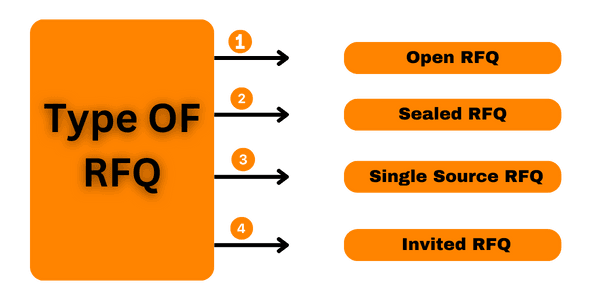
Types of Requests for Quotation (RFQ):
Open RFQ: In this format, sellers can view each other’s responses and adjust their bids until the deadline. This fosters competition, potentially resulting in better prices for the buyer. However, there’s a risk of collusion among sellers, leading to price-fixing.
Sealed RFQ: Commonly used in government and public sector procurements, bids in this RFQ are submitted sealed and opened only after the deadline. While this approach ensures transparency, it may not always yield the most competitive pricing or allow for negotiation.
Single Source RFQ: Primarily utilized in spare parts purchases, this RFQ involves inviting only the manufacturer or their authorized agent to bid for the items. While the quality of the materials is typically high, prices may be elevated due to the absence of competition.
Invited RFQ: In this method, a pre-selected list of bidders is invited to participate, aiming to expedite the process and ensure higher-quality work. Although it saves time, it may not necessarily result in the best offers.
When Should You Automate Quote Processing?
Determining the Optimal Time for Quote Process Automation
Recognizing the opportune moment to automate the quotation process involves identifying certain indicators signaling the need for automation. Here are key signs that underscore the necessity to automate your quotation process:
1. High Incidence of Pricing Errors:- Manual quotation procedures often yield numerous errors, ranging from minor inaccuracies to significant discrepancies in quoted prices. Even slight errors, such as digit transpositions, can profoundly affect quotation accuracy. If you observe a proliferation of errors in quotations, it’s a clear signal to automate data-intensive tasks within the process.
2. Occurrence of Duplicate Quotes:- Manual handling of quotes increases the likelihood of multiple sales personnel working on the same quote concurrently, resulting in duplicate quotes. This redundancy confounds the team and consumes valuable time in resolving duplication issues. If duplicate quotes occur frequently, it’s time to automate the quote preparation process to enhance visibility and mitigate duplication risks.
3. Limited Time for Value-Adding Activities:-When sales teams find themselves engulfed in routine tasks like quote verification and approval, their capacity to engage in value-adding endeavors diminishes significantly. Excessive time spent on low-value tasks impedes productivity and hampers business growth. Automating such activities alleviates the burden on the sales team, allowing them to focus on high-priority tasks that contribute to business success.
4. Prolonged Quote-to-Cash Cycles:- Extended quote-to-cash cycles, characterized by delayed approvals and data verification failures, indicate inefficiencies within the manual process. Manual cycles are susceptible to errors, lack of visibility, and delayed updates, prolonging the sales cycle and frustrating both sales teams and customers. Automation of critical tasks within this cycle significantly reduces processing time and enhances overall efficiency.
5. Customer Dissatisfaction:- Inaccuracies or delays in the quotation process can lead to dissatisfied customers and jeopardize existing relationships. A slow and inefficient quotation process disrupts the customer experience, potentially resulting in customer churn. Automation ensures the delivery of accurate and timely sales quotes, thereby safeguarding customer satisfaction and loyalty.