


What are servo grippers?
Servo grippers are a type of electric gripper that use servo motors to control the position, speed, or force of the gripper. Servo motors are electric motors that can rotate or move to a specific angle or position with high precision and accuracy. They can also provide feedback to the robot controller about the jaw position, speed, or grip detection.
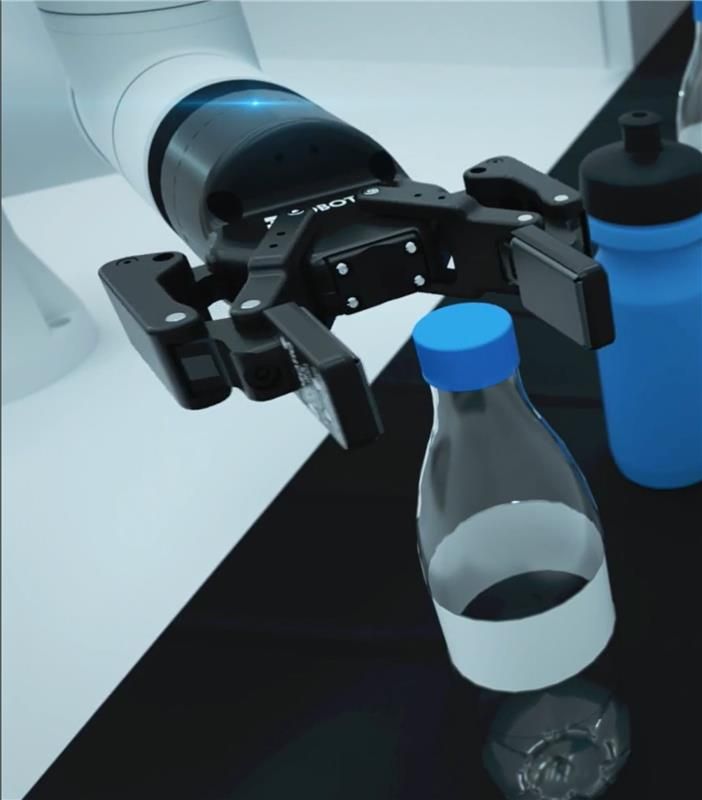
Servo grippers can be programmed to adjust the gripping parameters according to the input command from the robot controller. This allows them to handle different material tolerances and sizes of objects. For example, a servo gripper can grip a fragile glass bottle with a gentle force, or a heavy metal part with a strong force. Servo grippers do not require compressed air or hydraulic lines, which makes them cleaner and more energy-efficient than pneumatic or hydraulic grippers. They also have less noise and vibration, which improves the working environment for the operators.
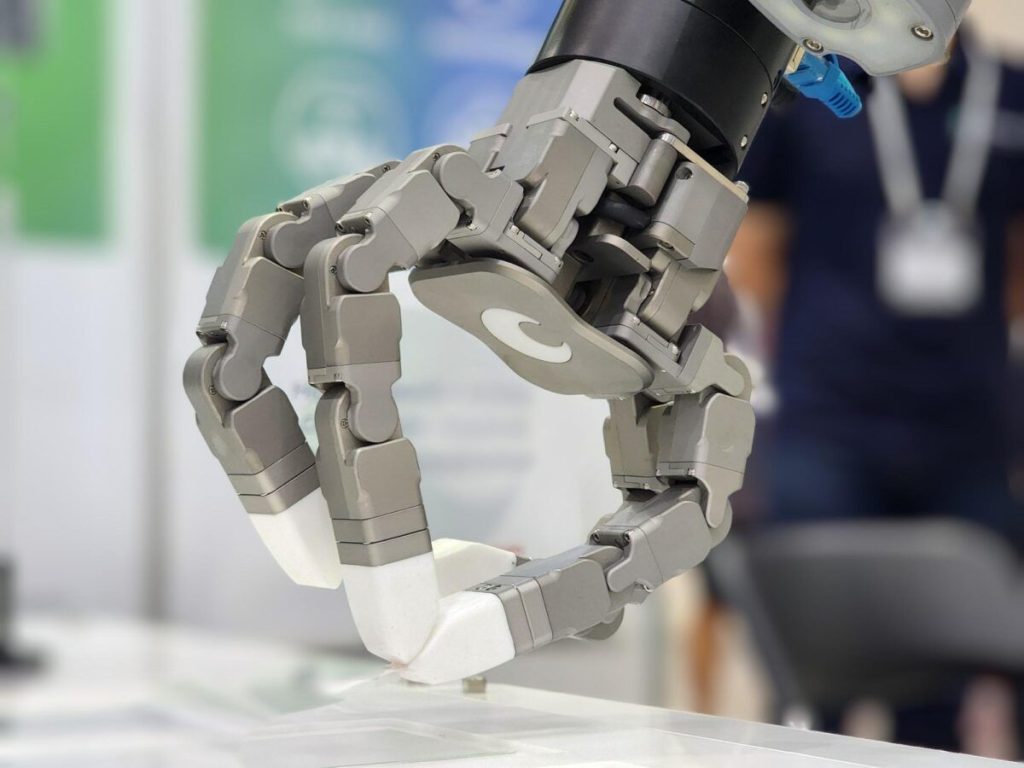
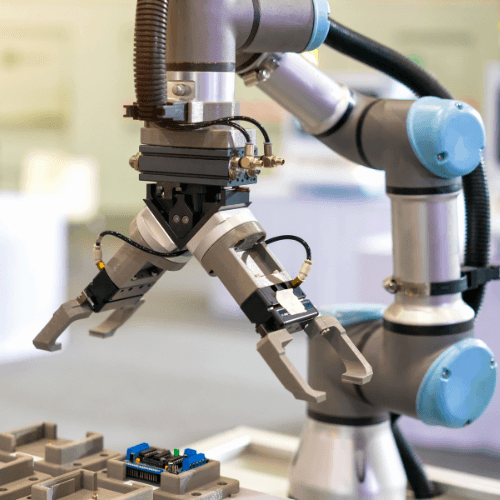
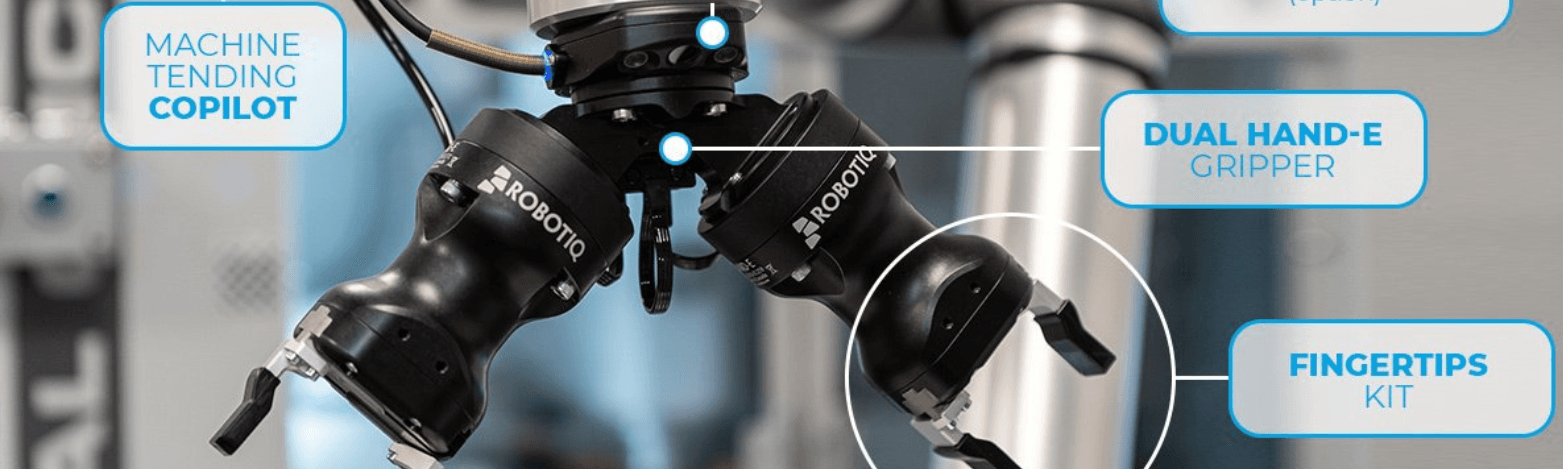
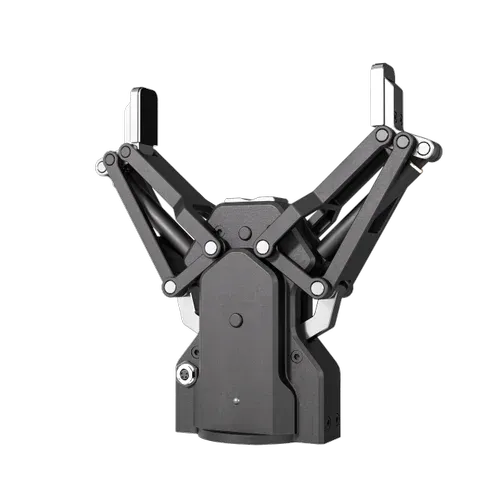
Servo grippers can be integrated with collaborative robots (or cobots) to automate various processes in manufacturing, such as inspection, assembly, pick & place, and machine tending. They can also work with different types of sensors and vision systems to enhance their performance and accuracy. Servo grippers are available in different designs and shapes, such as two-finger, three-finger, claw-like, or human-like. Some servo grippers can also mimic the human hand movements, such as pinching, grasping, or twisting.
How do servo grippers work?
The basic working principle of a servo gripper is as follows:
An input command is sent to the gripper from a robot control unit. This unit is usually pre-programmed by an operator via a teach pendant. The command can be a position, a speed, or a force.
The command from the robot is received by the gripper control module responsible for driving the gripper motor(s). This module is sometimes embedded in the gripper but most of the time it consists of a box sitting between the robot controller and the gripper. The servo-electric motor reacts to the signal. The shaft will then rotate or move to the commanded position, speed, or force. To enable closed-loop control, feedback from the motor position is usually necessary at the gripper level. Until there is a signal change, the servo will hold the position (and resist change). Some servo grippers can also send feedback to the robot controller about the jaw position, speed, or grip detection. This enables more precise and adaptive gripping.
What are the benefits of servo grippers?
Servo grippers have many advantages over other types of grippers in robotics. Here are some of them:
1. Easy to control: Servo grippers can be easily programmed and controlled via a simple interface integrated to the robot control or on its own control unit. You can set up different gripping modes and parameters for different objects and tasks.
2. Flexible: Servo grippers can handle various shapes and sizes of objects with high accuracy and repeatability. They can also adapt to different material properties and tolerances. You can use one servo gripper for multiple applications without changing tools.
3. Cost-effective: Servo grippers do not need compressed air or hydraulic lines, which reduces installation and maintenance costs. They also consume less energy than pneumatic or hydraulic grippers. They have longer lifespans and lower failure rates than other types of grippers.
4. Cleaner: Servo grippers do not produce any emissions or leaks that can contaminate the environment or damage the products. They also reduce noise and vibration levels that can affect the operators’ health and safety.
5. Collaborative: Servo grippers can work safely and efficiently with cobots in shared spaces. They can also communicate with other devices and systems via sensors and vision systems. They can enhance the productivity and quality of your industrial automation.
Important Servo Gripper Components
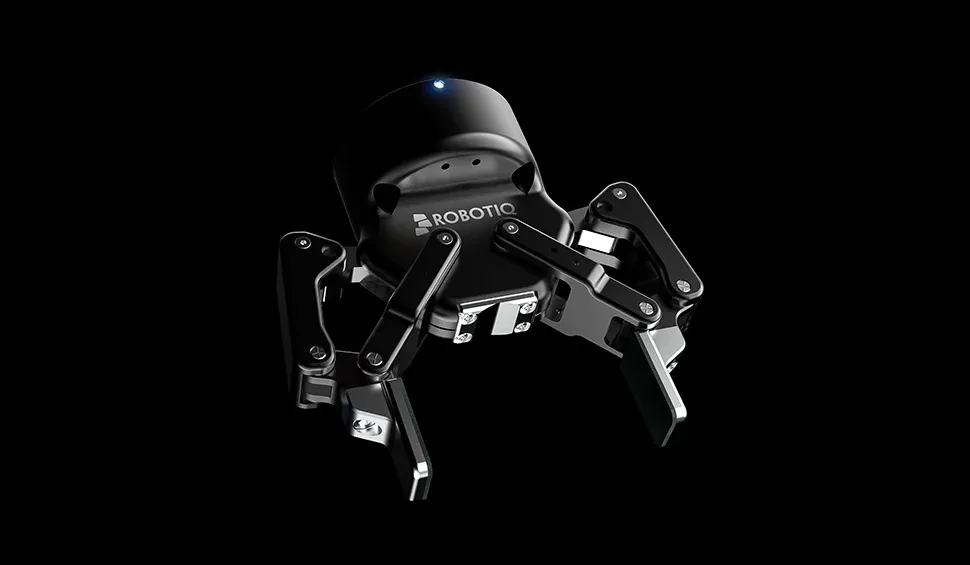
Servo grippers depend on a number of crucial parts that cooperate to offer accuracy and adaptability in automated handling duties. These elements are essential to the gripper’s precise and effective handling of things.
1. Servo Motors: The servo motor is the central component of any servo gripper. The exact movement needed to open and close the gripper’s jaws is provided by this motor. Because it enables precise control over the gripping force, it is perfect for activities requiring a high level of accuracy, including handling fragile products or delicate construction.
2. Controller: The controller ensures that the gripper moves precisely by controlling the motion and force exerted by the servo motors. It can operate independently or be included into the robotic control system. By modifying important variables like location, torque, and speed, the controller enables the gripper to satisfy the demands of various applications.
3. Gripper jaws: The parts that physically meet the thing being handled are called gripper jaws. Their main purpose is to safely grab and hold objects, and depending on the type of object, they can be made of different materials and shapes. Harder jaws are better suited for handling heavier or more durable materials, whereas soft or cushioned jaws are utilized for delicate things.
Difficulties with Servo Gripper Use
1. Cost and Complexity: Servo grippers are often more costly than their pneumatic or hydraulic counterparts, despite their great level of accuracy. For some applications, the expense and difficulty of combining servo grippers with robotic systems may be a deterrent.
2. Payload Restrictions: Due to the servo motors’ restricted force output in comparison to hydraulic or pneumatic systems, servo grippers might not be appropriate for applications needing large payloads.
3. Environmental Sensitivity: Dust, dampness, or extremely high or low temperatures can all have an adverse effect on the functioning of servo grippers. For functionality to be maintained, specialized parts can be required.
4. Energy Consumption: In settings where energy efficiency is an issue, servo motors may use more power than pneumatic grippers, particularly when operating continuously.
Future Prospects of Servo Grippers
The continued development of technology bodes well for servo grippers. Potential developments and trends include the following
1. Integration with AI and Machine Learning: Servo grippers will become increasingly more intelligent as machine learning and artificial intelligence technologies develop. Through learning the best grasping methods for various things, they will be able to handle chores more effectively and adaptably.
2. Collaborative Robots (Cobots): Servo grippers will be essential to facilitating human-robot contact as collaborative robots become more common. To collaborate with others in a shared workspace, these grippers will need to be more adaptable, safe , and responsive.
3. Miniaturization and Personalization: Servo grippers are becoming more portable and versatile as the need for more accurate and smaller robots keeps growing. This trend increases the effectiveness of grippers in specialized or niche activities by enabling the development of bespoke grippers suited to certain applications.
4. Energy-Efficient Designs: As sustainability gains traction, servo grippers are being made more energy-efficient. By lowering power usage, these advancements will minimize operating expenses and make them a more affordable long-term alternative.
5. Advanced Materials: The creation of novel, cutting-edge materials will greatly increase the servo grippers’ robustness, adaptability, and durability. As a result, they will be able to work with a greater range of materials and function better under demanding or harsh conditions.
In conclusion
By offering accurate, dependable, and adaptable solutions for object handling across a range of sectors, servo grippers are transforming automation. They are vital in industries including manufacturing, packing, medicine, and food processing because of their precise handling of fragile objects. Even while issues like cost, payload restrictions, and environmental sensitivity still exist, servo gripper technology is constantly evolving and presents encouraging answers. Servo grippers will be essential to the next generation of robotic systems as artificial intelligence, energy efficiency, and materials technology develop, further increasing automated operations’ accuracy, productivity, and adaptability.