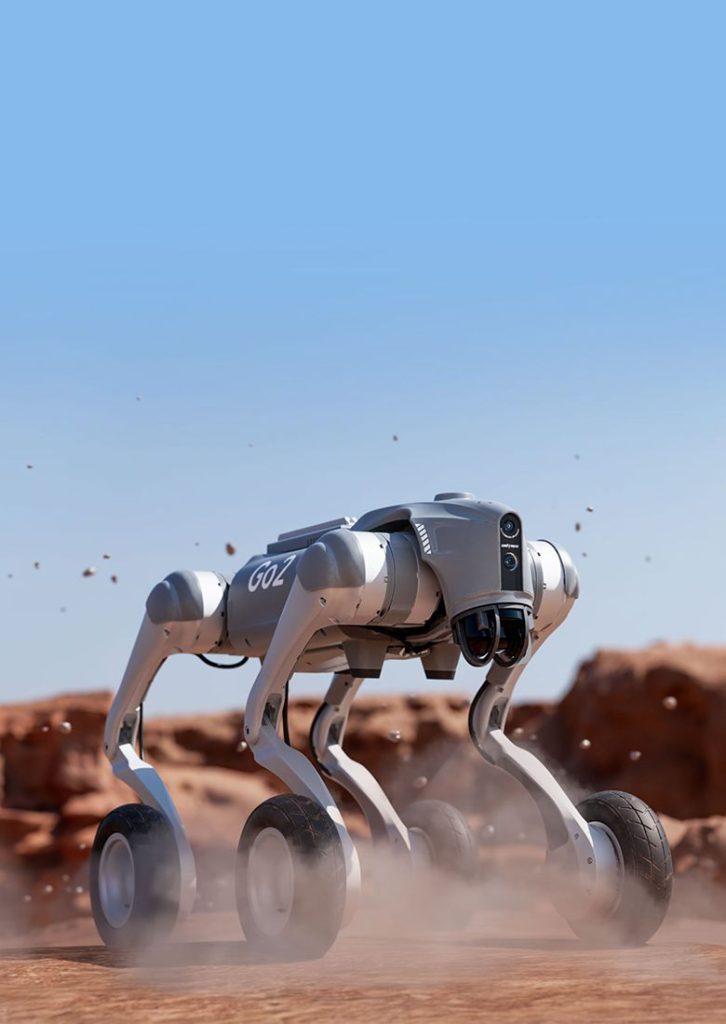


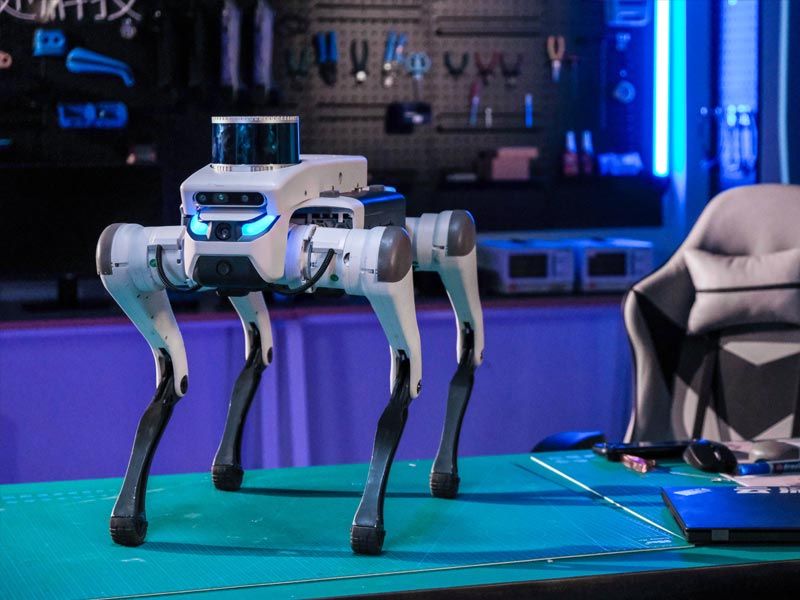

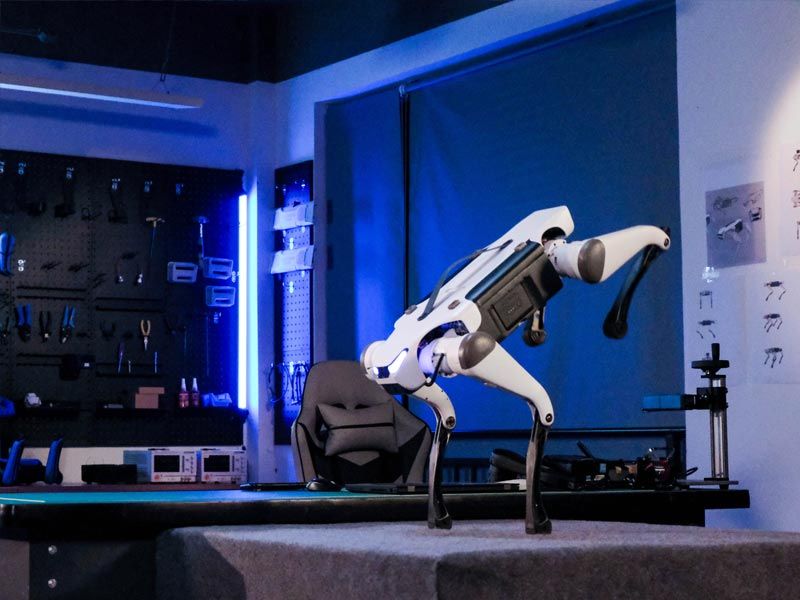
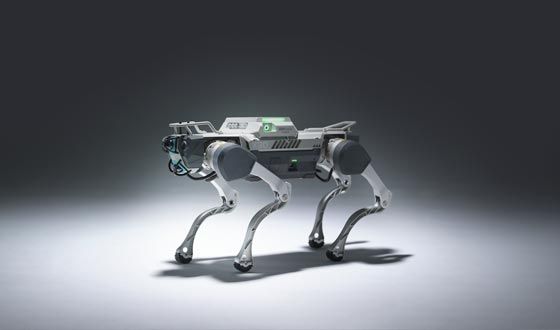
Performance and accessibility are well balanced in this quadruped robot . The Lite3’s small size, light weight, and portability make it simple to move and set up in a range of environments, including industrial sites, gravel walks, and woodland trails, as well as inside labs and classrooms. Its strength and mechanical integrity are unaffected by its light weight.
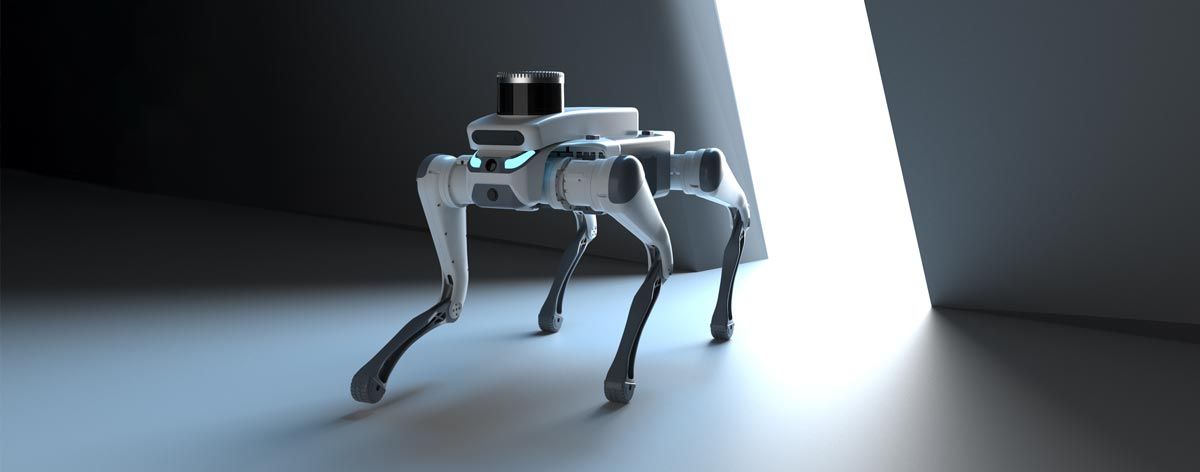
Key Features of Deep Robotics Lite3
In the field of legged robots, the Deep robots Lite3 stands out thanks to its robust feature set. From remarkable mobility to the integration of intelligent systems
1. Agility and Mobility
The Lite3’s remarkable mobility is among its most striking features. The Lite3’s four-legged design allows it to travel smoothly and effectively across uneven ground, stairs, and other difficult terrain, in contrast to wheeled or tracked robots that may find it difficult to navigate obstacles. It has the sort of animal-like agility that creates opportunities in both indoor and outdoor settings since it can walk, trot, pivot, and modify its stride on the move. This degree of control over movement not only increases adaptability but also increases security.
2. Adaptable and Modular Design
Adaptability was considered in the design of the Lite3. Its modular design makes it simple for users to incorporate or replace extra hardware parts. The robot may be set up to fulfill a wide range of project objectives, whether it is equipped with cameras for vision, LiDAR for spatial awareness, robotic arms for manipulation, or customized payloads for specific study. For developers and researchers that want a platform that can adapt to their needs without requiring them to start from scratch, this makes it particularly alluring.
3. Advanced Control Systems
The Lite3’s accuracy and responsiveness are powered by an advanced control mechanism at its core. To perform steady and smooth motions, the onboard computer analyzes real-time data from several sensors. This includes adjusting to abrupt changes in the terrain, regaining equilibrium, or even moving through pre-mapped areas on their own. Additionally, the robot is developer-friendly, supporting a wide range of programming tools and interfaces, such as Python, ROS (Robot Operating System), and custom SDKs.
4. Sturdiness and Dependability
Durability was a priority in Deep Robotics’ design of the Lite3. Strong, lightweight materials that offer structural stability without sacrificing portability make up its mechanical framework. Because the internal parts are shielded from dust, moisture, and small impacts, the robot can operate efficiently in a variety of settings, such as lab settings, industrial floors, and outdoor landscapes. The Lite3 is a robot you can rely on for extended usage, even under demanding operational conditions, thanks to its sturdy structure and dependable performance systems.
Deep Robotics Lite3 Applications
A very versatile quadruped robot, the Deep Robotics Lite3 may be used in a wide range of industries and applications thanks to its design. Its clever software, adaptable hardware, and strong capabilities make it a great option for both academic and practical settings. Here are some examples of how Lite3 is being applied in different fields:
1. Education and Research
For robotics laboratories, technical institutes, and universities, Lite3 is a superb teaching tool. It gives researchers and students a practical way to investigate important robotics ideas including path planning, machine learning, sensor integration, and locomotion control. Its adaptable hardware and ROS-compatible software promote experimentation and quick prototyping.
2. Examining and Monitoring
The Lite3 is ideal for industrial inspection and surveillance because of its smooth movement through intricate surroundings and ability to support a variety of sensors . It can be used at places like power plants, building sites, pipelines, or chemical storage facilities where human access is hazardous or restricted. It may gather visual and geographical data, identify abnormalities, and even send operators real-time video when equipped with HD cameras, LiDAR, or infrared sensors. This improves productivity and safety while lowering the need for human checks.
3. Rescue and Search
The Lite3 is a useful tool in disaster response situations because of its stability and agility across rough terrain. To find survivors or transport supplies, Lite3 can go through fallen buildings, woodland trails, or rocky terrain, unlike wheeled robots that can be hampered by debris, stairs, or uneven terrain. It may be very helpful in finding persons in hazardous or difficult-to-reach places when equipped with extra payloads like GPS trackers, thermal imaging cameras , or microphones. Its application in search and rescue reduces danger to human rescuers while also expediting recovery attempts.
4. Performances and Exhibitions
The Lite3 is also a powerful performer in marketing and entertainment because of its realistic motions and customizable choreography. Its canine-like movements, antics, and even interactive behavior may be utilized to enthrall audiences in live performances, tech exhibits, scientific museums, or public demonstrations. By transforming complicated technology into an approachable and breathtaking experience for people of all ages, educators and creative professionals have utilized Lite3 to bring futuristic narrative to life.
Deep Robotics Lite3 Technical Specifications
Power, adaptability, and mobility have all been carefully balanced in the design of Deep Robotics Lite3. Because of its technological characteristics, it may be utilized for a wide range of tasks, including fieldwork, research, and teaching contexts. The following are usually included in the basic specifications; however some may differ somewhat depending on extra modules or configurations:
1. Measurements
Because of its small size, the Lite3 is easy to deploy and carry around in both indoor and outdoor settings. Because of its streamlined body design, it can easily go through crowded areas, doors, and tight passageways, which makes it perfect for settings with limited space.
2. Weight
The Lite3 is lightweight and robust, weighing only a few kilos (precise weight varies depending on design). In addition to increasing its energy efficiency, its less weight makes it simple to transport, assemble, and re-deploy in various areas without the need for specific skills or equipment.
3. Capacity of Payload
The Lite3 is designed to carry more payloads despite its small size. Additional parts like LiDAR sensors, robotic arms, RGB and depth cameras, and custom hardware may be mounted by users. Because of this, Lite3 may be used for a variety of activities, such as mapping and manipulating the surroundings or conducting computer vision studies.
4. Life of the Battery
A high-efficiency, rechargeable lithium battery pack powers the Lite3. Depending on how hard it is used and how many sensors or payloads are attached, it can run for many hours on a full charge. The robot is appropriate for prolonged study sessions or long-term missions since it can operate continuously in the field thanks to its interchangeable batteries.
5. Interaction
The Lite3 supports several communication protocols, such as Bluetooth and Wi-Fi, to guarantee smooth operation and integration. These provide real-time telemetry, firmware changes, data sharing, and remote control. To prepare for IoT-enabled processes, the robot may also communicate with a cloud-based analytics platform or central control system.
6. Sensors
The Lite3’s extensive array of onboard sensors allows it to perform very well in autonomous navigation and spatial awareness. Typical sensor bundles consist of
– Inertial Measurement Units (IMUs) for orientation and motion detection
– Front and back high-definition cameras for object detection and visual input
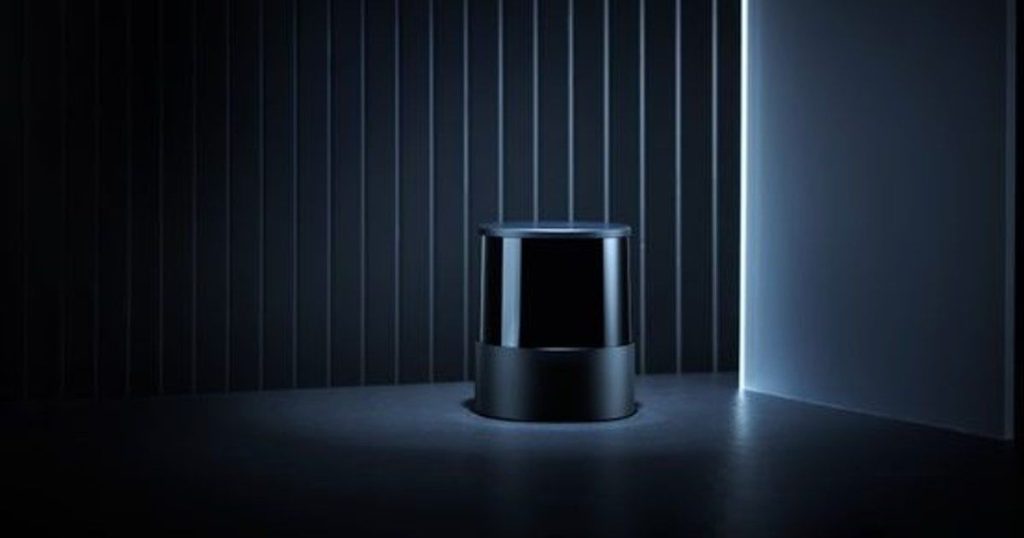
– LiDAR devices are optional for sophisticated 3D mapping and obstacle avoidance.
– Foot-force sensors for balance control and real-time gait optimization
The Lite3 can sense its surroundings in real time, adjust to changes, and make wise movement decisions either fully or partially on its own thanks to these embedded sensors.
Programming and User Interface
With a versatile and developer-friendly interface, Deep Robotics Lite3 is designed to be used by people of various technological backgrounds. The robot offers several methods for programming and controlling its operations, regardless of your level of robotics engineering expertise:
1. Interface for Graphical Users (GUI)
With the help of the Lite3’s user-friendly graphical user interface, users can manage the robot’s motions, keep an eye on its condition, and retrieve sensor data instantly. The interface makes interacting with the robot without writing code simple and is perfect for manual operations, live demonstrations, and system diagnostics.
2. Software Development Kits (SDKs)
The Lite3 offers stable SDKs for developers and academics that are compatible with well-known programming languages like Python and C++. These SDKs let customers create bespoke applications or incorporate the robot into bigger systems by offering APIs for motion control, sensor integration, data recording, and other features.
3. Tools for Simulation
Before releasing code and algorithms to the actual unit, users may test them in a virtual environment thanks to the robot’s support for simulation environments. These tools speed up the development cycle and lower the danger of harm, making them particularly helpful for prototyping, teaching, and troubleshooting.
In conclusion
With its unique combination of mobility, customisation, and cutting-edge control capabilities, the Deep Robotics Lite3 is a unique and approachable quadruped robot. From research and teaching to real-world field operations, its architecture supports a wide range of applications. Platforms like the Lite3 are essential to driving innovation and broadening the scope of what is feasible in autonomous systems as robotics technology develops further.