


This article examines the characteristics, advantages, and uses of the Robotiq 3-Finger Adaptive Gripper, gives insights into how it might revolutionize your automated operations, and investigates how it enhances robotic dexterity.
Knowing How to Use Robotic Dexterity
The capacity of a robot to precisely, quickly, and adaptably operate things of different sizes, shapes, weights, and materials is known as robotic dexterity. A skilled robotic gripper should be able to do the following, much like a human hand:
– Hold fragile and asymmetrical objects without causing harm.
– Execute intricate movements including twisting, pinching, and spinning.
– Manage settings that are dynamic or unpredictable.
– Keep your hold steady even when moving or interacting with outside forces.
These intricate requirements are frequently not met by conventional vacuum grippers or two-finger parallel grippers. Adaptive grippers , particularly those that imitate human hand motion, can be useful in this situation.
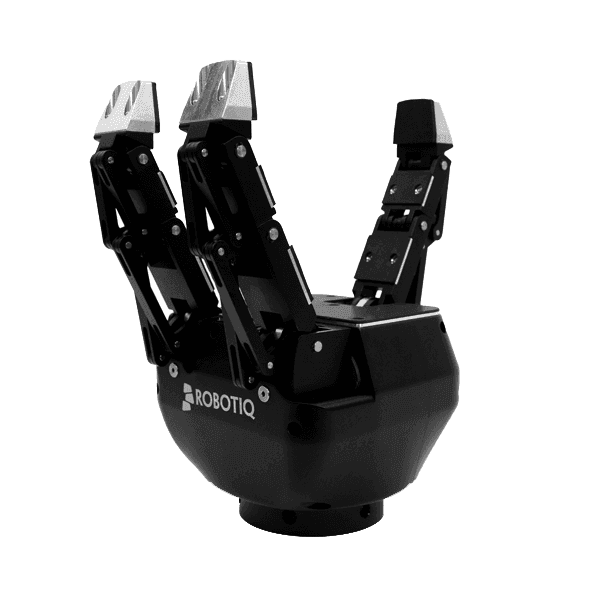
The Robotiq 3-Finger Adaptive Gripper: What is it?
In robotic manipulation, accuracy and adaptability are critical factors. And the Robotiq 3-Finger Adaptive Gripper does just that.
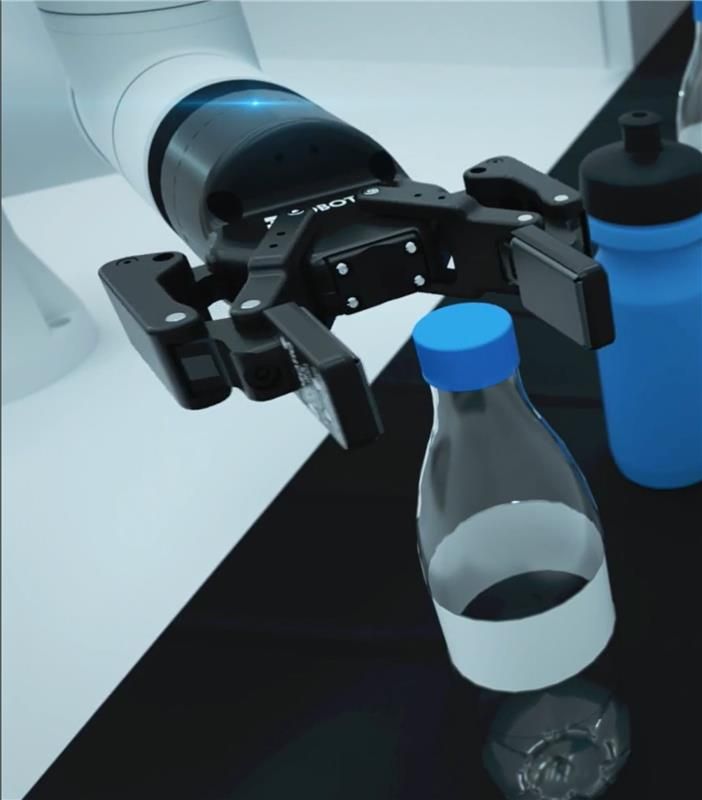
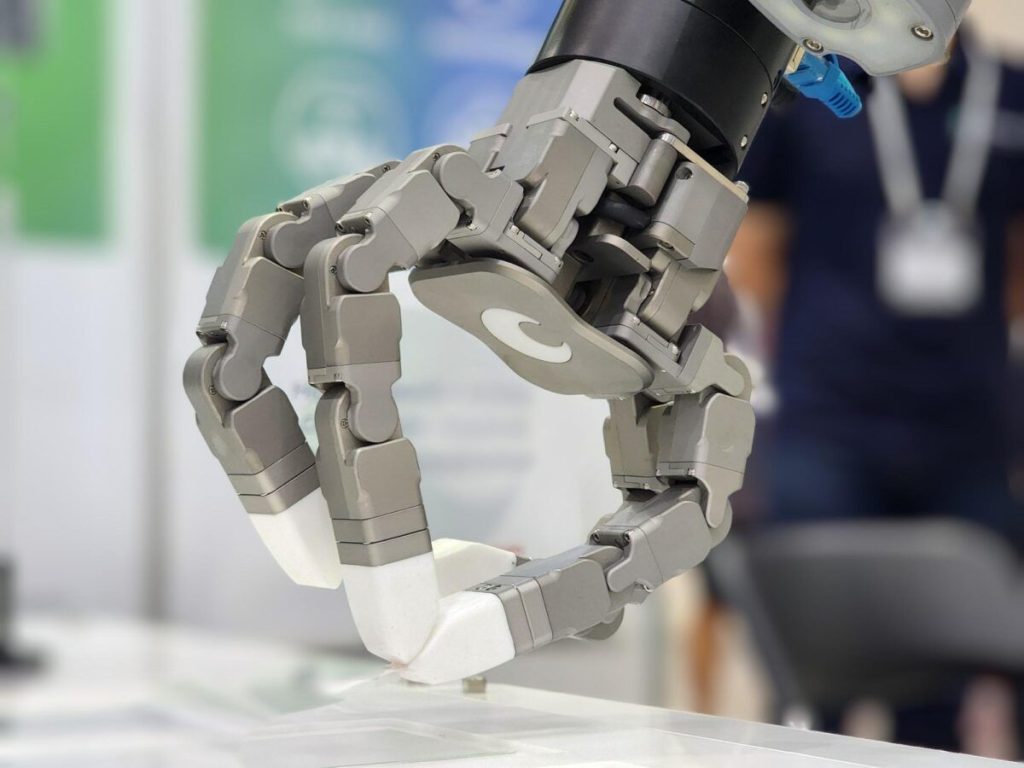
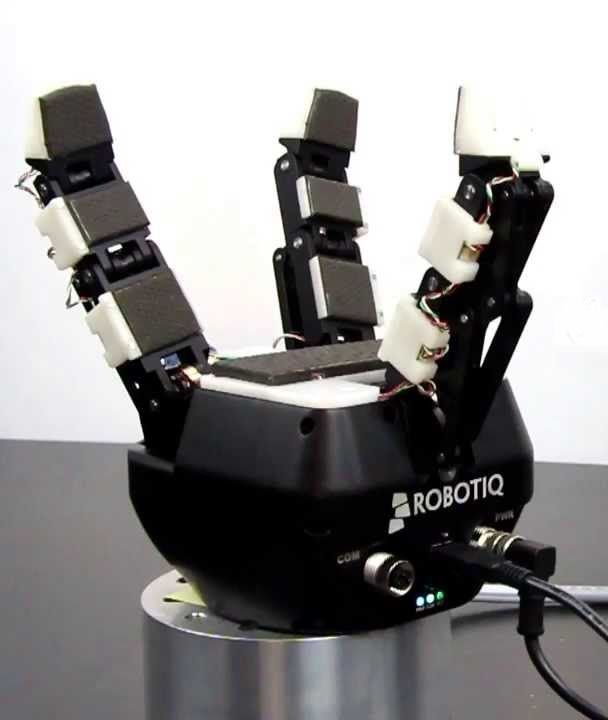
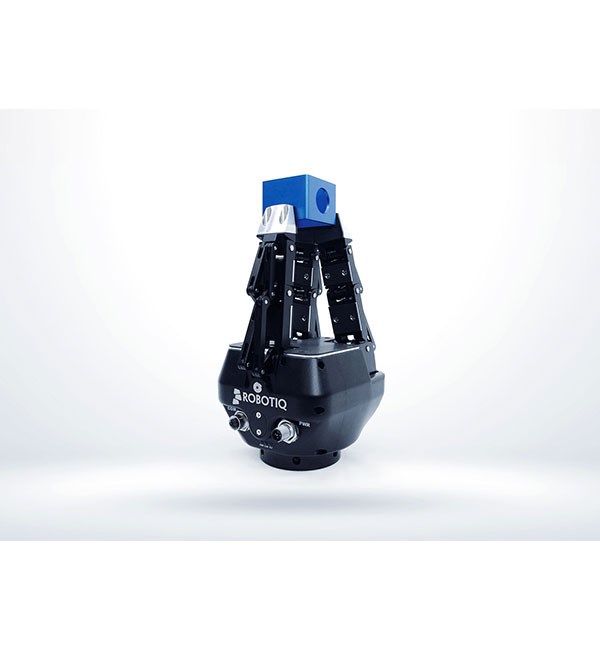
This robotic gripper is not just a “clamp-and-release” device; it is designed to mimic the adaptability of the human hand. It is a multifunctional, programmable end-effector designed to work with items of diverse sizes, shapes, and compositions.
Why is it unique?
1. Three fingers that are separately actuated
Because each finger works independently, the gripper may mimic a genuine hand by bending around intricate or irregular forms.
2. Various grip modes
This gripper changes its style of grip according to the task, from enveloping to pinching. With software commands, it can effortlessly convert between grip styles.
3. High payload capacity combined with force management
The gripper adapts its force to the task at hand, whether it’s lifting a big object or a delicate component. Don’t crush. Don’t slide.
4. Smooth integration
It is a plug-and-play solution for industrial, collaborative, or research applications since it is completely compatible with Universal Robots and other well-known brands.
Key Features That Enhance Dexterity
Let’s examine the distinctive qualities of the Robotiq 3-Finger Adaptive Gripper that give it unmatched dexterity:
1. Articulation with Multiple Fingers
Multiple joints in each of the three fingers provide subtle, organic grasping movements. The fingers may secure asymmetrical, cylindrical, or even soft and delicate things by conforming around them instead of just squeezing them.
2. A Variety of Grip Modes
Numerous grip styles are supported by the gripper, including:
– Pinch hold for tiny objects.
– broad grasp for heavy or huge things.
– Scissor grip for flat, thin items.
– cylinder-shaped handle for pipes and tubes.
A single robotic system may perform a variety of jobs by alternating grip modes without requiring reconfiguration.
3. Control of Force and Position
The fingers’ location and force may be precisely controlled thanks to Robotiq’s inbuilt sensors. This is crucial in situations where delicate objects are used or when a certain grip force is required to prevent damage or slippage.
4. Integration via Plug-and-Play
Plug-and-play kits allow the gripper to be easily attached to the majority of industrial robots , especially Universal Robots. With straightforward programming with URCaps and ROS (Robot Operating System) support, it minimizes the learning curve and implementation time.
5. Personalized Fingertips
For certain uses, users can design or 3D print their own fingers. This implies that the gripper may be customized to meet very precise requirements, whether in unstructured settings, manufacturing lines, or research laboratories.
Applications in the Real World
1. Advanced Production
Handling components with irregular forms or sensitive materials is a common difficulty in production, particularly in sectors like electronics or aircraft. The three-finger gripper can:
– Electronic boards should be picked up and placed carefully to avoid harming circuitry.
– Precision handling of turbine blades or aeronautical components is required.
– Collaborate with people in cooperative environments (cobots).
2. Storage and Logistics
– Accuracy and speed are critical in logistics. The gripper that adapts:
– manages packages with different textures and forms.
– performs well in order fulfillment facilities.
3. Prototyping and R&D
– This gripper facilitates the following in research settings where flexibility is essential:
– quick testing and prototyping of grasping techniques.
– manipulation of parts that have been specially developed.
– Human-hand contact with things is simulated.
4. Robotic Services
– For robots used in customer service, retail, or healthcare:
– handling goods or machinery with care.
– helping in senior care facilities with feeding or other tasks.
– securely interacting with people and fragile items.
Case Studies: Using Dexterity
First Case Study: Aerospace Production Line
The assembly of large, curved, and varying-sized turbine components needs to be automated for an aerospace customer. When combined with a UR10e robot , the Robotiq 3-Finger Gripper was able to:
– Accurately grasp and position the components 95% of the time.
– Cut down on assembly time by thirty percent.
Remove component damage caused by improper handling.
Case Study 2: Fulfillment Center for E-Commerce
The gripper was utilized to automate bin picking duties at a fulfillment facility. The 3-Finger Gripper and machine vision were used by the system to accomplish:
– 24/7 self-picking with a success record of more than 99%.
– A 50% decrease in the amount of human work needed.
– smooth handling of both soft and hard objects.
Customization and Programming: Designed for Both Novices and Experts
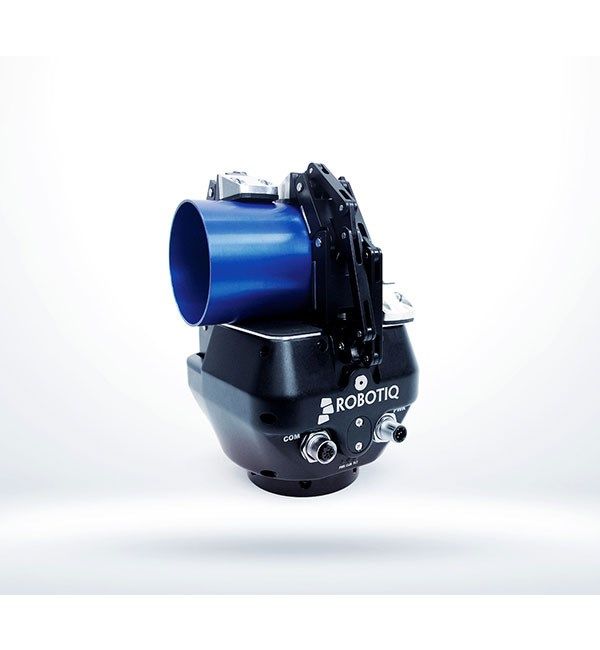
Regardless of your degree of robotics expertise, the Robotiq 3-Finger Adaptive Gripper’s remarkable ease of programming and customization is one of its best qualities.
The software tools in the gripper make it easy to get started and grow complexity as required, regardless of whether you’re an automation engineer or a curious novice learning robotics for the first time
1. URCap plug-and-play programming
Custom grip sequences may be created directly from the robot’s teach pendant while using Universal Robots thanks to Robotiq’s specialized URCap plugin. Just drag, drop, and deploy—no coding is required.
2. Complete ROS integration
The gripper integrates easily with ROS (Robot Operating System) for more experienced users. High-level control becomes possible as a result, such as when the gripper is integrated with AI algorithms, vision systems, or even unique machine learning models.
3. Adjust your grip.
Easily control timing, speed, and grip force using Robotiq’s user-friendly UI. Do you need to quickly grab something on a manufacturing line or carefully grip a delicate object? You have complete control.
Advantages Over Traditional Grippers
| Feature | Traditional Grippers | Robotiq 3-Finger Gripper |
|---|---|---|
| Object Compatibility | Limited to specific shapes | Adaptable to all geometries |
| Force Control | Often binary (open/close) | High-resolution force control |
| Flexibility | Needs retooling for different objects | Switches grip modes via software |
| Integration | Requires custom programming | Plug-and-play with major platforms |
| Dexterity | Minimal articulation | High dexterity with multi-joint fingers |
Where Dexterity Is Heading in the Future
The Robotiq 3-Finger Adaptive Gripper is a springboard for the upcoming wave of intelligent robotic manipulation, not merely a destination.
The way robots interact with the physical environment is changing dramatically because of advancements in technologies like computer vision, artificial intelligence, and tactile sensing
What will happen next, then?
Robotiq is already breaking new ground with: More intelligent fingers
Improved tactile sensors that can sense temperature, texture, and even material composition is being used in the development of new models. Consider a robot that could feel whether it is holding a glass fragment or some fruit.
AI-powered grip techniques
Grippers will soon be able to choose the best hold on unfamiliar things on their own thanks to machine learning. There is no need for preset guidelines because the robot will figure out how to grip objects based on past efforts.
Shapeshifting, modular designs
Gripping devices of the future could be able to change their form in the middle of an activity to accommodate new items. Imagine a single gripper that, without human assistance, can transform into a pinch tool, a claw, or a scoop.
Conclusion
Enhancing robotic dexterity is now essential in the quickly evolving field of automation; it is no longer a luxury. One of the most clever, adaptable, and simple-to-integrate gadgets made to satisfy this need is the Robotiq 3-Finger Adaptive Gripper. It can handle almost any form of item, adjust to difficult and dynamic jobs, and drastically cut down on development time—all while integrating smoothly with top robot brands. It gives robotic devices human-like mobility and decision-making, giving it more than just a mechanical hand.