


Cobot Vision Systems
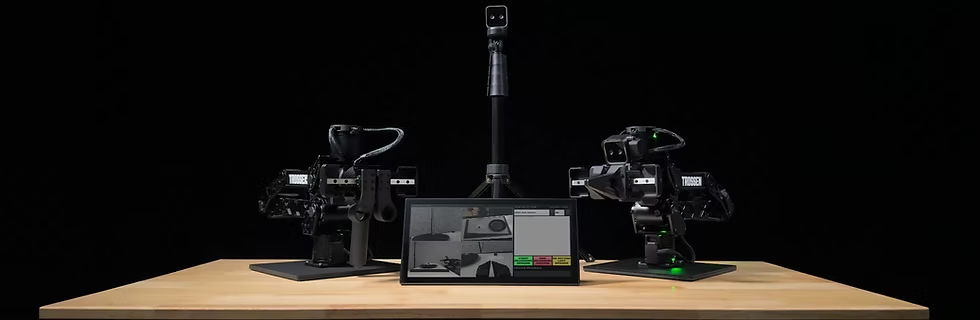
Vision systems equip collaborative robots with sight, enabling them to perceive their surroundings. Utilizing either 3D or 2D cameras, cobots can locate objects, identify patterns, and scan barcodes. This confers numerous advantages, with perhaps the most significant being in supply management. Unlike traditional setups where organized supplies are essential for robot operations, vision systems empower cobots to perceive the location of items without explicit organization. Furthermore, vision systems can be leveraged for optical inspections, such as detecting abnormalities in items, with Artificial Intelligence increasingly contributing to advancements in this domain.
In the realm of vision systems for collaborative robots, there exist various options, each suited to different applications. The choice of system type hinges on the specific tasks the robot needs to perform, considering factors like flexibility, cost, and usability. Broadly speaking, there are two primary categories of camera systems: 2D and 3D.
2D Vision Systems
2D cameras offer a more economical option compared to their 3D counterparts, albeit with somewhat limited functionality. While they can accurately measure the width and length of objects, they lack the capability to gauge height.
3D Vision Systems
In contrast, 3D cameras provide a comprehensive view, capable of measuring width, height, and length, greatly expanding the range of potential applications. However, this enhanced functionality comes at a higher cost. The ability to measure height makes 3D cameras particularly suitable for tasks involving variable object heights or scenarios requiring stacking, such as packing or palletizing boxes.
End of Arm Tooling
(EOAT)
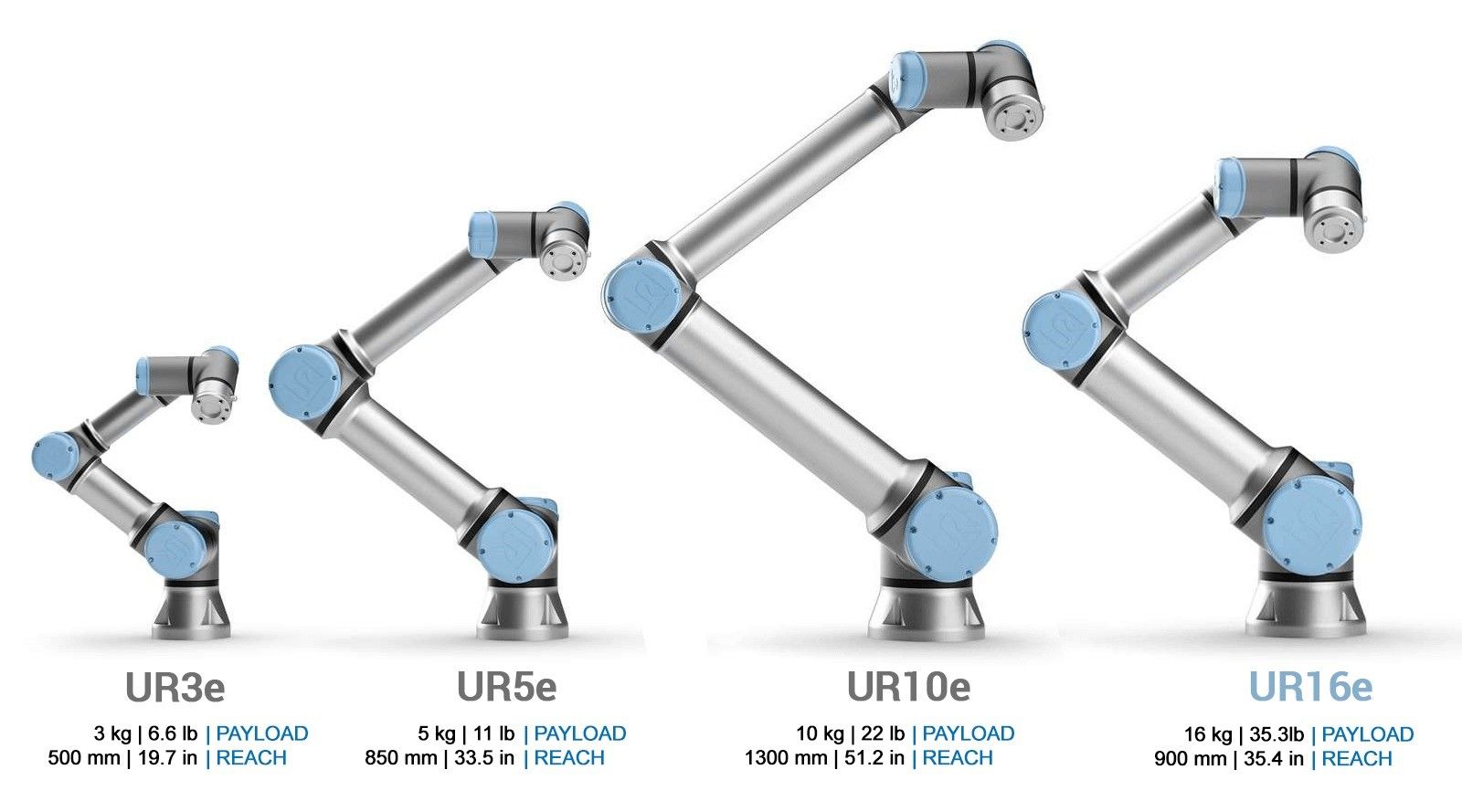
End of Arm Tooling encompasses a diverse array of tools that can be attached to a collaborative robot’s arm. Examples include sanders, screw machines, sensors, tool changers, glue dispensers, welding, and soldering tools. The development of EOAT has advanced significantly in recent years, enabling collaborative robots to assist a broader range of production processes and enhance overall production capacity for various industries.
Diverse Types of End-of-Arm Tooling
End-of-Arm Tooling (EOAT) opens up a myriad of opportunities for introducing new applications to collaborative robots (cobots). With ongoing advancements in tooling development, the future promises even broader capabilities for cobots. Here are several examples of the various EOAT tooling:
1. Glue Dispensers
These devices are designed to attach glue or sealant syringes to the end of a cobot’s arm. This configuration allows the cobot to follow predefined paths, dispensing glue or sealant with exceptional precision and uniformity. Consequently, there is minimal wastage as the exact amount of sealant or glue required can be precisely determined.
2. Collaborative Robot-Assisted Screwing Systems
These systems empower collaborative robots to independently or cooperatively attach products. Screwing, a repetitive and monotonous task, can become tedious for human workers. By integrating a collaborative robot with a screwing system, this task can be efficiently sustained over extended periods with high precision.
3. Sanders End-of-Arm Tooling (EOAT)
Equipped with a sander at its end, a collaborative robot is capable of sanding, polishing, or deburring surfaces effectively. Integrated sensors ensure that the cobot maintains a consistent force throughout the process, thereby ensuring uniform quality. The robot can be effortlessly trained to follow designated paths using intuitive software.
4. Cobot Sensors
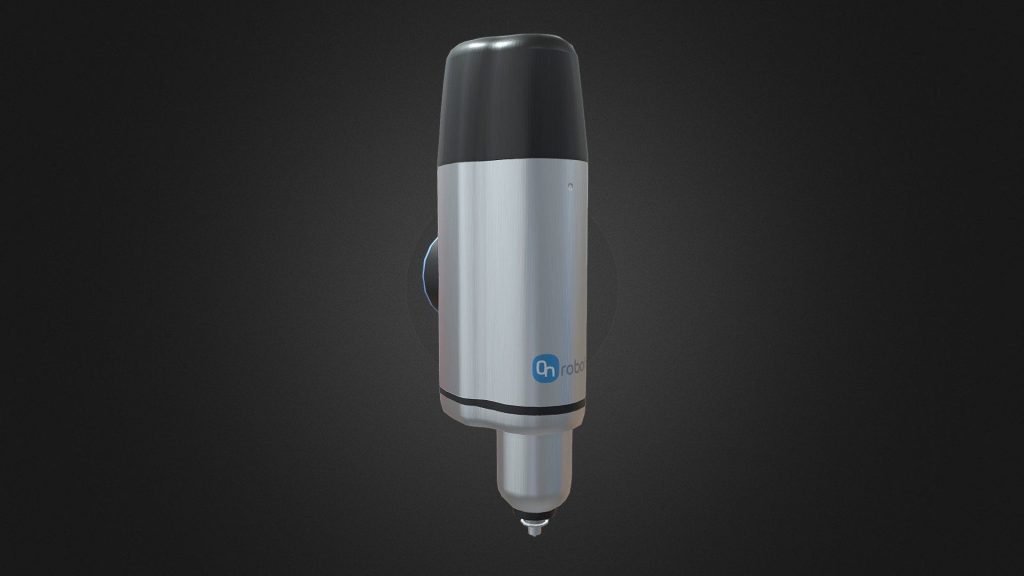
Collaborative robots are equipped with inherent sensors designed to imbue them with collaborative and sensitive capabilities. Occasionally, additional sensors may be required for tasks demanding heightened sensitivity. In such cases, an external force torque sensor can be utilized.
5. Cobot Soldering and Welding Equipment
Soldering and welding demand precision, making collaborative robots an ideal choice for these tasks due to their inherent accuracy. Integrating a welding torch or soldering iron with the cobot enables the automation of soldering and welding processes.
6. Cobot Grippers
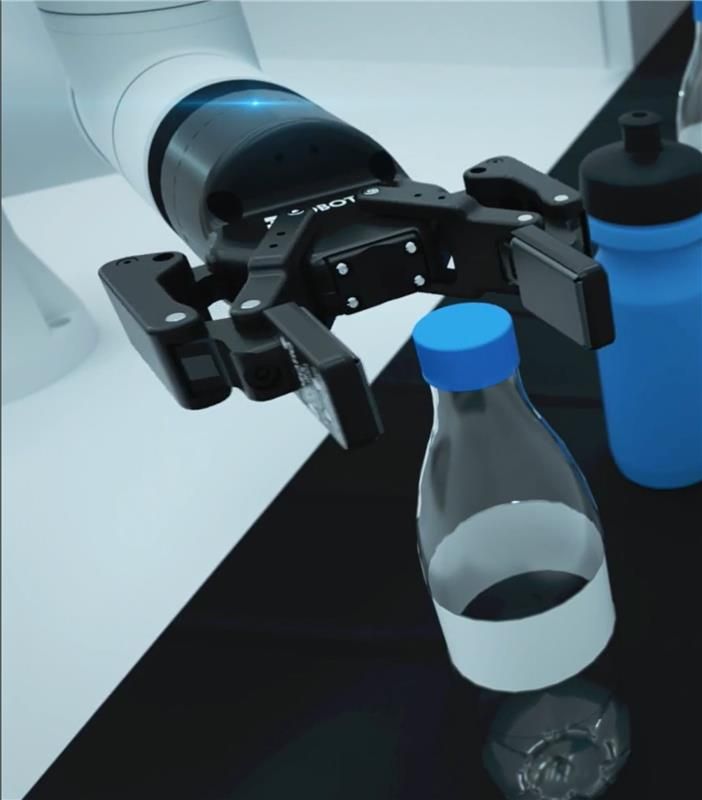
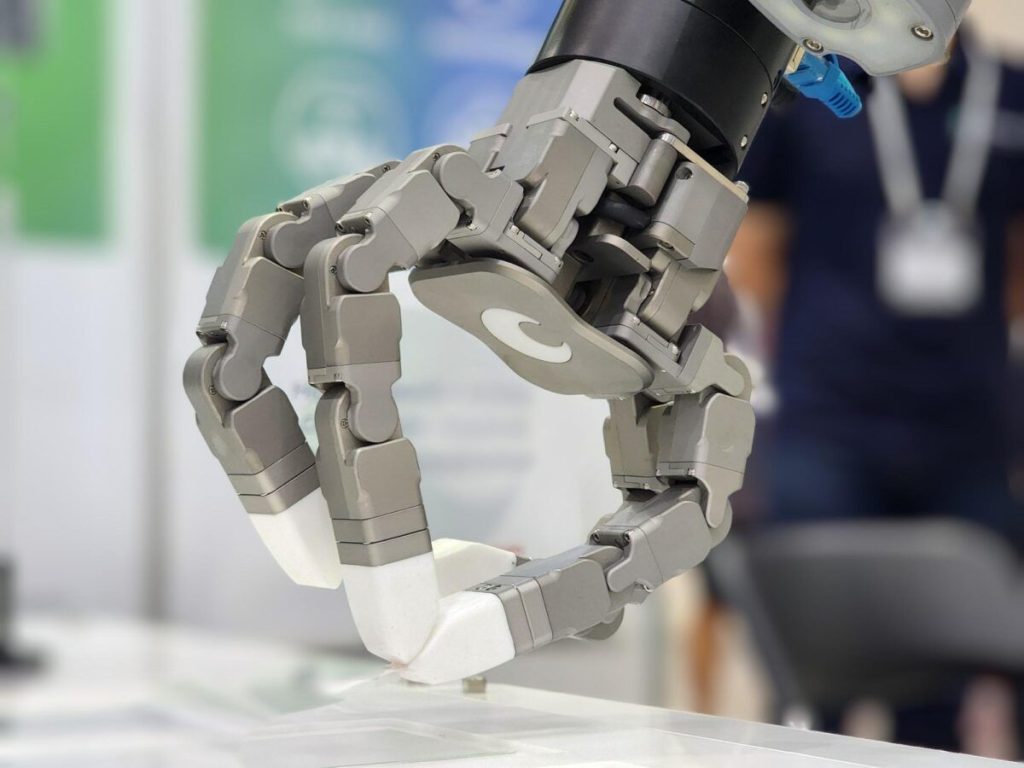
Grippers enable collaborative robots to grasp objects and relocate them elsewhere. Various types of grippers cater to different tasks, such as vacuum grippers, magnetic grippers, and finger grippers, each suited for specific applications. For example, vacuum grippers are ideal for lifting boxes, while soft grippers are suitable for handling food items. Grippers come with specifications including gripping width, gripping force, and payload capacity.
Varieties of Cobot Grippers
There exists a range of grippers tailored to different materials and tasks. Determining the most suitable gripper involves considering the weight and material of the objects to be handled.
1. Electric Grippers: Electric grippers offer precision and versatility, allowing regulation across multiple parameters such as finger positions and grip force, making them ideal for intricate tasks.
2. Pneumatic Grippers: Controlled by compressed air, pneumatic grippers are well-suited for less complex tasks. They are comparatively simpler to operate, cost-effective, offer high grip force, and are lighter than alternative grippers.
3. Finger Grippers: For tasks demanding precision, three- or two-finger grippers are optimal. These grippers can adapt to the shape of the object, ensuring secure and precise handling.
4. Cobot Software
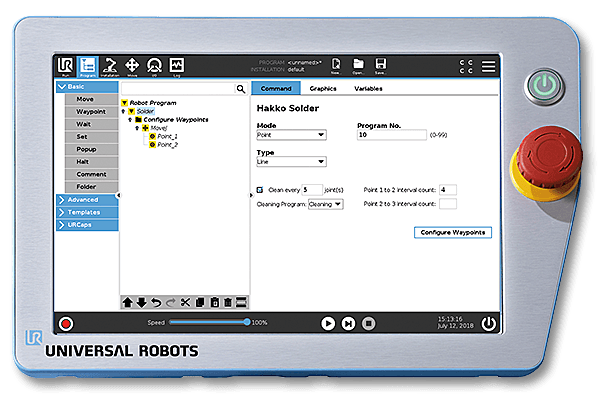
Numerous applications are accessible for designing and programming collaborative robot functionalities. Each collaborative robot comes with its own intuitive and user-friendly software. Furthermore, simulation applications are available to facilitate the creation of a robust integration of the robot prior to its implementation.
5. RoboDK
RoboDK stands out as a cost-effective and dominant robot simulator, boasting a vast library of over 500 robot arms and an intuitive interface requiring no programming expertise. Through offline programming capabilities, RoboDK enables cobot programming outside of the production space, facilitating seamless integration into diverse production projects like machine tending, pick-and-place, welding, packaging, and palletizing.
Considerations for Choosing a Collaborative Robot
When selecting a cobot, several factors should be taken into consideration:
Applications for Collaborative Robots:
Which sectors will see widespread adoption of collaborative robots? Which tasks typically characterized as dirty, dull, hazardous, or physically demanding will they assume? We need to consider various factors such as reach, accuracy, payload capacity, and more. Can collaborative robots outperform traditional industrial robots in certain scenarios? In what areas can they bridge the gap in workforce shortages? Additionally, which roles can be transitioned to more cognitive tasks?
In assessing the potential applications, it’s essential to refer to the international standard ISO 10218, encompassing both its first and second parts. This standard delineates four key features of collaborative robots: stop functionality, hand guiding, speed control, safety-monitored and separation monitoring, as well as force and power limiting. How well do these features align with the intended applications?
1. Systems Integrator
Secondly, it takes substantial skill to incorporate a cobot. Does anyone in the company have the time and skills needed to do this, or must a systems integrator be used to handle everything? A systems integrator will walk through the machine shop and assuredly tell what works and won’t work. They have performed all types of setups for several customers before, and they can offer something that will cost less even though the system integration is being outsourced. The reason is that there is no need to begin from scratch and reinvent the wheel.
2. Robotic Integrators
Furthermore, integrating a cobot requires significant expertise. Is there someone within the company with both the necessary skills and time to undertake this task, or should a robotic integrator be enlisted to manage the process entirely? A robotic integrator, also referred to as a system integrator, possesses the knowledge to assess what solutions will be effective within the machine shop environment. With experience across various setups for numerous clients, robotic integrators can provide cost-effective solutions, even when outsourcing the integration process. This efficiency stems from their ability to leverage existing frameworks rather than starting from scratch, saving both time and resources.
3. Risk Assessment
Assessing risk is crucial in deciding whether to employ a collaborative robot. Despite having sensors designed to halt their movements to prevent harm, collaborative robots still pose a potential risk of injury to individuals, even with their advanced sensor technology. To ensure the safety and effective operation of a collaborative robot, it is imperative that it is fully equipped with appropriate guarding mechanisms to protect workers.
Types of Collaborative Robots
Collaborative robots represent a recent innovation within the robotics sector, featuring various types. The diversity in programming and safety functionalities distinguishes different categories of collaborative robots. Each variant of these robots incorporates unique technologies and approaches to ensure a secure operational setting.
1. Power and Force Limiting Cobots
Collaborative Robots with Power and Force Limitation When discussing collaborative robots, many immediately picture those equipped with power and force limitation features. These robots are specifically engineered to facilitate direct interaction with human workers, eliminating the requirement for additional safety barriers, external scanners, or vision systems.
2. Safety Monitored Stop Cobots
Another type of collaborative robot, known as Safety Monitored Stop Cobots, is commonly deployed in scenarios where minimal human interaction with the cobot is anticipated. These cobots comprise traditional industrial robot designs outfitted with various safety sensors to detect human presence within their workspace. When a human is detected, the robot ceases operation instantly, ensuring a secure working environment for the human operator. Once the human task is complete, the robot can be easily restarted with the push of a button.
3. Speed and Separation Cobots
Speed and separation collaborative robots, often referred to as “fenceless” cobots, operate optimally with minimal human interaction while ensuring easy accessibility for humans. Safety laser range scanners are commonly employed to establish designated zones around the cobot’s workspace. When a person approaches the robot, its movements decelerate, eventually halting if the individual encroaches further into the cobot’s workspace. Once the human operator moves away from the cobot’s designated area, the collaborative robot automatically resumes its normal operating speed.
4. Hand Guiding Cobots
Hand-guiding collaborative robots are equipped with a safety-rated component at the end of the cobot’s arm, allowing operators to manually move or guide the robot. This hand guidance method is commonly employed for efficient and rapid programming of new cobot paths and positions by simply using one’s hand. It proves particularly useful in mobile applications where robots traverse between stations and require retraining for various tasks, as well as in scenarios where frequent reprogramming is necessary for new tasks. Collaborative robots represent a pivotal advancement in the automation sector, being the inaugural robotics technology that enables safe cooperation with human workers. Within a relatively brief period, four distinct types of cobots have emerged, with the potential for additional variations as the industry continues to evolve.
2. Applications of Collaborative Robots
With their array of tools, user-friendly software, and adaptability, collaborative robots, or cobots, excel in performing a wide range of tasks. Their diverse capabilities allow for the seamless integration of numerous activities into comprehensive automation applications. While theoretically capable of learning anything, in practice, cobots frequently find application in several key areas:
1. Sanding and Polishing: Utilizing built-in sensors, cobots can execute controlled actions such as sanding, polishing, or deburring while maintaining consistent force and following precise lines. This capability ensures uniform quality, making them ideal for tasks involving wooden, stainless steel, or metallic surfaces.
2. Screwing Jobs: Cobots are well-suited for simple, repetitive screwing tasks. With appropriate tools and programming, they can align objects with holes, assemble components with precision, and apply consistent force over extended periods—tasks impractical for human workers but easily sustained by cobots.
3. Pick-and-Place: This involves the picking and transferring of objects, such as sorting items from bins onto conveyors. Pick-and-place tasks can be scaled in complexity by adding various tools like double grippers or sensors to handle objects of different sizes.
4. Bin Picking: Similar to pick-and-place but with objects presented in non-standardized arrangements, cobots equipped with vision technology and intelligent software can identify and retrieve items from bins individually, facilitating tasks like supplying conveyor belts.
5. Palletizing: Collaborative robots optimize palletizing operations by efficiently stacking boxes using electric vacuum grippers. Advanced technologies eliminate the need for external air supplies, simplifying integration, reducing costs, and minimizing noise.
6. Soldering and Welding: Cobots offer unparalleled precision and consistency in soldering and welding applications, delivering high-quality results across diverse manufacturing environments.
7. Food Industry:Cobots address the automation needs of the food industry, overcoming challenges related to worker and food safety through innovative gripper technology.
8. Electronics Industry: Cobots equipped with sensors excel in handling delicate electronics components, automating tasks such as quality control and testing.