


In 2015, Teradyne Inc. (Nasdaq: TER), a North American designer and manufacturer of automatic test equipment, acquired Universal Robots . Presently, Universal Robots has established an esteemed reputation for its high-quality and accessible cobots, many of which have garnered innovation and design awards. With offices and training facilities spanning across the globe, the company remains highly accessible. In 2021,
What Are Universal Robots Cobots?
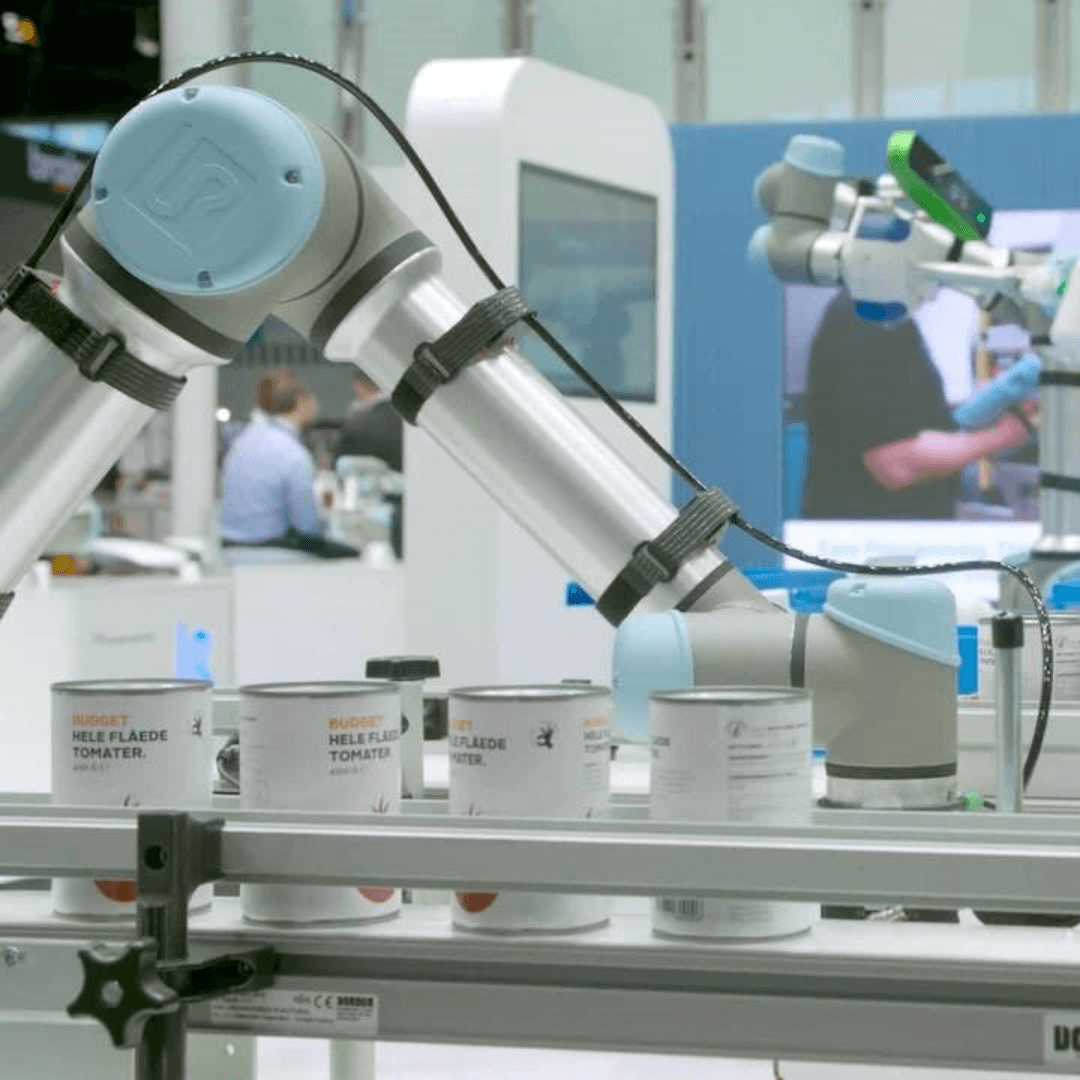
The advent of collaborative robots (cobots) has revolutionized the manufacturing sector and automated processes. Cobots, essentially robots designed to work alongside humans safely, have played a pivotal role in this transformation. Equipped with sensors capable of detecting issues and anomalies, cobots seamlessly adapt to their surroundings. In the event of interruptions or safety concerns, they automatically activate a safety mode, ensuring a secure working environment.
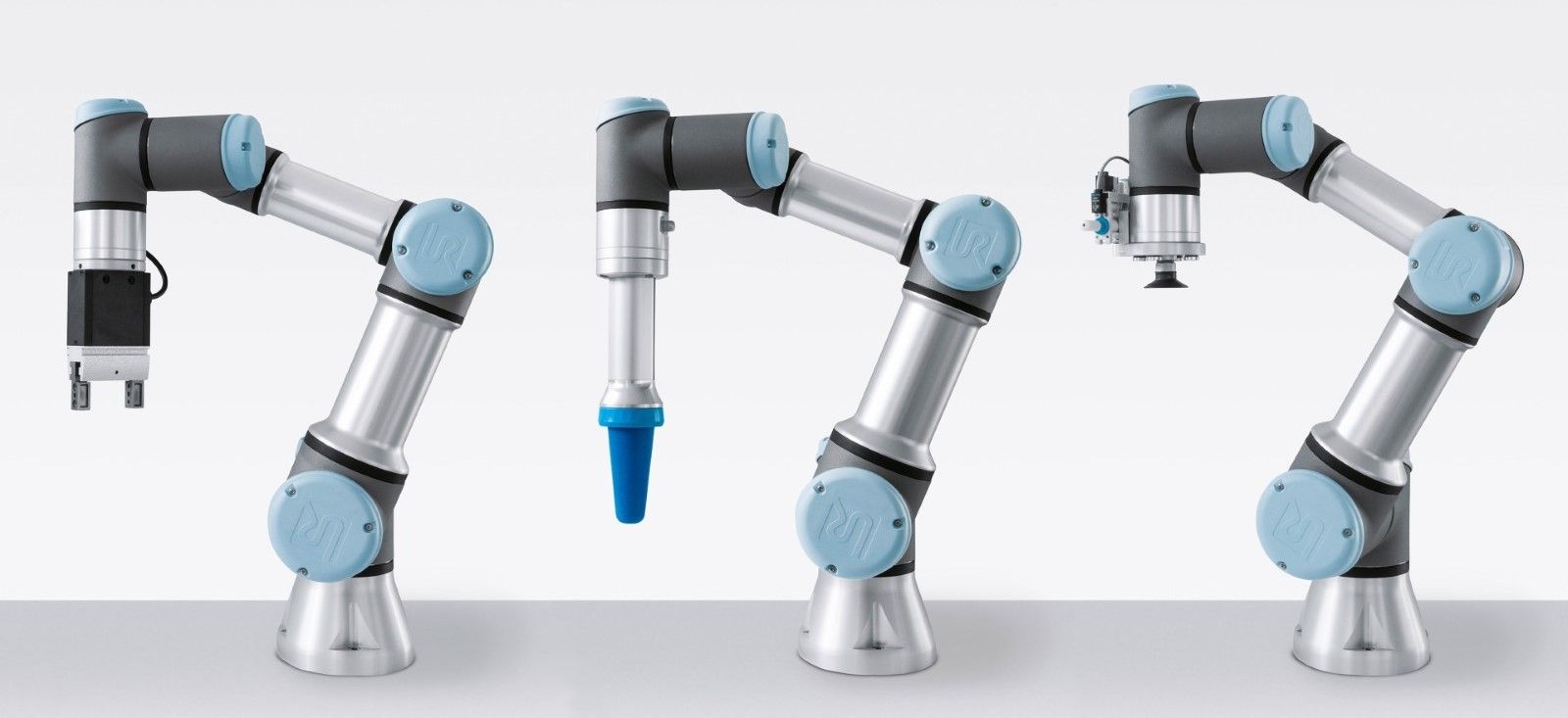
UR Products: Universal Robots UR3, UR5, UR16, UR10, and introducing the new UR20!
Unlike traditional robots that might continue operating regardless of safety concerns, cobots prioritize safety in human-robot collaboration. They automatically switch to a safety mode when issues arise, ensuring a secure environment for users and nearby workers. Contrary to the notion of replacing human workers, UR cobots are designed to complement and enhance a manufacturer’s team, offering smart and efficient assistance. Their intuitive operation accommodates employees with varying skill levels. Collaborative robots inevitably enhance human capabilities in tasks requiring precision and endurance, thereby reducing injuries and fatigue associated with repetitive and tedious tasks.
The Benefits of Universal Robot Cobots
Consistent Quality: Cobots offer unwavering quality by executing programmed tasks repeatedly, unaffected by human errors, fatigue, or staff shortages. Universal Robots ensure consistency and repeatability, particularly beneficial for industries like automotive and aerospace, where stringent regulations govern operations.
Improved Efficiency: Universal Robots significantly enhance productivity and throughput, proving indispensable in today’s competitive labor market. Cobots handle repetitive tasks during off-hours or when skilled workers are engaged in more stimulating projects, optimizing resource allocation. Moreover, their ability to operate around the clock boosts production capacity. Studies indicate that Cobots can reduce human workforce idle time by up to 85%.
Enhanced Safety: Equipped with built-in safety features like speed, force, and power limits, UR Cobots prioritize worker safety, enabling seamless collaboration between humans and robotic arms. The meticulous design of Universal Robots incorporates comprehensive safety measures, as endorsed by the American Society of Mechanical Engineers.
While risk assessments and safety precautions remain essential, cobots are deemed safer alternatives compared to the bulky industrial robots of the past era.
Cost Reduction: To remain competitive in both domestic and offshore markets with lower labor costs, manufacturers increasingly adopt automation. Universal Robots facilitate cost reduction through enhanced efficiency, mitigating the impact of rising labor costs on fixed-price contracts spanning multiple years.
Simplified Programming and Operation: Contrary to traditional industrial robots, Universal Robots cobots boast user-friendly programming interfaces. UR Cobot programming has revolutionized robot programming with intuitive graphical commands, eliminating the need for complex code. Some newer cobot solutions require no programming at all, crucial for industries facing challenges in recruiting skilled workers. Minimal programming requirements ensure almost anyone can operate a cobot with basic training.
Unparalleled Flexibility: UR Cobots feature a compact footprint and streamlined setup process, often requiring just a few hours. Additionally, they are highly mobile, enabling manufacturers to relocate them across the shop floor or different work areas swiftly. This level of adaptability surpasses that of conventional robots.
The Many Applications of UR Cobots
Over the past decade, industrial robot applications have experienced significant expansion, particularly with the emergence of collaborative robots, or “cobots.” While manufacturing and industrial settings remain primary environments for cobot implementations, their versatility extends across diverse sectors including agriculture, medical, and pharmaceuticals.
Collaborative robot applications span across various industries, encompassing assembly, dispensing, finishing, machine tending, material handling, welding, material removal, quality inspections, and beyond. Here, we outline three prevalent categories of cobot deployments.
Material Handling:
Material handling ranks among the most hazardous tasks in manufacturing, with materials like metal and plastic posing risks to human workers. Moreover, the repetitive nature of these tasks can lead to strain injuries. Robot integration in manufacturing significantly reduces workplace injuries. Mobile robot platforms adeptly handle heavy materials, facilitating safe transport across factory floors. Additionally, Universal Robots’ cobots excel in machine tending duties, including tasks involving robust CNC machines.
Assembly and Quality Assurance:
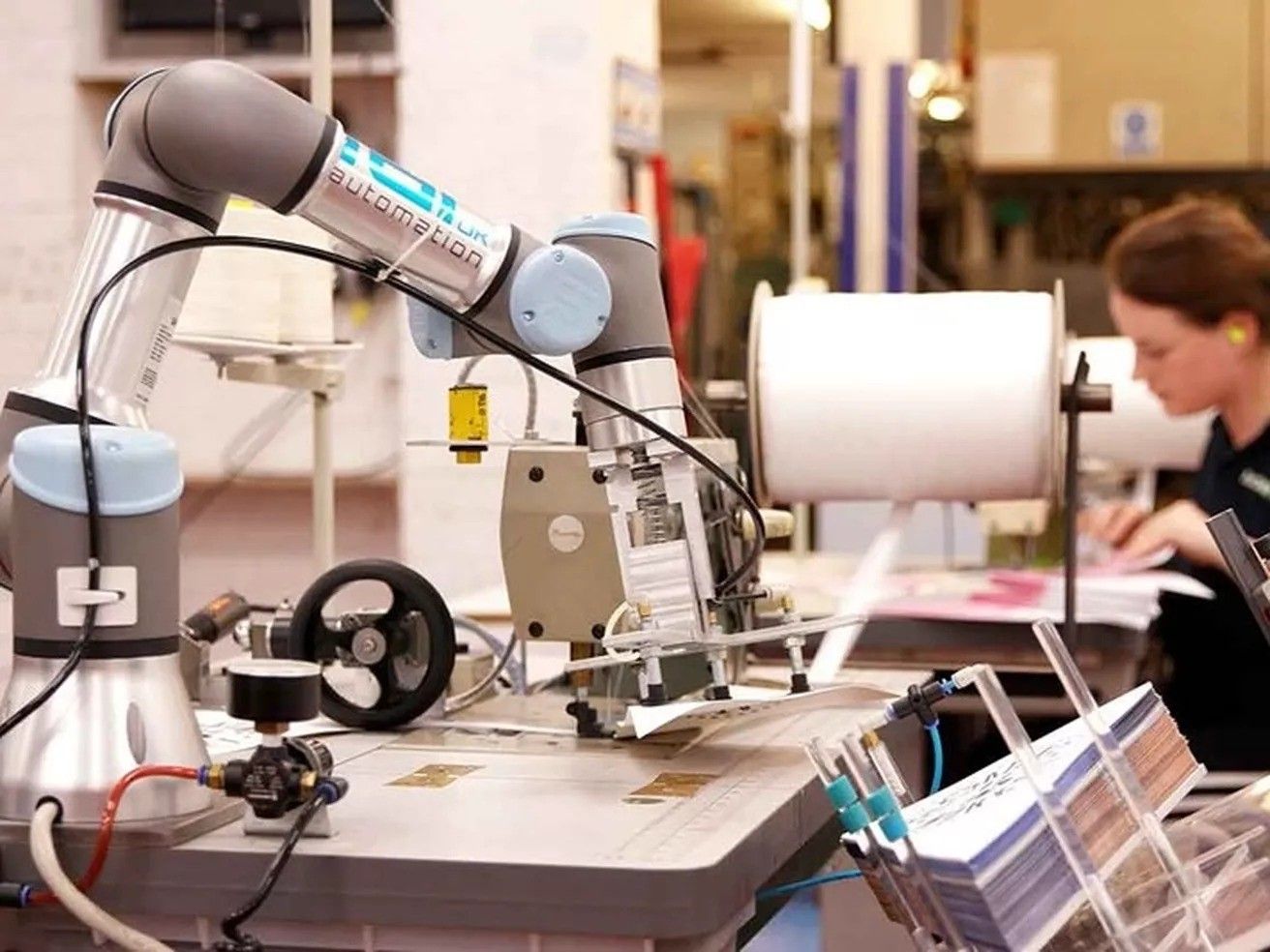
Cobot Pick & Place operations encompass tasks such as adding components to products during assembly, packing finished products into boxes, and stacking pallets. Universal Robots (UR) cobots are widely used in assembly and quality assurance applications due to their precision, consistency, and flexibility. UR cobots can significantly reduce assembly times and increase production speed. They can handle assembly of various materials like plastics, woods, metals with the right adaptor mechanisms. They can perform repeatable, accurate assembly processes such as screw driving , nut driving, part fitting, and insertion. The UR3 model offers infinite rotation for screw driving applications. The cobots can operate in reduced mode when a human enters the robot’s work area and resume full speed when the person leaves.
Material Removal:
Cobots are adept at handling various critical production tasks. For instance, they excel in material removal processes essential for any molding operation. These compact robots can evaluate molded components and efficiently trim excess metal or plastic, ensuring precision without jeopardizing worker safety. Furthermore, cobots equipped with dispensing tools are ideal for applying glue and other adhesives, while those outfitted with sanding kits from the UR+ platform can seamlessly polish components to achieve a pristine, smooth finish.
Dispensing
Cobots introduce flexibility, efficiency, and autonomy to your gluing, sealing, painting, and other dispensing operations. Equipped with built-in force/torque sensing, they ensure consistent flow and accurate placement, minimizing waste and scrap. Our flexible, lightweight robots can be effortlessly relocated to provide application support wherever needed. After completing a task, you can repurpose and redeploy the robot to different areas within your production facility.
Palletizing
Palletizing stands as a crucial end-of-line task across virtually all production facilities, making a reliable and efficient palletizing system essential for business continuity. However, it can swiftly become a bottleneck, primarily due to the following reasons:
1. There’s a growing shortage of labor in the manufacturing industry, with fewer individuals willing to undertake strenuous tasks.
2. Workers are exposed to high risks of injury, leading to extended absences and productivity disruptions.
3. Hiring and packaging costs are escalating steadily, adding financial strain to operations.
Considering these challenges, collaborative robotic palletizing emerges as a compelling solution. Collaborative robots can operate tirelessly, significantly boosting production output and expediting time-to-market for your products. Moreover, robotic palletizing presents a safer alternative for your workforce. With cobots managing the heavy lifting and stacking tasks, the risk of injury or strain on your employees is substantially reduced.
Finishing and polishing
Tasks such as polishing, buffing, and sanding demand precision and finesse. Collaborative robot arms equipped with force control provide a versatile solution, automatically adjusting position to achieve the desired force. Ensure consistent results in polishing and buffing by utilizing a Universal Robot with built-in force mode, even on curved and uneven surfaces.
Universal Robot Cobots in Welding
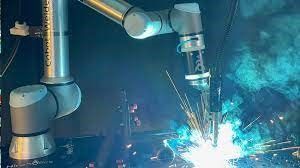
Universal Robot’s collaborative robots play a significant role in the welding industry, bringing notable benefits to welding businesses and teams. They are ideally suited for welding operations and provide distinct advantages compared to manual welding and conventional robotic systems.
1. Address Welder Shortages:
Welding cobots serve as a solution for companies facing a shortage of skilled welders. Systems like Cobot Welder simplify the welding process, eliminating the need for intricate programming or robotics expertise. Integrated with Universal Robots, these cobots empower welders to transition into operators, utilizing their welding skills more efficiently.
2. Enhance Precision and Quality:
By implementing cobots in welding workflows, manufacturers can enhance the consistency and quality of their produced parts. Welding cobots minimize human error, operate consistently round-the-clock, and don’t suffer from fatigue like manual welders. This ensures a higher level of precision and quality in welding tasks.
3. Boost Productivity:
Welding cobots significantly accelerate production cycles and increase throughput without compromising quality. Reduced spatter leads to less time spent on weld cleaning, enabling teams to complete welding projects faster and enhance customer satisfaction. Moreover, the automation and speed offered by cobots enable welding teams to handle a wider range of projects, including high-mix, low-volume, and longer continuous seams for large parts.
4. Enhance Workflow Control:
Welding cobots provide welding teams with greater control and flexibility over their production processes. Whether it’s improving project quality, managing timelines more effectively, or deploying cobots to various tasks based on complexity, welding teams can optimize workflows and better achieve their overall business objectives.
The Future of Cobots with Universal Robot
The outlook for cobots, such as those pioneered by Universal Robots, appears exceptionally promising. Amidst challenges like supply chain disruptions, widespread labor shortages, and heightened focus on cost efficiency triggered by the global pandemic, an increasing number of manufacturers—ranging from large corporations to small and medium enterprises (SMEs)—are embracing cobots to streamline operations.
According to ABI, the cobot market was valued at $600 million globally in 2021. This figure is projected to soar to $8 billion by 2030, with an anticipated growth rate of 32.5%. As cobot technologies evolve, the manufacturing sector is poised for significant transformation. Cobots will play a pivotal role in empowering a skilled workforce to enhance productivity and uphold quality standards.