


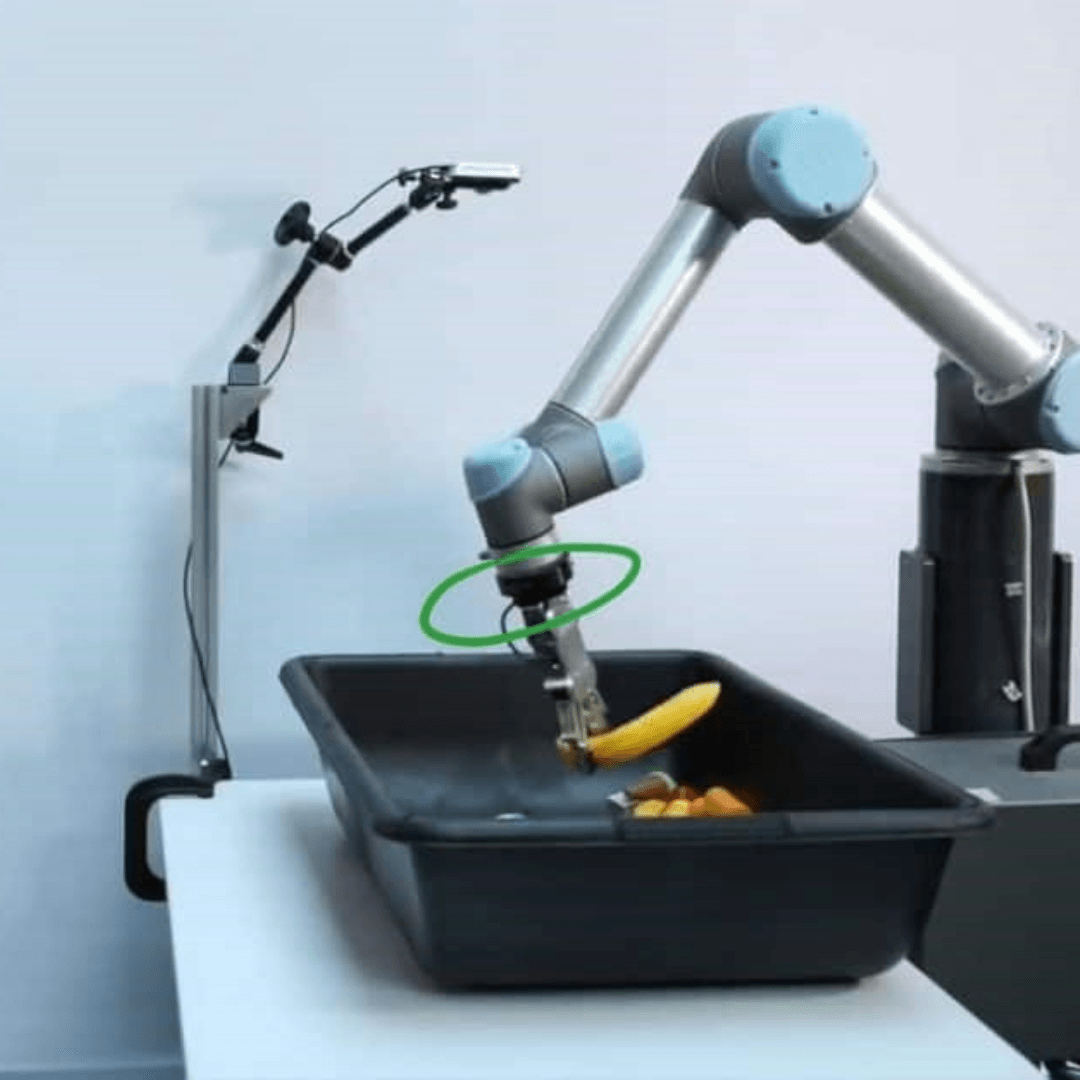
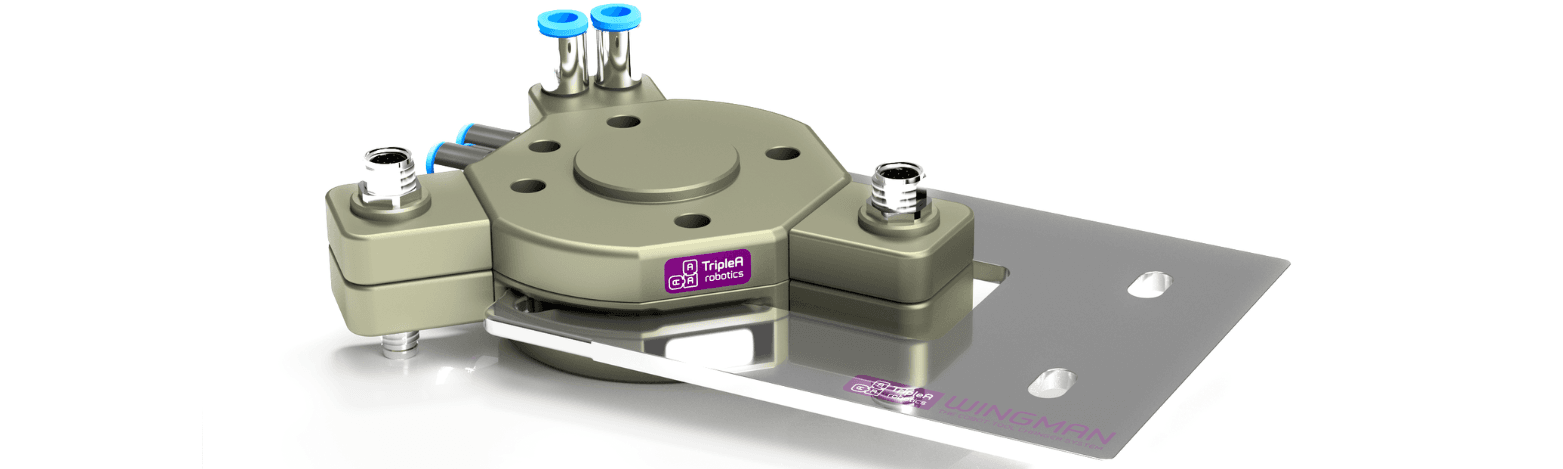

Robot tool changers empower versatile technological applications tailored precisely to each specific requirement. These systems can directly access a tool magazine, which houses an array of end-of-arm tools like welding guns, drill drivers, drilling and milling spindles, deburring tools, grippers , or vacuum effectors, customized to match diverse applications. Consequently, the robot autonomously selects the appropriate tool as dictated by the operational needs.
What is a Tool Changer?
In essence, a tool changer is a straightforward device affixed to the robot’s wrist, enabling seamless switching between different tools within a robotic cell. This capability allows for multiple tools to be stationed in one area, facilitating the completion of specific tasks. For instance, if a task involves assembly, testing, and material handling, the tool changer can efficiently select and switch between each required tool, enabling the robot to fulfill its designated functions consecutively.
Robot Tool Changers – An Overview of Applications
Essentially, robot tool changers find utility across a wide spectrum of manufacturing or handling processes ripe for automation. This diversity spans various industries, encompassing joining and connection processes like welding or screw fitting in process engineering, as well as assembly and machining tasks within the automotive sector, and the delicate handling of components in aviation.
Outlined below is a condensed summary of the primary applications and the corresponding benefits associated with robot tool changers.
Precision in assembly processes:Automating assembly processes within the manufacturing industry presents considerable challenges due to the myriad tasks robots must execute. These processes typically involve small batch sizes, intricate motion sequences, and meticulously synchronized contact forces. However, robot tool changer systems offer substantial potential to elevate the automation level of assembly lines significantly. Through fully automatic swapping of end effectors for tasks such as parts handling or finishing, substantial savings can be realized. Moreover, this automation liberates personnel resources and mitigates the risk of human error.
Fully automated welding: Advancements in automotive technology have had a profound impact on the automation of welding processes. As early as the 1980s, the automotive sector recognized the potential of robotic welding and gradually integrated suitable tool changers into chassis production. Through a methodical, incremental approach, the industry successfully automated the labor-intensive and error-prone welding processes involved in manufacturing automotive frames and chassis. This trend has persisted to the present day and has extended its reach into numerous other industries.
Versatile component handling: Handling components, whether picking, moving, or placing them, stands as a pivotal task within automated production lines. Given the diversity in component shape, material, and weight, the end-of-arm tools (EOATs) necessitate frequent changes. Dedicated changer systems serve this purpose, allowing independent switching between various gripper systems tailored for different components, such as parallel grippers, angular grippers, or needle grippers. This dynamic capability notably enhances the precision, efficiency, and productivity of component handling, facilitating variable component manufacturing.
Advantages of Robot Tool Changers
Incorporating contemporary tool changing systems into robotic production lines has yielded numerous benefits. These advantages extend beyond economic considerations to encompass occupational safety and sustainability. The primary motivations for adopting robot tool changers include:
Higher productivity: Automating tool changes on robotic systems enables efficient switching between various tools, thereby reducing downtime and optimizing production processes. This enhancement also enhances the versatility of robots. Depending on the frequency of tool changes, significant boosts in productivity can be realized.
Cost savings: Employing robot tool changers not only results in direct cost savings by requiring fewer robots, but it also yields various economic benefits. The heightened process efficiency facilitated by tool changers enables a substantial increase in robot utilization levels.
Industrial safety: Industrial safety considerations are paramount. Even with qualified personnel, manual robot tool changes entail potential accident risks. Furthermore, repetitive end effector changes can lead to significant ergonomic strain over time. Implementing robot tool changing systems alleviates human personnel from these hazardous tasks, minimizing accident risks and long-term ergonomic issues.
Flexibility and adaptability: Flexibility and adaptability are crucial in modern production environments, where agility is key to meeting evolving customer demands. Robot tool changers enable companies to swiftly implement these adjustments with remarkable efficiency. Standardized interfaces between the robot flange and the end effector facilitate seamless adaptation of the robot’s tasks, ensuring quick and flexible reconfiguration.
Robot Tool Changers In Practical Use
For years, highly automated production lines featuring intelligent, technologically advanced robots have spearheaded industrial production. These robotic systems exhibit remarkable precision, speed, and agility, seamlessly collaborating with humans or operating fully autonomously. In our video, we showcase compelling and practical examples illustrating how robot systems, aided by state-of-the-art tool changers, execute a diverse array of tasks with versatility and efficiency.
Tool Changing Mechanisms
Robots, mechanical devices programmed to carry out repetitive tasks, offer a multitude of benefits across various domains. In contemporary society, they’re gradually supplanting human labor and finding extensive integration into production lines. Their exponential advancement prompts us to innovate, refine, and devise additional technologies such as tools and sensors to complement them.
Collaborative robots, or cobots, stand out for their cost-effectiveness, flexibility, safety features, and user-friendliness. Operating near humans within defined spaces, they streamline automation processes, making them more accessible and efficient. Indeed, cobots represent the future of the automation industry.
Manual Tool Changer
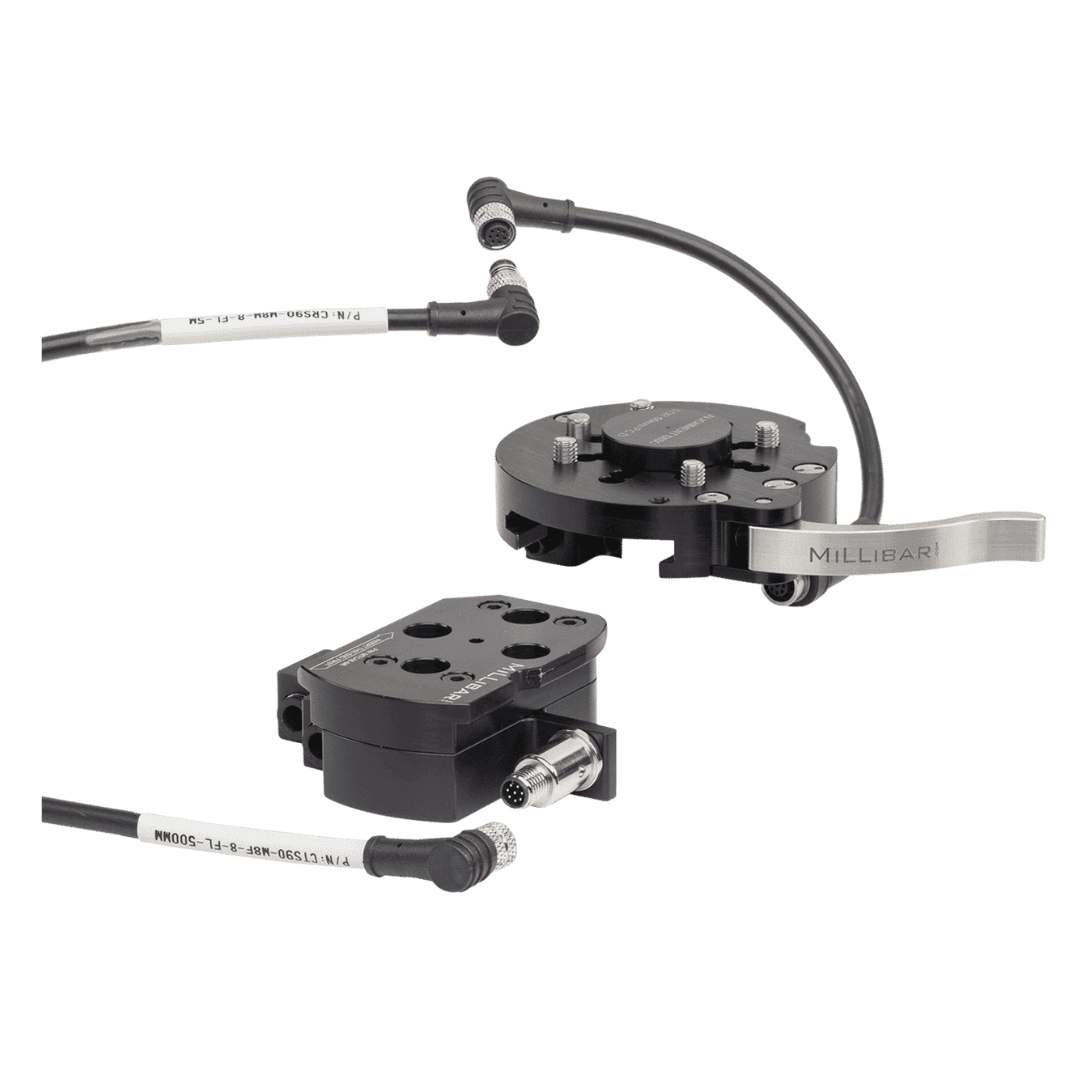
Manual tool changers are utilized in situations where the robot lacks an air supply system to assist in the locking procedure, or when tool changes are infrequent. Consisting of a tool side and a master side plate, manual tool changers offer a straightforward solution. The master side plate remains permanently connected to the robot arm, while the tool side connects to one of the tools. The connection between the master side and the tool side is manually executed by human hand.
Various models of manual tool changers are available on the market, with a primary focus on their locking mechanisms. For instance, one manual tool changer model, such as the HWS by Schunk, features a lever for locking and unlocking. Another model, the ATI MC-10, is renowned for its cost-effectiveness and compatibility with Universal Robots (UR). This model employs a twisting mechanism for locking and unlocking, providing a practical solution for diverse robotic applications.
Automatic Tool Changer
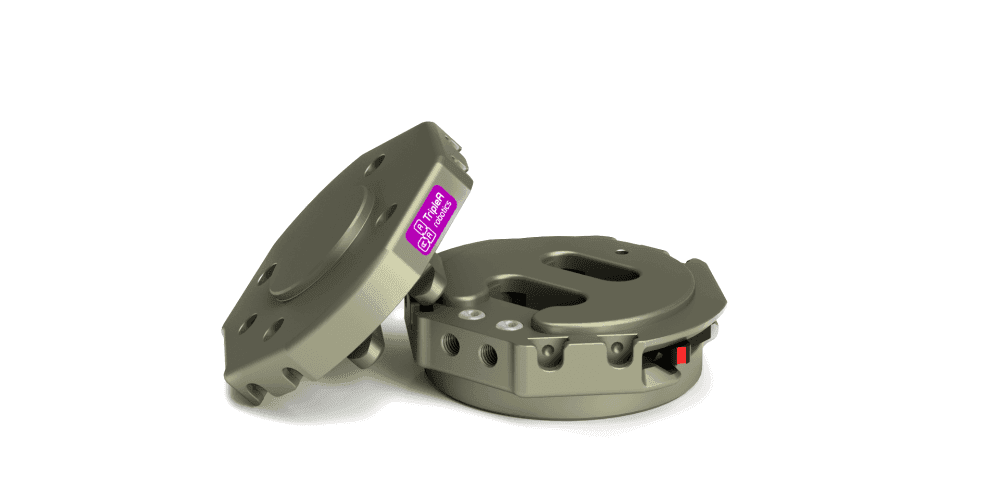
Automatic tool changers operate similarly to manual tool changers, with the primary distinction being that the tool is changed automatically by the robot’s wrist or through other automated means. Pre-programming the robot is the only requirement for operation.
Automatic tool changers are typically categorized into two groups: active and passive. Active tool changers employ electrical or pneumatic actuators to function. For example, Figure 6 illustrates an active tool changer manufactured by ATI Industrial Automation. This tool changer is operated by a pneumatically actuated piston, exemplifying the functionality of an active tool changer.
In a passive system, the locking and unlocking of the tool are facilitated by the wrist motion of the robot. Additionally, other locking methods such as robot pressing and spring mechanisms are employed within the passive tool changing system.
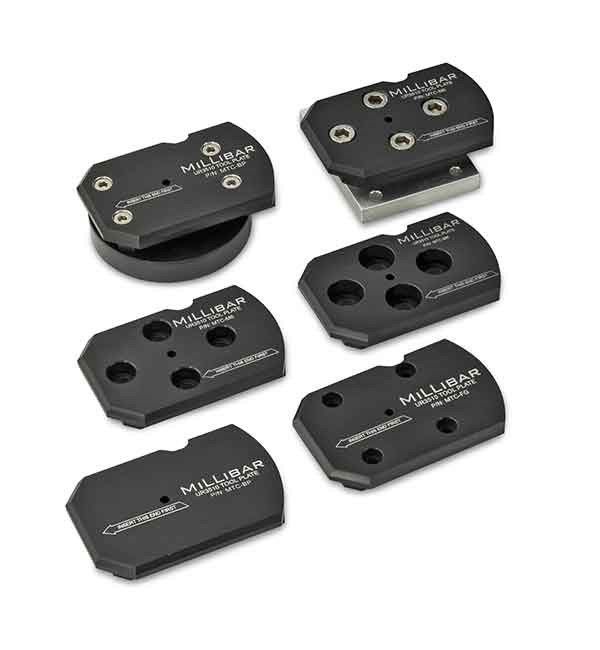
Choose the Right Robotic Tool Changer for My Application
Choosing the right robotic tool changer for your application involves considering several factors to ensure compatibility, efficiency, and optimal performance. Here’s a guide to help you make the right choice:
1. Application Requirements: Start by clearly defining your application’s requirements. Consider factors such as the types of tasks the robot will perform, the frequency of tool changes, the weight and size of the tools, and any specific environmental conditions.
2. Type of Robot: Determine the type of robot you’ll be using (e.g., industrial robot, collaborative robot) and ensure compatibility with the tool changer system you’re considering.
3. Tool Compatibility: Check the compatibility of the tool changer with the tools you plan to use. Consider factors such as tool size, weight, and interface requirements. Ensure that the tool changer can accommodate a variety of tools commonly used in your application.
4. Automation Level: Decide whether you need a manual or automatic tool changer. Automatic tool changers offer greater efficiency and flexibility for applications with frequent tool changes, while manual tool changers may be sufficient for less dynamic applications.
5. Integration: Consider how easily the tool changer can be integrated into your existing robotic system. Look for tool changers that are compatible with your robot’s controller and programming software to streamline integration.
6. Reliability and Durability: Choose a tool changer that is reliable and durable enough to withstand the demands of your application. Look for features such as robust construction, sealed mechanisms to prevent contamination, and a proven track record of reliability in similar applications.
7. Safety: Ensure that the tool changer system complies with relevant safety standards and includes features such as collision detection and fail-safe mechanisms to prevent accidents and protect both equipment and personnel.
8. Cost:Consider your budget constraints and weigh the cost of the tool changer against its features, performance, and long-term benefits for your application.
9. Supplier Support: Evaluate the level of support provided by the tool changer supplier, including technical assistance, training, and after-sales support, to ensure a smooth implementation and ongoing operation.
By carefully evaluating these factors and consulting with experts in robotic automation, you can select the right robotic tool changer to optimize efficiency and productivity in your application.












