


How do Soft Grippers Work?
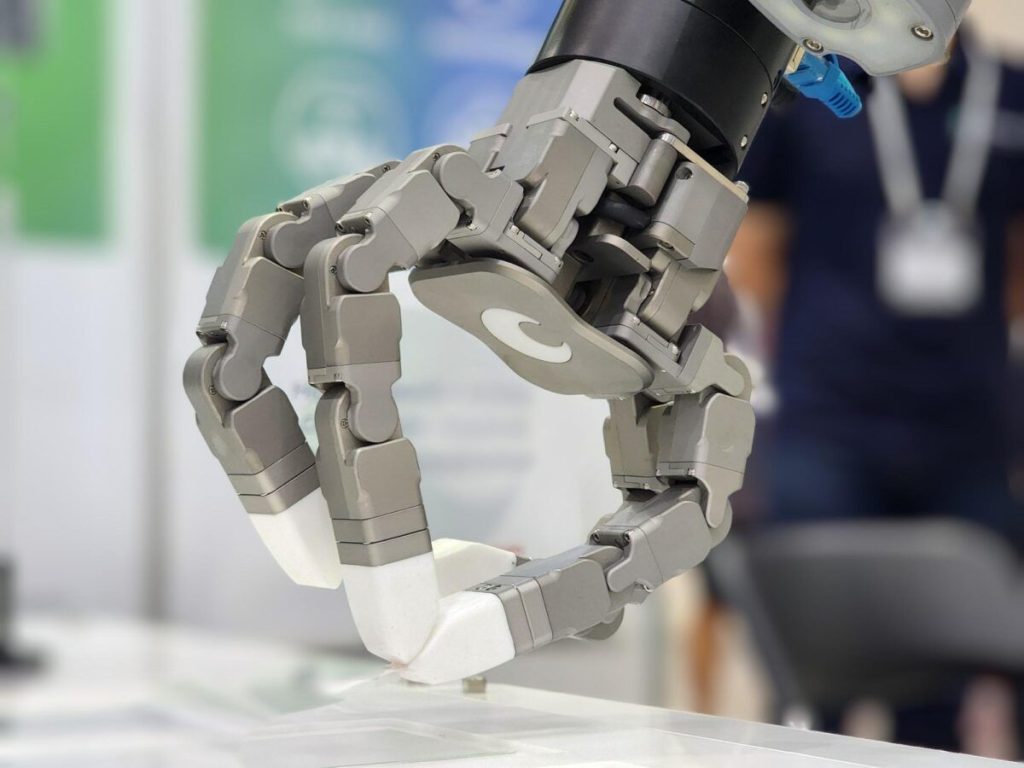
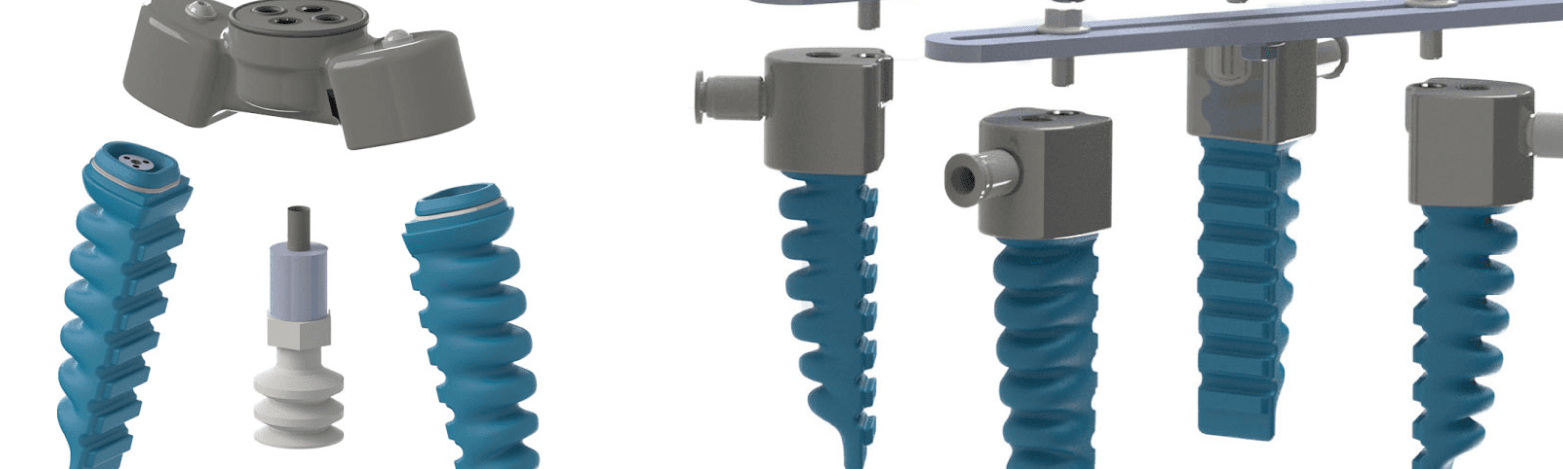
Soft grippers utilize principles of pneumatics, hydraulics, or smart materials to achieve gripping motion. Pneumatic soft grippers, for instance, rely on the controlled inflation and deflation of embedded air chambers to grasp objects. This enables them to exert gentle yet firm pressure, mimicking the dexterity of human fingers. Alternatively, some soft grippers leverage shape-memory alloys or polymers that change their shape in response to external stimuli such as temperature or electric current.
What is the principle of Soft Gripper?
Soft grippers are designed with flexibility and adaptability in mind, allowing them to conform to the unique shapes and sizes of objects they handle. Unlike conventional rigid grippers that depend on intricate mechanical systems for gripping, soft grippers employ pliable materials like silicone, rubber, or elastomers.
These grippers are governed by several key principles, including:
1. Flexibility: Soft grippers are engineered with flexibility in mind, enabling them to adapt and reshape according to external pressures. This characteristic flexibility allows them to seamlessly conform to the unique contours of the objects they grasp, providing both secure and gentle handling.
2. Gripping Motion: Soft grippers utilize diverse methods for gripping, including pneumatic, hydraulic, or smart material-based actuation. For instance, pneumatic soft grippers achieve gripping by precisely inflating and deflating embedded air chambers.
3. Delicate Touch: Soft grippers handle objects with care, making them ideal for fragile or sensitive items. Their gentle grip minimizes the risk of damage to both the object and its surroundings.
4. Tailored Solutions: Soft grippers can be customized to suit specific needs by tweaking factors such as material firmness, surface feel, and overall design. This customization facilitates optimal performance across various industries and applications.
Soft grippers are designed to flexibly conform to objects, gently grasping them through compliant materials and advanced actuation methods, which makes them highly versatile for numerous robotic tasks.
Which type of gripper is Best
Selecting the optimal gripper type hinges on diverse considerations, such as the application’s specifics, the properties of the objects involved, operational needs, and budgetary limitations. Nevertheless, delving into the pros and cons of various gripper types prevalent in robotics can provide valuable insights for making informed choices.
1. Precision Perfection: Rigid grippers excel in providing meticulous control over both grip strength and placement. This makes them an ideal choice for delicately handling items with exacting specifications.
2. Unwavering Stability: With rigid grippers, you can count on a steadfast hold without any distortion. This reliability proves invaluable for tasks demanding unwavering manipulation.
Challenges Despite their effectiveness, rigid grippers have certain limitations. Their fixed design may hinder adaptability when it comes to handling objects with diverse shapes, sizes, or textures. Moreover, their rigidity poses a risk of causing damage to delicate or sensitive items during gripping
Benefits of Soft Gripper:
1. Soft grippers stand out for their remarkable ability to handle objects of irregular shapes, sizes, or textures with ease, all credit to their flexible and deformable structure.
2. Moreover, their gentle handling approach significantly reduces the risk of damage to both objects and the surrounding environment, owing to their inherent flexibility.
Challenges
1. Reduced Precision: While soft grippers provide excellent flexibility, they may lack the precise control offered by rigid grippers. This could be considered a drawback, especially for applications that demand high levels of accuracy.
2. Considerations for Gripping Force: It’s worth noting that soft grippers might have limitations in terms of gripping force, potentially affecting their suitability for specific tasks.
Benefits of Vacuum Gripper
1. Versatility: Vacuum grippers showcase remarkable adaptability, capable of efficiently handling an extensive array of objects varying in shapes, sizes, and materials, provided they possess flat surfaces.
2. Strong Gripping Capability: Vacuum grippers are renowned for their impressive ability to exert substantial force, rendering them ideal for lifting heavier objects with ease.
Challenges
1. Surface Considerations: Vacuum grippers depend on establishing airtight seals with object surfaces, which can constrain their efficiency when dealing with porous or irregularly shaped objects.
2. Environmental Sensitivity: Factors like dust, moisture, or surface roughness can influence the performance of vacuum grippers, underscoring their sensitivity to environmental conditions.
Benefits of Electric Grippers:
Electric grippers provide precise grippermanipulation of gripping force, speed, and position, catering to diverse applications with accuracy and versatility.
Energy Savings Electric grippers generally have a lower energy consumption than pneumatic grippers, which translates to reduced operational costs.
Challenges
1. Initial Investment Consideration: Electric grippers often entail a higher initial cost when compared to pneumatic or basic mechanical grippers.
2. Complexity: Electric grippers may require more sophisticated control systems and maintenance compared to simpler gripper types.
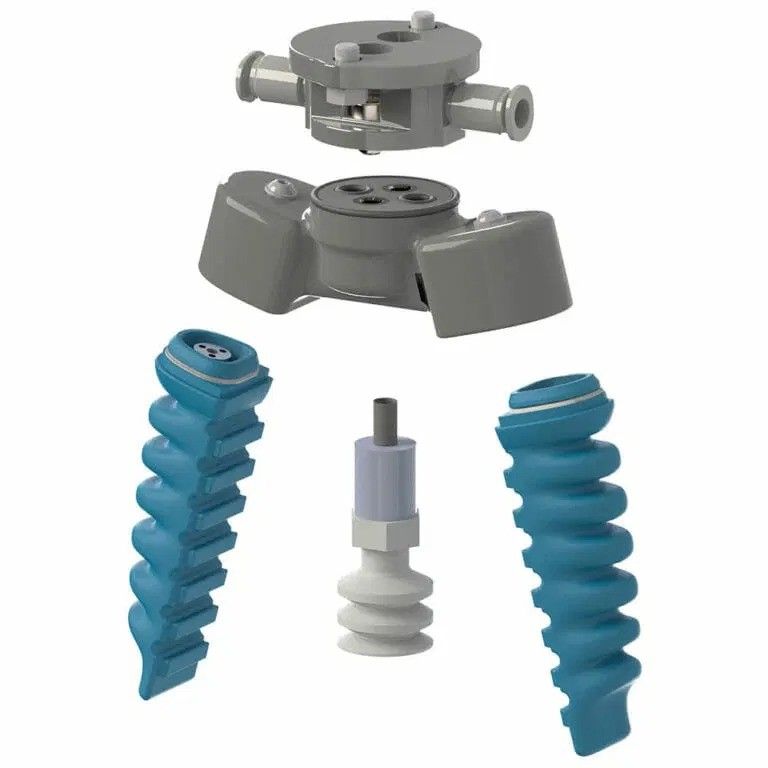
SoftGripper Elements
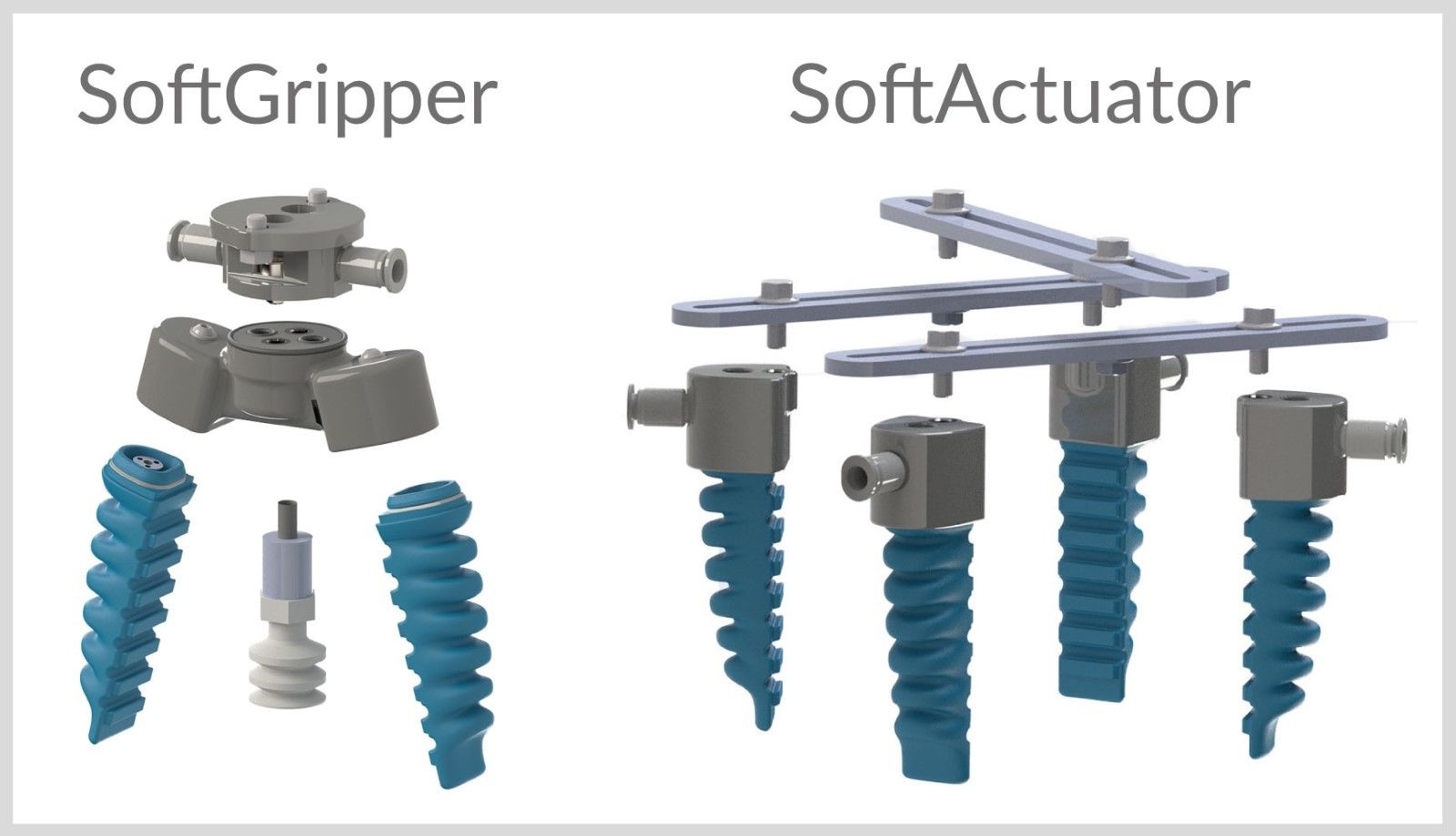
1. Flange and Base
When integrating your gripper with your robot, a flange adapter becomes essential. Softgripper adapters seamlessly fit with all robot models on the market, ensuring compatibility without hassle. Selecting the right base for your gripper largely hinges on the shape of the object you aim to grasp. For instance, circular objects find a perfect match with centric base, while cubic or elongated items align well with the parallel base.
You can request adjustments to finger angles and base sizes for a perfect fit. In environments demanding strict hygiene standards, SoftGripping bases are crafted to meet such requirements. These bases can be coated with FDA-approved materials, ensuring enhanced cleanliness and safety. This optional feature ensures compliance with industry regulations while maintaining peak gripping performance. Range of gripper bases, along with customizable options, guarantees compatibility and efficiency for a wide range of gripping tasks. Whether you require standard bases or specialized designs, we are committed to providing solutions that meet your specific needs.
2. Fingers
At the heart of grippers lie the gripping elements, often referred to as fingers. These components possess remarkable adaptability, conforming seamlessly to the shape of any object they grasp without causing surface damage. Their lightweight design ensures swift and agile manipulation, while their versatility enables them to handle a wide range of food items with ease. Crafted from FDA-approved silicone rubber and powered by pneumatic pressure, our fingers are engineered for durability. Behind their performance, guaranteeing a lifespan of over 10 million cycles at 1 bar pressure.
3. Spacers and Suction cups
Suction cups are adept at bolstering the grip of the fingers, particularly advantageous in scenarios like bin picking or when added stabilization of the object is necessary. Moreover, extensions can be incorporated to reinforce the suction cup’s support. For heightened precision and to mitigate the risk of goods sliding, spacers serve as an excellent alternative to suction cups. Additionally, they offer flexibility in mounting other tools for diverse applications.
Using A SoftGripper for High-Speed Applications
Automating high-speed applications demands specialized robot grippers capable of lightweight, rapid, and dependable performance. In such scenarios, reliability is defined by the gripper’s ability to securely grasp objects, regardless of their irregular shapes, packaging, or slippery surfaces, rather than just precision.
For high-speed handling of goods and foods, tailored pneumatics are essential. engineers can provide insights into key considerations for high-speed pick-and-place applications. Alternatively, consider our Controlbox solution. This system, equipped with appropriately sized pneumatic valves, is optimized for the fastest delta robots available. With Controlbox, gripper fingers swiftly close to ensure a secure hold, while also being capable of rapid opening through negative pressure, facilitating the handling of large objects. Additionally, a separate connector is provided for suction cups, further expanding gripping capabilities.
Using A SoftGripper for Cobot Applications
Control options for SoftGrippers are versatile, offering users the flexibility to tailor the setup according to their specific needs. Whether it’s utilizing a pneumatic system or opting for Controlbox solution, the operation of SoftGrippers is easily customizable to suit diverse applications. The integration of the Controlbox is seamless with any robot platform, ensuring compatibility and ease of use. For Universal Robots users, we provide an additional UR cap for effortless and rapid installation, streamlining the setup process.
For environments where compressed air is unavailable, we offer a specialized Controlbox featuring an integrated pump designed specifically for cobot applications. This ensures that SoftGrippers can be utilized safely and efficiently in a wide range of settings, regardless of the availability of compressed air resources.
human-robot collaboration, safety is paramount. SoftGrippers not only enhance the functionality and versatility of cobots but also prioritize safety in every aspect of their design and operation. With multiple control options and seamless integration with leading cobot platforms, SoftGrippers offer a reliable and risk-free solution for a variety of applications. Whether it’s in manufacturing, logistics, or healthcare.