


Advanced Applications of AI and ML in Industrial Automation
1. Dynamic Production Scheduling
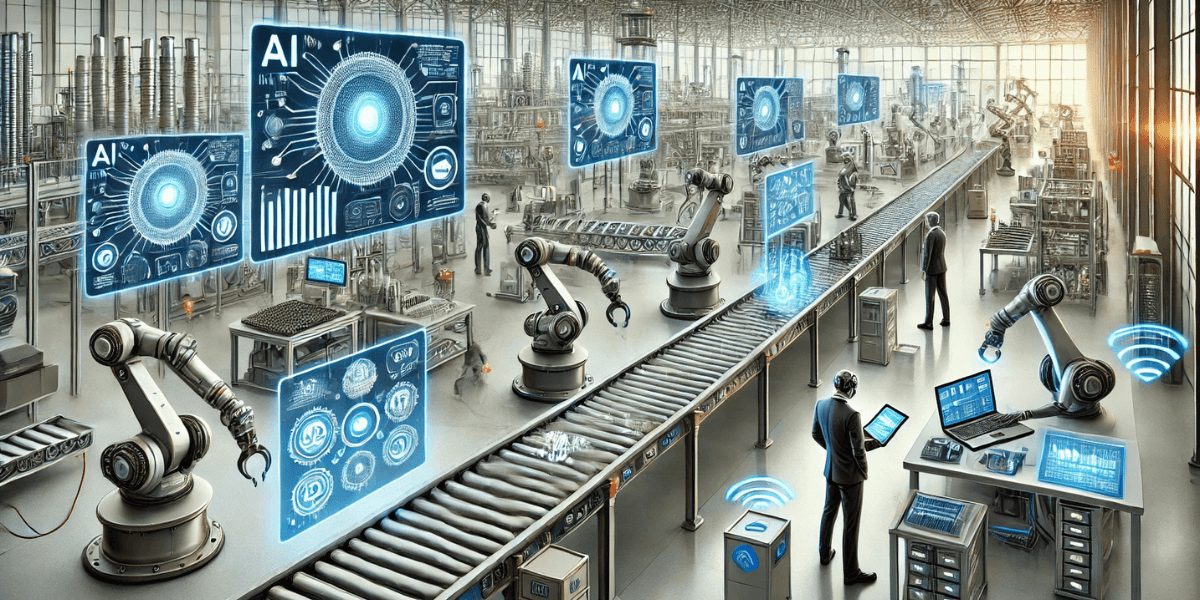
Machine failures, resource shortages, and last-minute changes in production requirements are all difficult for traditional scheduling systems to manage. AI-driven scheduling solutions dynamically optimize production schedules by utilizing real-time data and predictive analytics. To avoid bottlenecks or downtime, for instance, an ML algorithm may modify production schedules in response to machine health data.
2. Robot-Human Collaboration (Cobots)
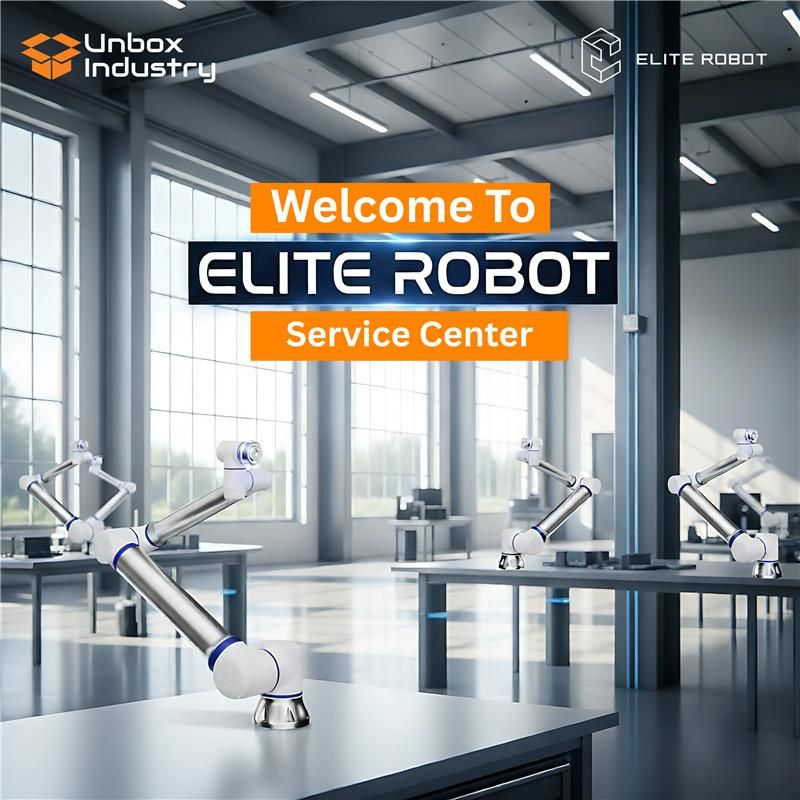
Cobots are made to safely do dangerous or monotonous activities alongside people. When given artificial intelligence (AI), cobots can learn from previous interactions, adjust to human behavior, and get better over time.
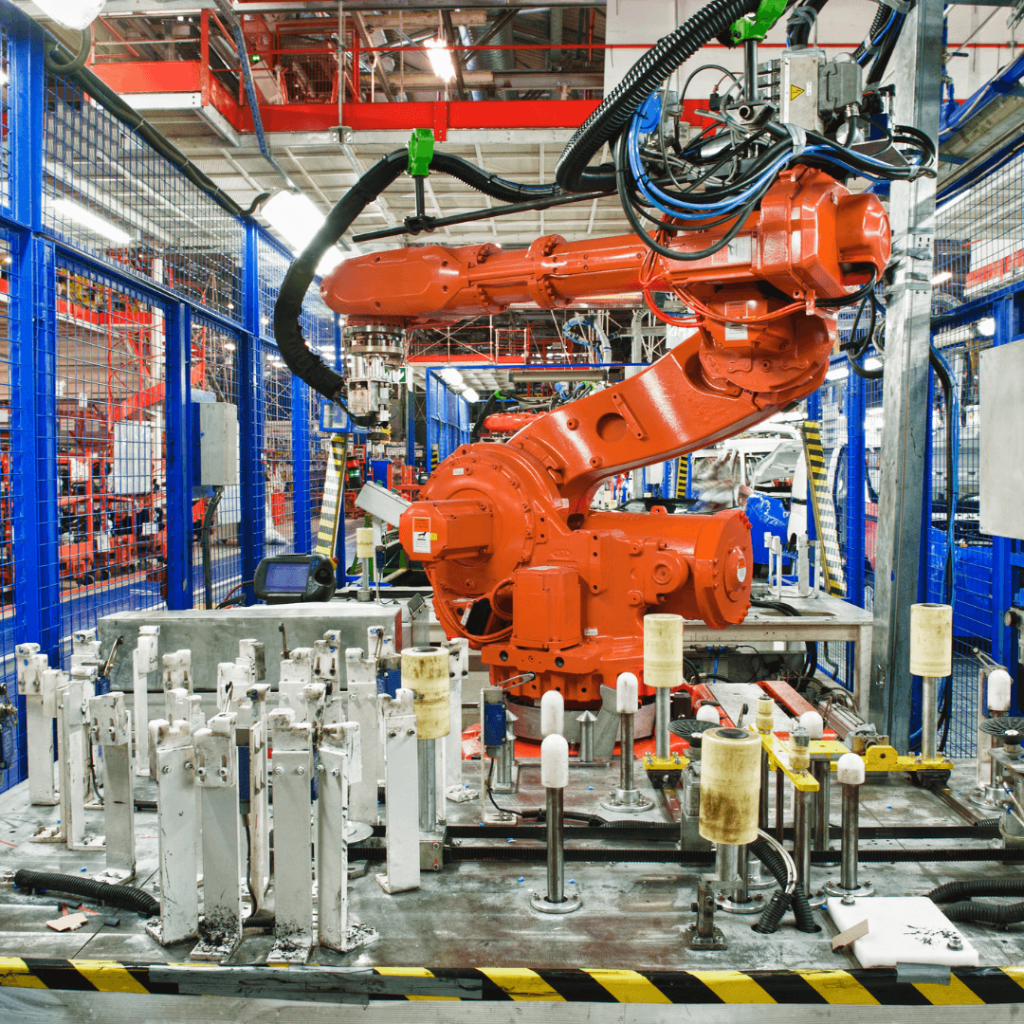
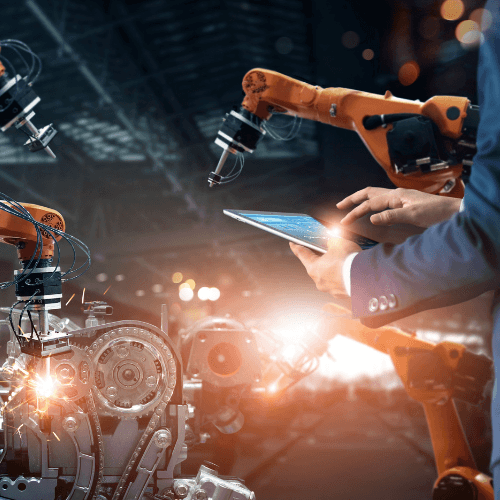
For example, cobots help employees on auto assembly lines with jobs like welding and painting, increasing worker safety and productivity.
3. Employee Training and Augmentation
Augmented reality (AR) tools driven by AI give workers real-time assistance, increasing productivity and lowering error rates.
For instance, a technician can perform faster repairs by using AR glasses to view detailed instructions superimposed on a machine’s parts.
4. Assistants using Industrial AI
Artificial intelligence (AI) virtual assistants are being developed to give analytics, monitor and control operations, and make recommendations to plant management.
For instance, an AI assistant can alert operators to anomalous variations in energy usage and provide remedial measures.
5. Environmental Monitoring
AI systems track environmental factors including garbage levels, pollutants, and air quality in real time using IoT sensors and machine learning algorithms.
AI, for instance, tracks pollutant levels and recommends mitigating techniques to ensure that mining activities adhere to environmental rules.
New Technologies Enhancing with AI and ML
Blockchain for Industrial Automation
Data integrity and transparency in industrial processes are guaranteed when blockchain and AI are combined. This is especially helpful for supply chain automation , where traceability and trust are essential.
For instance, a blockchain ledger can monitor the source and flow of raw materials, and artificial intelligence can forecast possible supply chain interruptions.
The Quantum Computer
Because quantum computing can solve optimization problems at previously unheard-of rates, it has the potential to completely transform artificial intelligence into industrial automation.
Example: Quantum AI models can speed up optimizing routes for hundreds of autonomous vehicles at a factory.
Enhancing Procedures through Neural Networks
Deep neural networks analyze complex facts such as chemical reactions or fluid dynamics to optimize industrial systems.
To boost yields and energy efficiency, for example, the chemical industry uses neural networks to enhance reaction conditions.
Robotics as a Service Powered by AI (RaaS)
SMEs can benefit from advanced automation without having to make large financial investments because RaaS offers cloud-based access to robotic features.
A robotic arm with AI capabilities, for example, can be rented by SMEs to carry out assembly or packing tasks.
Wider Effects of AI and MLs on Industrial Automation
Economic Consequences
Global Competitiveness: Nations that make significant investments in automation powered by AI are probably going to control the world’s supply chains and industries.
SME Empowerment: AI makes it possible for smaller businesses to compete with larger corporations by democratizing access to sophisticated automation.
Sustainability of the Environment
AI minimizes waste, maximizes resource use, and helps businesses comply with strict environmental standards.
For example, predictive models are used by AI-powered water treatment facilities to reduce chemical use while preserving water quality.
Transformation of the Workforce and Society
Possibilities for Upskilling: Automation increases the need for tech-savvy personnel with AI and ML expertise.
Job Evolution: AI opens new career options in fields like data analysis, machine learning, and system maintenance, even though it may replace some manual jobs.
Adaptability in Times of Crisis
Automation powered by AI improves an industry’s capacity to adjust to unanticipated shocks like pandemics or supply chain failures.
For instance, automated industries were allowed to continue operating during COVID-19 while still following social distancing guidelines.
Real-World Examples and Success Stories
1. AI at Foxconn
AI-powered robots have been used by Foxconn, the biggest electronics company in the world, to assemble goods, check parts, and minimize flaws. With each assignment, these robots increase their accuracy by using machine learning.
2. Siemens’ AI Projects
Siemens improves factory operational efficiency with AI. Its AI-powered tools, for instance, optimize energy use, simplify production processes, and forecast equipment breakdowns.
3. Amazon Robotics
Thousands of AI-enabled robots are used at Amazon’s fulfillment facilities to choose, pack, and move goods, greatly cutting down on delivery times and expenses.
4. John Deere’s Intelligent Agriculture
To improve farming methods and cut waste, John Deere incorporates AI and ML into his agricultural machinery, such as self-driving tractors and intelligent sprayers.
Problems That Need Attention
Problems with Interoperability
Due to incompatibilities between new technology and legacy equipment, integrating AI with current industrial systems can be challenging.
Absence of Skilled Personnel
As more industries use AI, the skills gap widens. Training programs must adapt to new technology to provide employees the skills they need.
Interpretability of AI Models
Because AI judgments are sometimes viewed as “black boxes,” it might be challenging to comprehend or have faith in their results in crucial applications.
Regulatory Obstacles
To balance innovation with societal concerns, governments must create frameworks that guarantee the safe and moral application of AI in industries.
The Future: Important Trends and Forecasts
Increased automation
Robotic process automation (RPA), artificial intelligence (AI), machine learning (ML), and other technologies are used in hyper automation to automate every facet of industrial processes.
Learning Federated
By using this method, AI systems can work together to learn across several locations without exchanging private information, improving performance and privacy.
Distributed Production
Automation driven by AI is making it possible for smaller, regional manufacturing centers to increase supply chain resilience and lessen reliance on centralized facilities.
Call to Action: Taking the Future into Account
An enormous change is about to occur in the industrial sector. For businesses to prosper in this new era, they need to:
Put money into ML and AI technologies: Develop AI-driven capabilities and give R&D top priority.
Build a workforce with expertise: Encourage an environment where learning and reskilling are valued.
Use data-first methodology: Make educated decisions by utilizing big data analytics and the Internet of Things.
Cooperate across sectors: Establish collaborations and exchange best practices to hasten the deployment of AI.
AI and ML are strategic enablers that are propelling the future of industrial automation; they are not merely tools. Industry use of these technologies can lead to previously unheard-of levels of sustainability, innovation, and efficiency. It’s time to take action.
In conclusion
Machine learning and artificial intelligence (AI) have revolutionized industrial automation in ways that were previously unimaginable. By enabling more intelligent decision-making, predictive capabilities, and dynamic flexibility, these technologies are propelling businesses into a new era of efficiency and innovation. Whether in predictive maintenance, quality assurance, or supply chain efficiency, AI and ML are setting new benchmarks for sustainability and performance.
However, there are challenges associated with their integration. Issues including high upfront costs, poor data quality, and the need for labor upskilling must be fixed if AI is to be extensively used in industrial automation. As industries resolve these challenges, the benefits much outweigh the drawbacks, making AI and ML crucial instruments for the factories and systems of the future.