


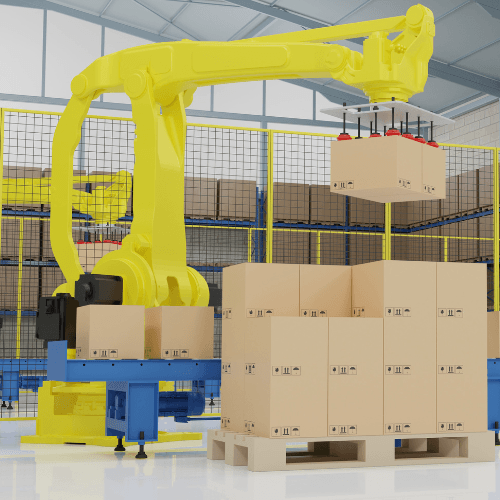
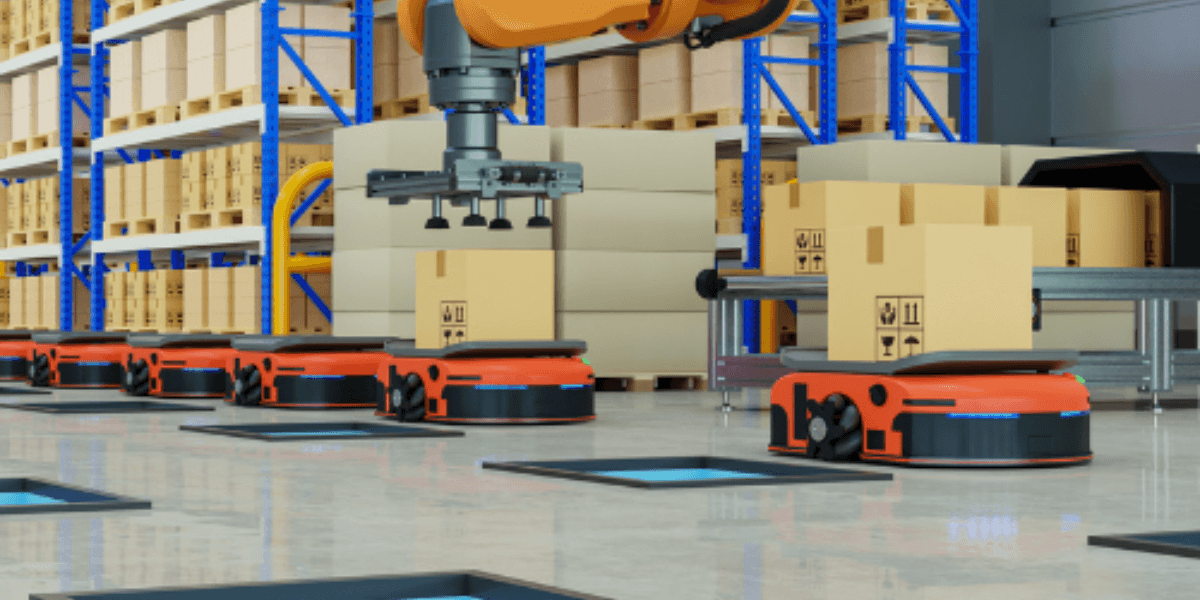
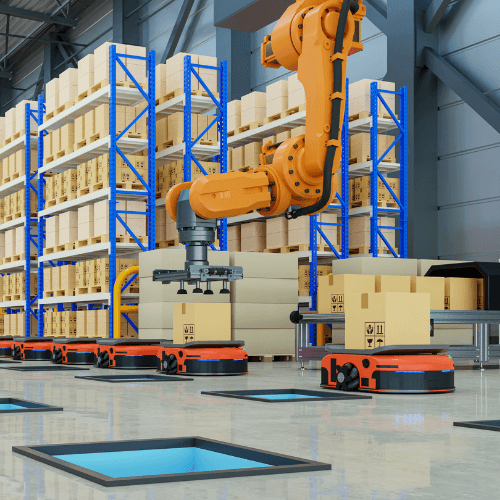
This post will discuss how deploying palletizing robots can transform your production line, important optimization techniques, and the quantifiable advantages they offer companies in a variety of sectors.
What is a Palletizing Robot
Modern palletizing robots can execute jobs with great precision and versatility because of their sophisticated sensors, end-of-arm tooling (EOAT), and programming capabilities.
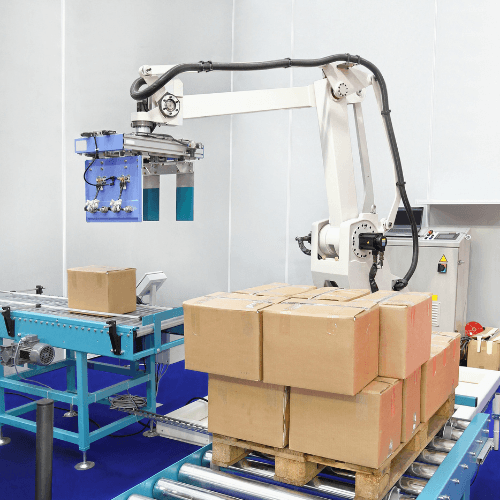
Why Use Robots for Palletizing to Optimize
There are various benefits of using a palletizing robot to optimize your production line:
1. Enhanced Efficiency: Because robots can work around the clock without getting tired, throughput can be significantly increased.
2. Lower Labor Costs: Automating repetitive processes lessens the need for human labor.
3. Increased Safety: By handling large objects and repetitive tasks, robots reduce workplace accidents.
4. Precision and Consistency: Robots arrange goods consistently, minimizing mistakes and damage while in transportation.
5. Space Utilization: Pallet designs can be optimized by programming robots to make greater use of the available space.
How to Use Palletizing Robots to Optimize Your Production Line
Assess Your Production Line Requirements.Determine the needs of your production line before making an investment in a palletizing robot. Think about:
– The kind and dimensions of the goods that will be palletized.
– Requirements for production speed and volume.
– There is space available in your facility.
– Integration with current systems and equipment.
A thorough examination guarantees that the chosen robot fits your production objectives and limitations.
1. Select the Appropriate Palletizing Robot
There are several varieties of palletizing robots, and each is appropriate for a particular use case:
– Articulated robots: are flexible and have several axes of motion, making them perfect for intricate palletizing jobs.
– Cartesian robots: are ideal for simple stacking since they move linearly along the X, Y, and Z axes.
– Collaborative robots, or Cobots: are ideal for minor tasks since they are made to securely work alongside people.
– Delta Robots:renowned for palletizing lightweight items at rapid speeds.
Choose a robot according to the particular requirements of your production line.
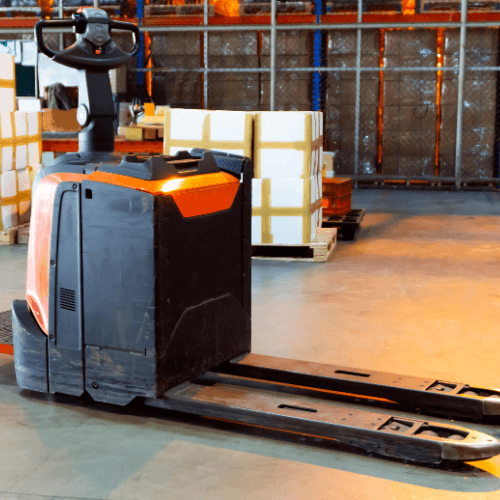
The robot’s performance is greatly influenced by the physical configuration of your production line. Make sure:
– To reduce the travel distance between the palletizing station and the production line, the robot is positioned strategically.
–Sufficient room for maintenance tasks, access points, and safety barriers.
–Pro Tip Prior to implementation, model several layouts using simulation software.
3. Integrate with Existing Systems
Your palletizing robot must interface with current systems, such the following, to operate smoothly:
-Conveyor belts:Provide the robot with a consistent supply of goods.
-Sensors: Give immediate feedback on the alignment and position of the product.
-Warehouse Management Systems (WMS):Automate the movement of palletized items to shipment or storage regions with warehouse management systems (WMS).
Efficient data transfer between equipment is ensured by utilizing communication protocols such as Ethernet/IP or Modbus.
4. Flexibility Program
Due to their great degree of programming flexibility, modern palletizing robots can be customized for a wide range of jobs. Important things to think about are:
– Pallet Patterns: Configure the robot to stack products in the best possible ways according to their weight and size.
– Adaptive algorithms: Make use of AI and machine learning to provide the robot the ability to adapt to changes in the size or location of the product.
– Fast Changeovers: Set up the robot to quickly reprogrammed to handle various pallet sizes or merchandise.
5. Put Safety Measures in Place
Worker safety should never be jeopardized by automation . Observe these safety precautions:
– Enclose the robot with light curtains or protective obstacles.
– In situations where human-robot contact is required, use collaborative robots.
– Perform routine maintenance checks and safety inspections.
6. Monitor Performance
For optimization, data analysis and ongoing monitoring are essential. Monitor important metrics like:
– Palletizing precision and speed.
– energy usage and operational expenses.
Over time, enhance the robot’s performance by using this data to pinpoint bottlenecks.
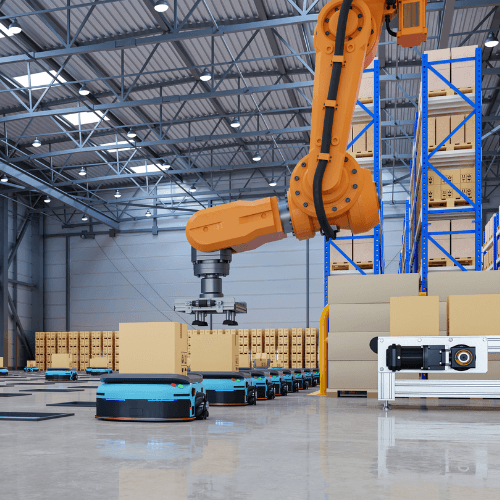
Case Study: Transforming Production with Palletizing Robots
Manual palletizing made it difficult for beverage manufacturer Company A to satisfy rising consumer demand. Following the deployment of an articulated palletizing robot, they were able to a 50% boost in output velocity.
– 30% labor cost savings.
– Repetitive heavy lifting was eliminated, improving worker safety.
Additionally, the company was able to extend its product line without experiencing substantial downtime thanks to the robot’s capacity to transition between different bottle sizes.
Implementing Palletizing Robots Presents Difficulties
Despite the substantial advantages, firms may face obstacles like:
– High Initial Costs: Although purchasing robots and integrating them can be costly, the return on investment eventually makes the investment worth while.
– Complex Integration: It takes skill and careful preparation to align robots with current systems.
– Training Requirements: To properly operate and maintain the robots, staff members must receive training.
Collaborate with seasoned automation suppliers and make continuous investments in staff training to overcome these obstacles.
Prospects for Palletizing Automation in the Future
Palletizing robots are growing increasingly intelligent and adaptable as technology develops. Future developments include:
AI-Driven Optimization: AI-enabled robots can dynamically optimize stacking patterns and forecast changes in demand.
IoT Integration: Using IoT connectivity to perform predictive maintenance and real-time monitoring.
Sustainability: To lessen the influence on the environment, use energy-efficient robots and environmentally friendly palletizing techniques.
Increased use of cobots for jobs that humans and robots share is known as collaborative automation.
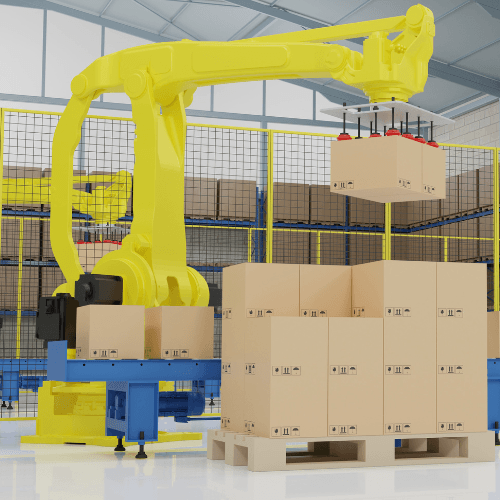
Use Cases in Various Sectors
Palletizing robots are useful in many different industries, such as:
1. Food and Drink
– using care when handling delicate objects, such as eggs or glass bottles.
– adjusting for surges in seasonal demand.
2. Medicines
– arranging pharmaceutical boxes in climate-controlled spaces.
– ensuring adherence to stringent safety and hygienic guidelines.
3. Logistics and E-Commerce
– managing a wide variety of packaging dimensions.
– satisfying the fast requirements of delivery the same day or the following day.
4. Production
– stacking bulky parts in the electronics or automotive sectors.
– lowering labor expenses in operations with large volumes.
Important Things to Think About Before Using Palletizing Robots
1. Making a total cost budget
–In addition to the robot’s price, consider:
–combining with current systems.
–maintenance and training costs.
2. Selecting the Appropriate Level of Automation
Fully automated systems could be advantageous for certain companies, while semi-automated solutions might be preferred by others to preserve a certain amount of human oversight.
3. Certification and Compliance
Verify that the robot complies with safety requirements and industry-specific laws.
4. Needs for Customization
Determine whether the robot needs extra characteristics like food-grade materials for applications requiring hygienic practices or environmental sealing for severe environments.
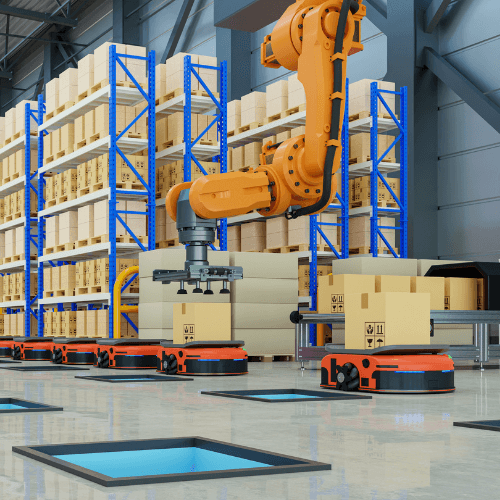
Advanced Features of Modern Palletizing Robots
Palletizing robots are now more sophisticated and adaptable than ever thanks to recent developments in robotics technology. Here are a few innovative features:
1. AI and Vision Systems
–When outfitted with sensors and cameras , robots can:
–Determine product dimensions and make real-time adjustments to stacking patterns.
–Identify items that are misaligned or faulty and reroute them for quality assurance.
2. End-Effectors in Modules
Robots’ “hands” are called end-effectors, and they are made in a variety of designs, including:
– Vacuum grippers: Perfect for flat or light objects, such as cardboard boxes.
– Clamp grippers: firmly grasp larger or asymmetrical objects.
– magnetic grippers: For metal items, magnetic grippers work best.
Businesses can change the grippers according to particular requirements thanks to modular designs, which increase the robot’s adaptability.
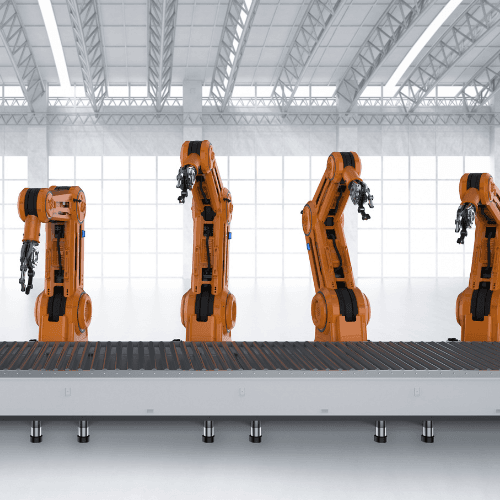
Palletizing robots are now a need for companies looking to streamline their production processes rather than a luxury. These robots enable companies to increase production, cut expenses, and preserve a safer working environment by automating monotonous jobs. Careful planning, technology selection, and investments in ongoing development are the first steps on the path to optimization. Palletizing robots are at the forefront of industries’ transition to more intelligent manufacturing techniques, fostering innovation and efficiency everywhere. Palletizing robots can be fully utilized by your company with the correct strategy, laying the groundwork for long-term success in a market that is becoming more and more competitive.












