

1. Production and Storage
a. Simplifying logistics
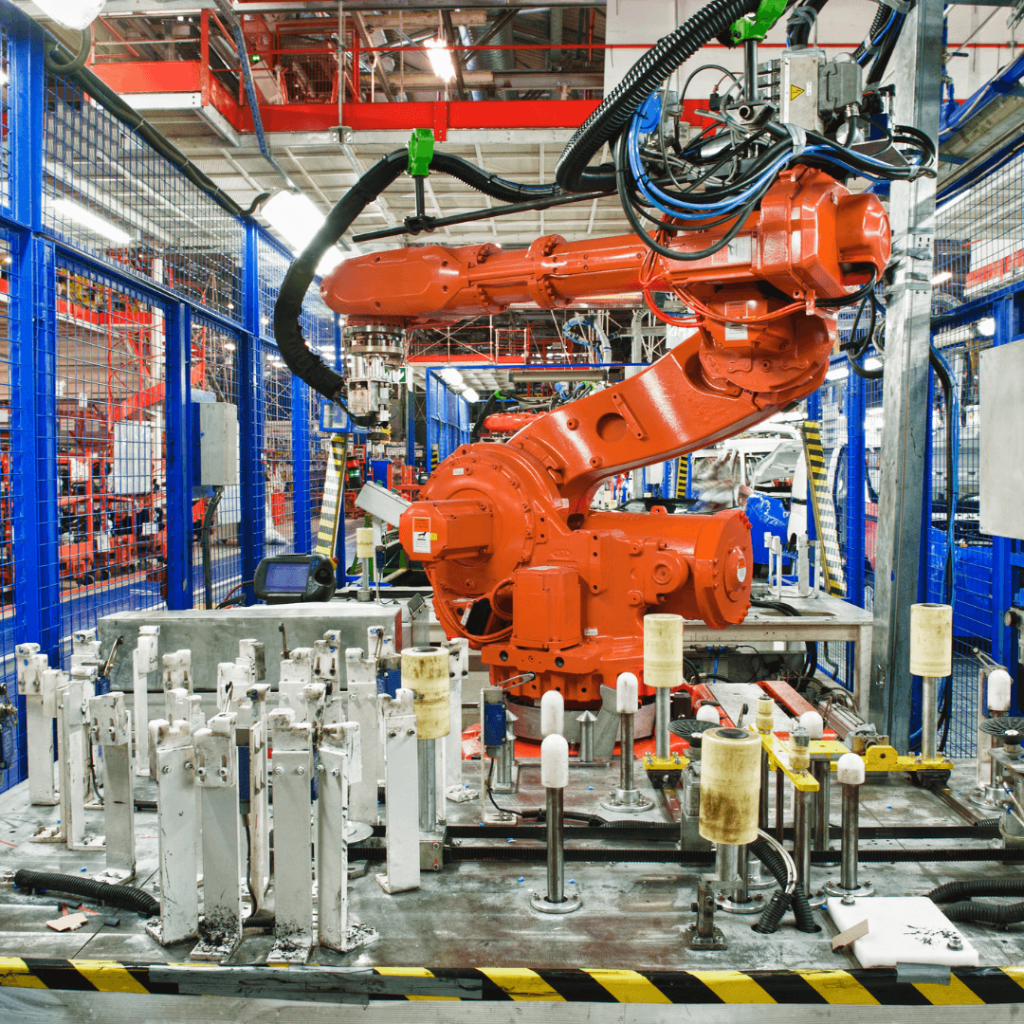
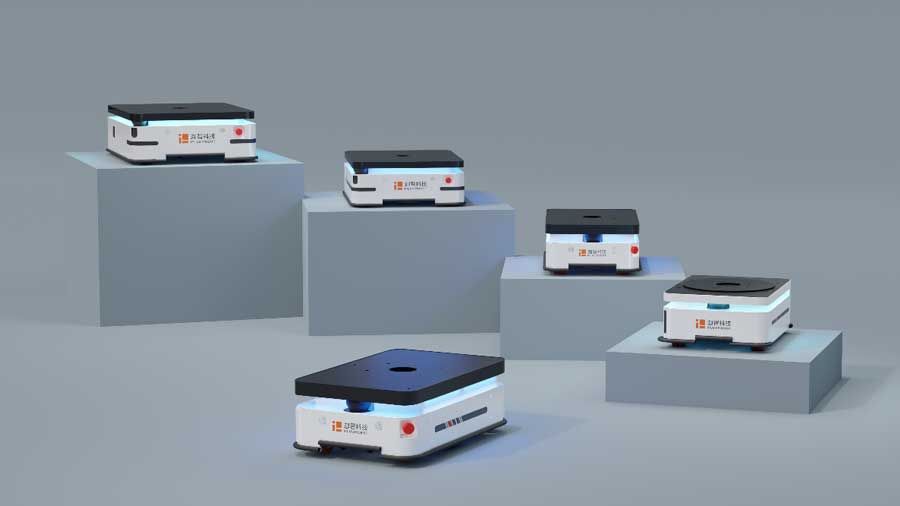
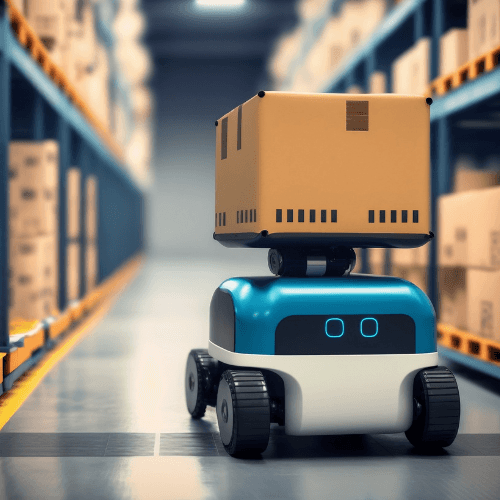
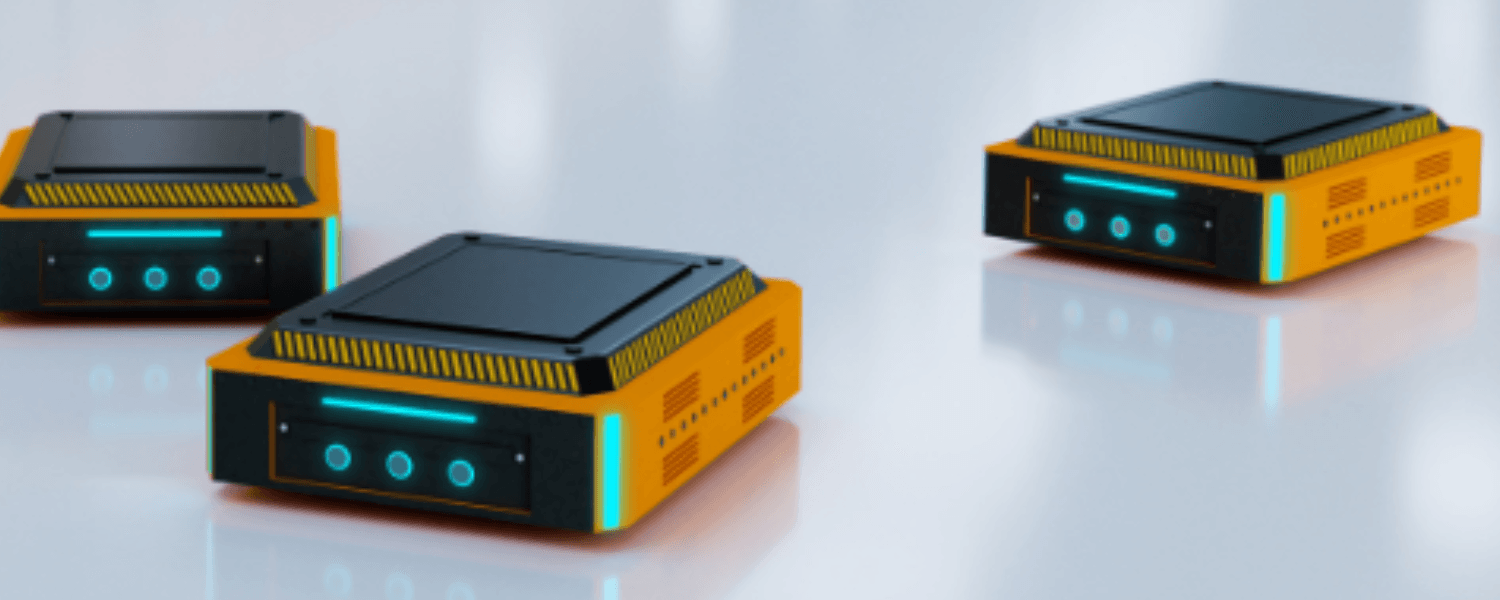
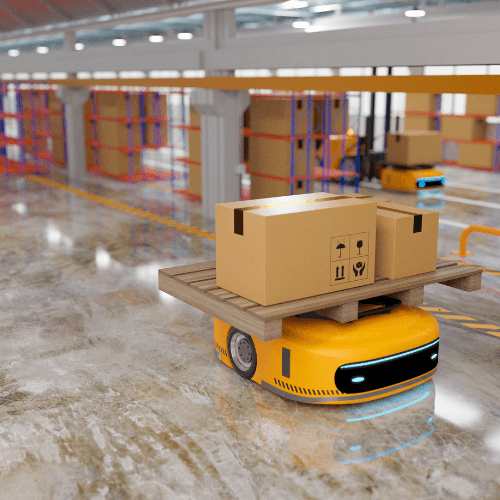
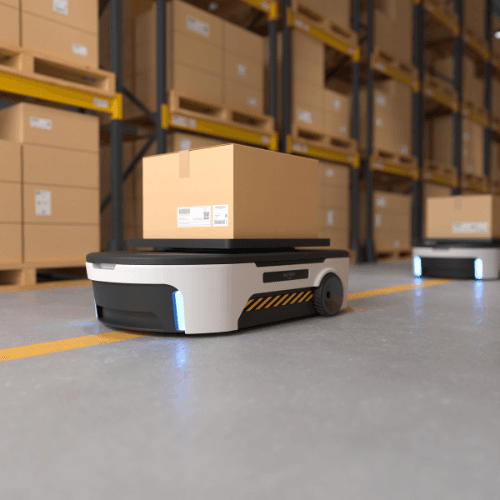
Production and storage are two of the most prevalent uses of AMRs. Among the duties performed by these robots are inventory replenishment, product transportation, and raw material movement. AMRs are taking the role of traditional conveyor systems or forklifts due to their versatility in dynamic operations and shifting warehouse layouts.
Example: Amazon’s fulfillment centers use thousands of AMRs, which are like Kiva robots, to efficiently sort and move goods. Productivity is increased because of this automation , which cuts down on product location and shipping time.
b. Management of Inventory
Real-time stock level monitoring and shelf scanning are possible with AMRs outfitted with sophisticated vision systems. This minimizes losses from lost or unsold inventory, guarantees precise inventory tracking, and lowers errors.
Example: Symbiotics’s AMRs optimize space usage and inventory management by using AI to sort and arrange things in warehouses.
2. Medical Care
a. Support for Patients
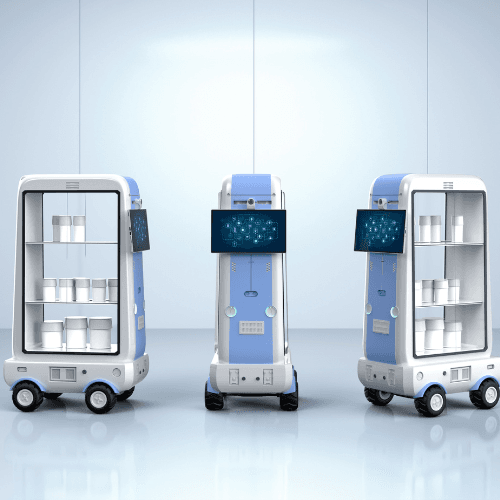
AMRs are being utilized in hospitals to help medical staff by moving samples, medication, and equipment across departments. This guarantees the timely supply of vital resources and lessens the workload for employees.
Example: hospitals deploy Aethon’s TUG robots to distribute supplies on their own, minimizing the need for human intervention and freeing up staff members to provide patient care.
b. Cleaning and Sanitization
The use of AMRs for sanitization was expedited by the COVID-19 pandemic. AMRs with chemical sprayers or ultraviolet (UV) light systems automatically clean public spaces and medical rooms, creating a safer atmosphere.
Example: a Danish business called UVD Robots created AMRs to use UV-C light to disinfect hospitals, greatly lowering the spread of pathogens.
3. E-commerce and retail
a. Customer service
AMRs engage with consumers in retail establishments to offer information, direct them to merchandise, or even help with checkout. This lessens the workload for human personnel while improving the purchasing experience.
Example: The Pepper robot from SoftBank Robotics welcomes consumers, offers product details, and solicits comments in retail settings.
b. Order Completion
AMRs are essential for picking and packing orders for e-commerce platforms. They efficiently find things, move them to packing stations, and navigate warehouses
Example: online supermarket Ocado deploys a fleet of AMRs in its warehouses to quickly fulfill online orders and guarantee on-time delivery.
4. Agriculture
a. Agricultural Precision
Precision farming methods are being used by AMRs to revolutionize agriculture. With the use of sophisticated sensors and cameras , they can monitor crops, plant seeds, and identify pests or illnesses. This lowers resource waste and increases crop productivity.
Example: the AMRs from Naïo Technologies, such Dino and Oz, help farmers save time and money by monitoring and weeding large-scale crops.
b. Gathering and Classifying
Fruits and vegetables are harvested by automated robots and sorted according to quality. The ability of these AMRs to operate 24/7 lessens reliance on seasonal personnel.
Example: Agrobot’s AMRs minimize crop damage by precisely harvesting ripe strawberries using machine vision.
5. Supply Chain and Logistics
a. Last-Mile Delivery
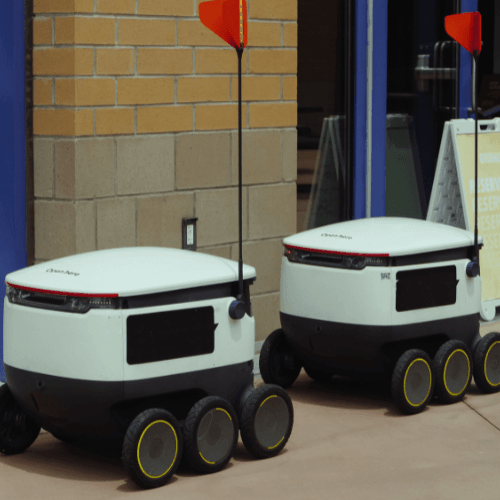
Last-mile delivery is becoming more effective and quicker because to AMRs. These robots carry products straight to clients’ doorsteps while navigating metropolitan surroundings.
Example: Starship Technologies utilizes tiny AMRs that drive themselves around sidewalks to deliver packages and groceries.
b. Automation of ports and terminals
AMRs control container transportation in shipping terminals, lowering bottlenecks and boosting efficiency. They are crucial for such tasks because of their capacity to operate in harsh environments.
Example: Shanghai International Port Group improves operational efficiency by moving containers within its terminals using AMRs.
6. Hospitality
a. Concierge duties and room service
AMRs are used in hotels to bring supplies like meals, toiletries, and towels to the rooms of visitors. Additionally, they serve as concierge assistants, giving advice on area activities and hotel amenities.
Example: Savioke’s Relay robot increases customer happiness by delivering room service orders in hotels
b. Upkeep and Cleaning
Hotel lobbies, hallways, and other public spaces can be automatically cleaned by robots fitted with cleaning supplies, guaranteeing a constant level of cleanliness.
Example: hotels use SoftBank Robotics’ Whiz cleaning robot to effectively vacuum big areas
7. Exploration and Mining
a. Navigation Underground
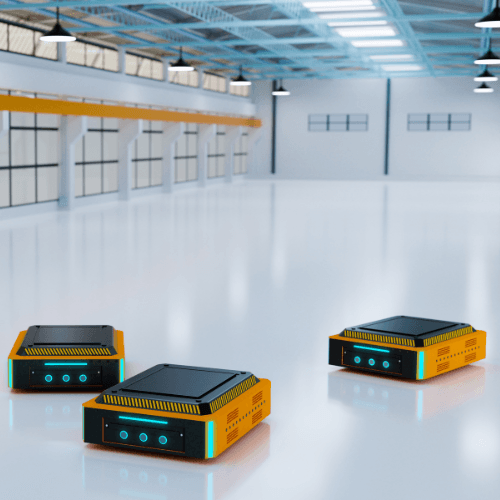
AMRs are used in mining operations to map and explore subterranean mines. They carry out duties like material transportation and tunnel inspection, guaranteeing worker safety in dangerous situations.
Example: Sandvik’s AMRs are used in mines to move ore on their own, eliminating the need for human operators in hazardous areas.
b. Environmental Surveillance
In mines or exploration sites, AMRs with sensors gather information on radiation levels, air quality, and structural integrity. This helps to uphold safety regulations.
Example: Boston Dynamics’ Spot robot’s capacity to maneuver over uneven terrain makes it useful for inspection duties at energy facilities and mines.
8. Defense and Military
a. Monitoring and Reconnaissance
In defense, AMRs are often employed for reconnaissance tasks. They reduce the hazards to soldiers by navigating challenging terrain, gathering intelligence, and sending real-time data to command centers
Example: the MAARS (Modular Advanced Armed Robotic System) robot conducts autonomous tactical missions and surveillance.
b. The disposal of explosive ordnance (EOD)
To protect bomb disposal workers, robots are used to identify and deactivate bombs.
Example: armed forces all over the world have utilized iRobot’s Pack Bot for hazardous material handling and EOD.
9. Education and Research
a. Resources for Learning
AMRs are interactive teaching aids used in educational institutions to teach robotics and artificial intelligence principles. Through programming and interaction, students receive practical experience with these robots.
Example Universities frequently employ TurtleBot, an open-source AMR platform, to instruct students in robotics and navigation, for instance.
b. Investigating and Developing
To push the limits of robotics innovation, researchers also employ AMRs to test novel AI algorithms, navigational strategies, and sensor technologies. The Atlas robot from Boston Dynamics,
Example: is used as a testbed to create more sophisticated locomotion and manipulation skills.
10. Security and Safety for the Public
a. Monitoring and Patrolling
By patrolling regions, keeping an eye out for suspicious activity, and reporting occurrences in real time, AMRs improve security in public places like parks, malls, and airports.
Example: Knightscope’s security robots patrol regions on their own while sending law enforcement incident warnings and video surveillance.
b. Reaction to Emergencies
AMRs help in places affected by disasters by finding survivors, bringing supplies, or removing trash. They are extremely useful in emergency situations due to their capacity to function in dangerous environments.
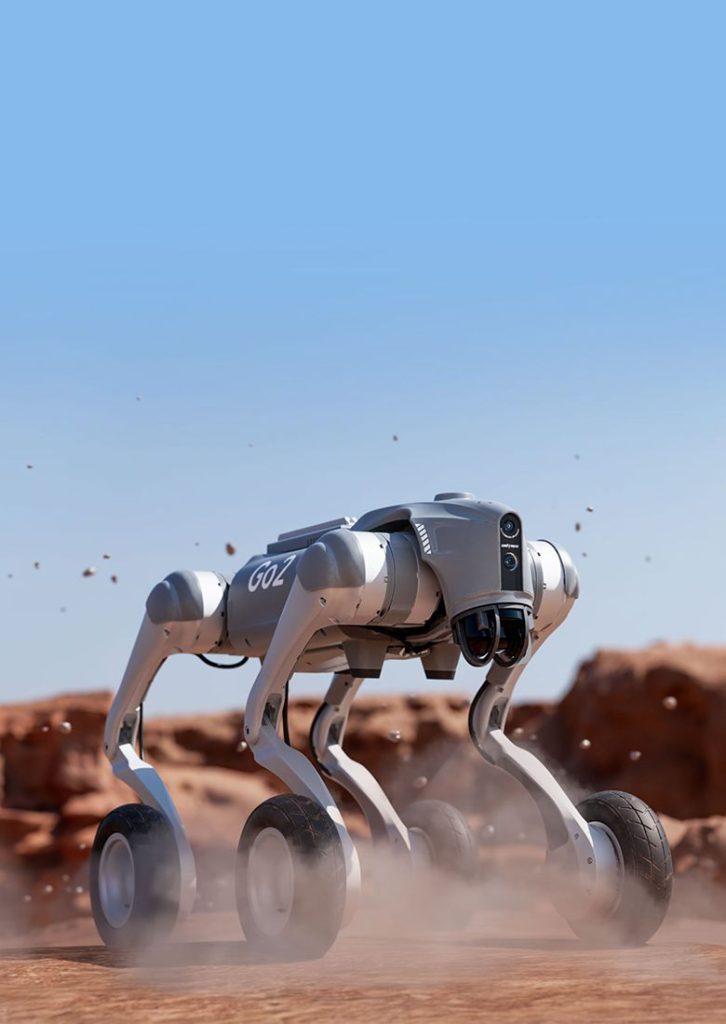
Example: Boston Dynamics’ Robodog has been utilized in search and rescue operations, finding survivors by navigating through debris and tight areas.
Challenges and Future Prospects
Obstacles: Getting Around in Complicated Environments: Despite improvements, AMRs may have trouble in environments that are congested or extremely dynamic.
High Initial Investment: Small and medium-sized enterprises may find the cost of implementing AMRs to be unaffordable.
Ethical and Regulatory Concerns: It is still crucial to handle ethical issues like job displacement and make sure that regulations are followed.
Prospects for the Future
AI developments: Smarter AMRs will be able to make better decisions and be more adaptive thanks to enhanced AI algorithms.
Integration with IoT: By enabling smooth communication between AMRs and other devices, IoT connectivity will improve ecosystem efficiency.
Greater Accessibility: AMRs will be used in homes and smaller businesses as technology gets more reasonably priced.
In conclusion
Industries are changing because of autonomous mobile robots’ capacity to carry out jobs effectively and safely. Their adaptability is propelling important breakthroughs, from improving patient care in hospitals to expediting logistics in warehouses. AMRs will become increasingly important tools for addressing real-world problems as technology develops, making them essential tools for the future.
Industries are changing because of autonomous mobile robots’ capacity to carry out jobs effectively and safely. Their adaptability is propelling important breakthroughs, from improving patient care in hospitals to expediting logistics in warehouses. AMRs will become increasingly important tools for addressing real-world problems as technology develops, making them essential tools for the future.