

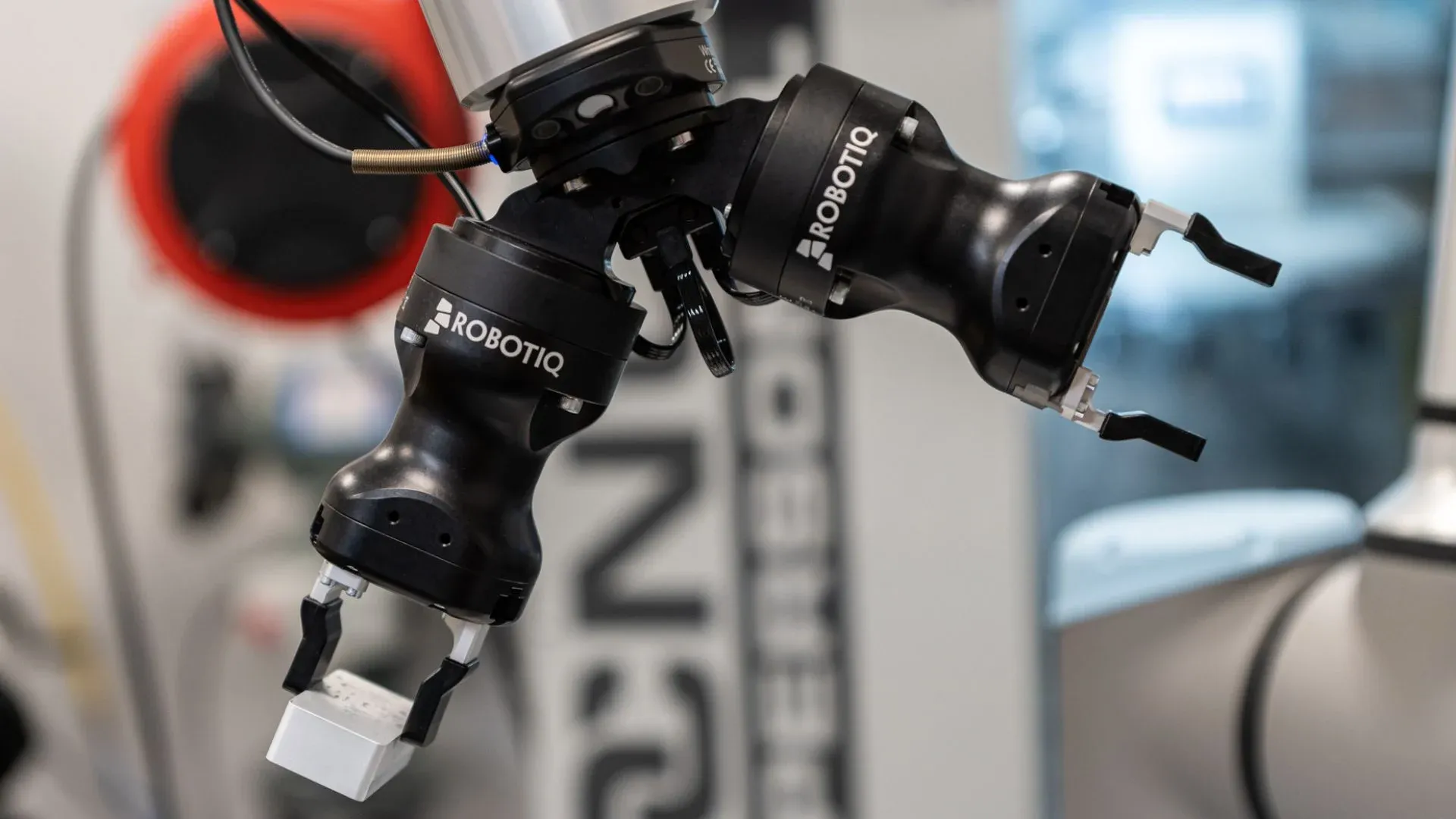
Knowing How to Use Robotic Grippers
One kind of end effector made specifically for handling or gripping duties in robotic systems is a robotic gripper. Numerous applications, including material handling, assembly, and precise jobs like pick-and-place operations, call for the usage of these grippers. The design, functionality, and environmental compatibility of grippers might vary.
There are various types of grippers, and each has advantages and disadvantages of its own. Among the most popular kinds of grippers are:
– Mechanical Grippers: Actuators drive mechanical grippers , which have jaws that can be opened and closed.
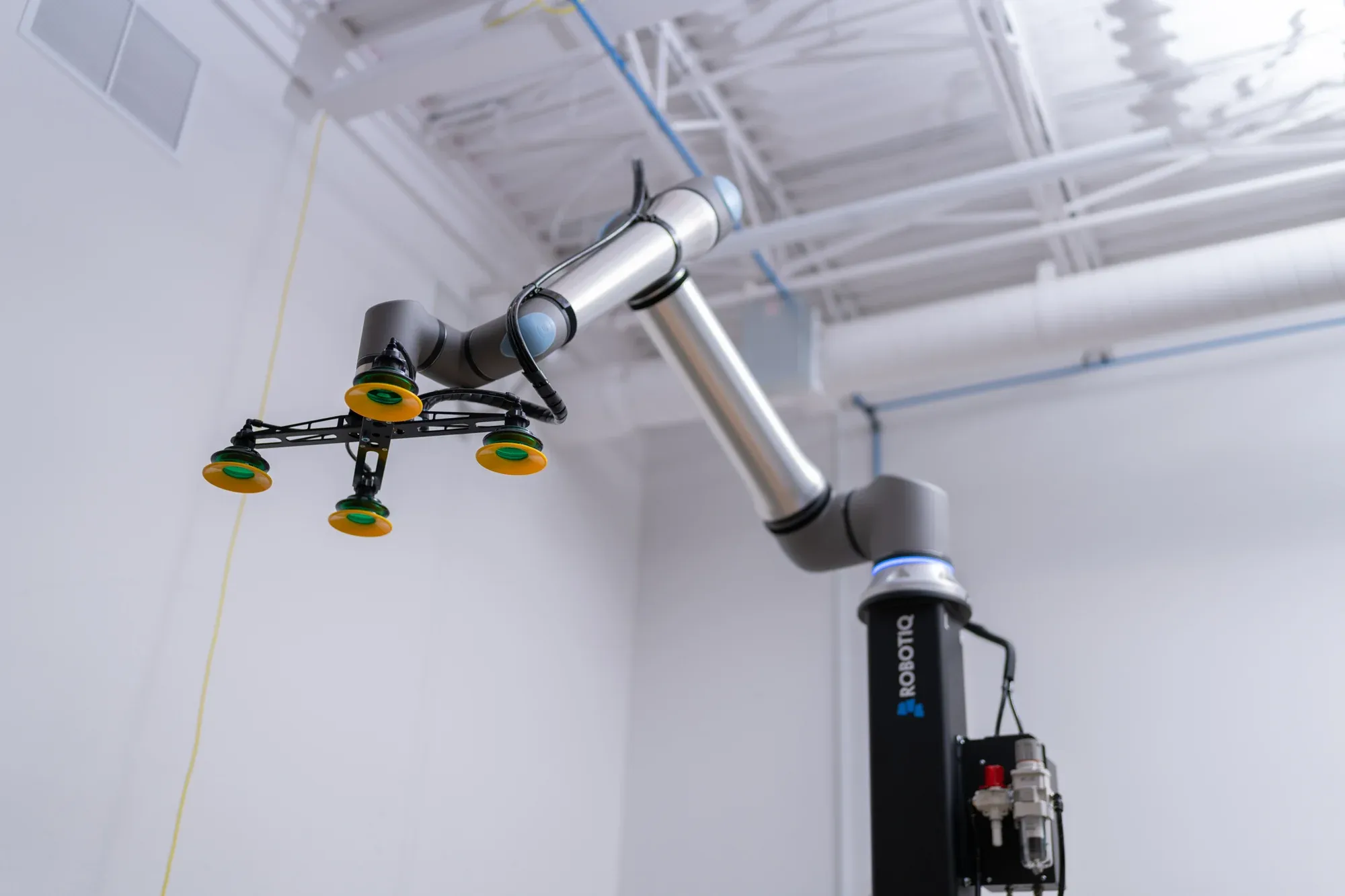
– Vacuum gripper: Vacuum grippers are perfect for handling flat, non-porous objects since they use suction to pick them up.
– Magnetic grippers: These lift ferrous things by using magnets.
– Soft grippers: Soft grippers are perfect for delicate or breakable objects since they are composed of soft materials that can adapt to unusual shapes.
– Pneumatic Gripper: Compressed air is used by pneumatic grippers to regulate the opening and closing mechanism.
– Electric grippers : Using electric motors to provide precise control, these devices are frequently more energy-efficient.
Since mechanical, vacuum, and soft grippers are the most widely utilized in industrial settings, we will concentrate on them in this article.
Important Things to Look for When Selecting a Gripper
1. Material Type Being Managed
Knowing the materials your robot will handle is the first step in choosing the best gripper. To provide a firm and efficient grip, different materials call for different grippers. Here are a few instances:
– For big Objects: Mechanical or magnetic grippers can be the ideal option if your robot will be handling big objects, such as huge boxes or metal parts. These grippers are strong and capable of supporting heavy loads.
– For Delicate Objects: When it comes to delicate objects, vacuum grippers or soft grippers are frequently the ideal choice if your robot must handle delicate materials like glass, electronics, or soft textiles. While vacuum grippers offer suction without harming the thing, soft grippers can conform gently around it.
– For Porous or Irregularly Shaped Objects: Since soft grippers are so flexible and can take on the contour of the object, they are frequently the best choice for holding soft or oddly shaped objects.
– For Flat, Non-Porous Surfaces: Glass and smooth metal are two examples of flat, non-porous surfaces that vacuum grippers are ideal for handling.
2. Capacity of Payload
The kind of gripper required depends depend on the size and weight of the objects your robot is grasping. The amount of weight that the gripper can securely support and still function well is known as its payload capacity. The payload capacity of grippers varies greatly, therefore it’s important to pick one that can support the weight range of your application without experiencing discomfort. Pneumatic or mechanical grippers are frequently the best choices for demanding applications. To lift big things without sacrificing the stability of the robot, these grippers can be combined with strong actuators.
Since they are usually made for lesser payloads, a soft or vacuum gripper might be adequate for light-duty jobs like handling tiny devices or assembling pieces.
3. Size and Shape of the Object
When choosing a gripper, it is crucial to consider the dimensions and form of the things your robot will be handling. Robotic grippers are available in a variety of designs to fit a range of object shapes, including irregular and cylindrical ones.
– For Cylindrical items: The best grippers are mechanical ones with fingers made to wrap around cylindrical items. Pipes and rods can be securely grasped by these grippers.
– For Smooth or Flat objects: A vacuum gripper will provide your robot a firm yet delicate hold if it must handle smooth or flat objects (such as sheet metal or glass).
– For Odd-Shaped or Fragile Items: When handling fragile or oddly shaped things, such soft food or delicate packaging, soft grippers are especially well-suited. Additionally, they are perfect for objects with delicate surfaces that more firm grippers could harm.
Your application’s speed and accuracy requirements will dictate the kind of gripper you want. While some grippers are made to be extremely precise, others are made to be quick and flexible.
– Applications at High Speed: Pneumatic or electric grippers can be the ideal option for pick-and-place tasks requiring high speed. The rapid opening and closing of these grippers enable the robot to move at greater speeds.
– Accuracy Handling: It is essential to use accuracy while working with small or delicate components. High degrees of accuracy are best maintained in this situation using soft grippers that adapt to the shape of the object or mechanical grippers with well calibrated actuators.
5. Environmental Conditions
Selecting the right gripper can also depend on the environment in which your robot will work. A gripper’s performance may be impacted by elements such as temperature, moisture, dust, and chemicals.
– For Harsh surroundings: If your robot works in challenging surroundings, such hot or dusty ones, think about utilizing a gripper made especially for these conditions. In industrial settings with chemicals or dirt, pneumatic or magnetic grippers are frequently utilized
– For damp or Hygienic Environments: Soft or vacuum grippers made for hygienic environments are ideal if your robot must handle food items or work in damp environments (like underwater applications).
6. Cost and Maintenance
When choosing a gripper, cost is a crucial consideration. Even though electric and pneumatic grippers can operate better and have more sophisticated features, their costs may also be higher. However, mechanical grippers might be less expensive, but they might not have the accuracy or adaptability needed for particular applications.
Another crucial factor to consider is care. For instance, to guarantee optimal performance, pneumatic grippers may require periodic maintenance and a constant supply of compressed air. Conversely, electric grippers often use less energy and require less upkeep over time.
7. Combining the Robotic Arm
The degree to which the gripper works with the arm and control system of your robot is another important consideration. While some grippers can be readily mounted to common robotic arms, others could need more specialized tools or adjustments.
Make sure the gripper is compatible with the robot’s payload capacity, control system, and end-effector interface before choosing one. Standardized interfaces are a feature of many contemporary grippers that make integration easier.
Types of Grippers in Details
1. Mechanical Grippers
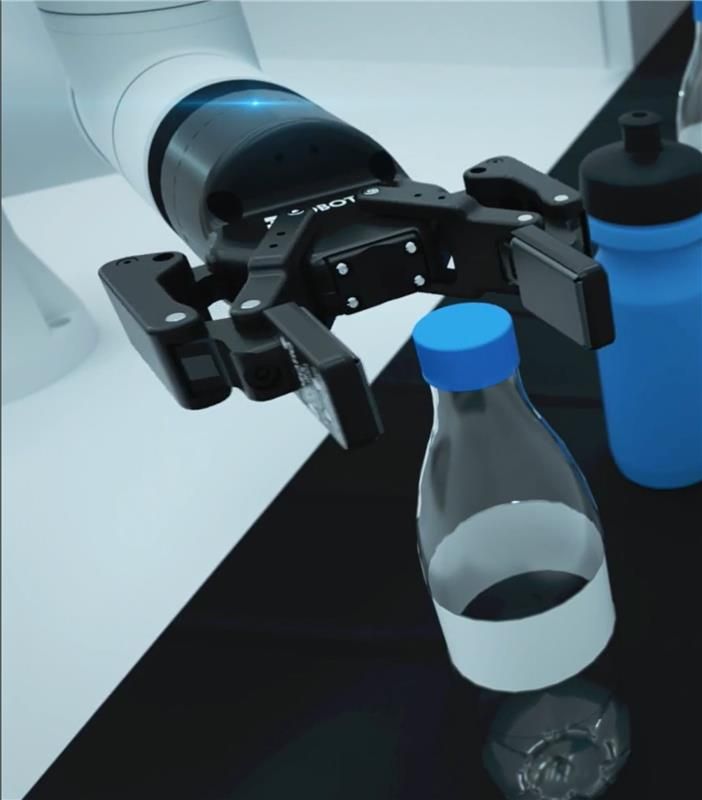
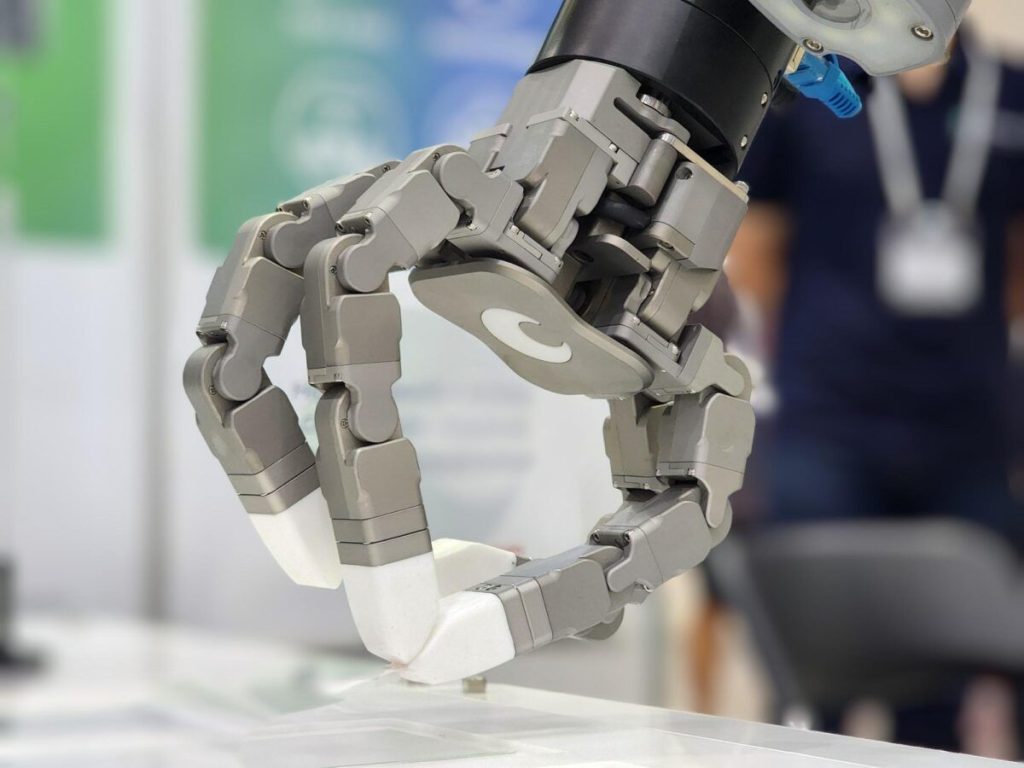
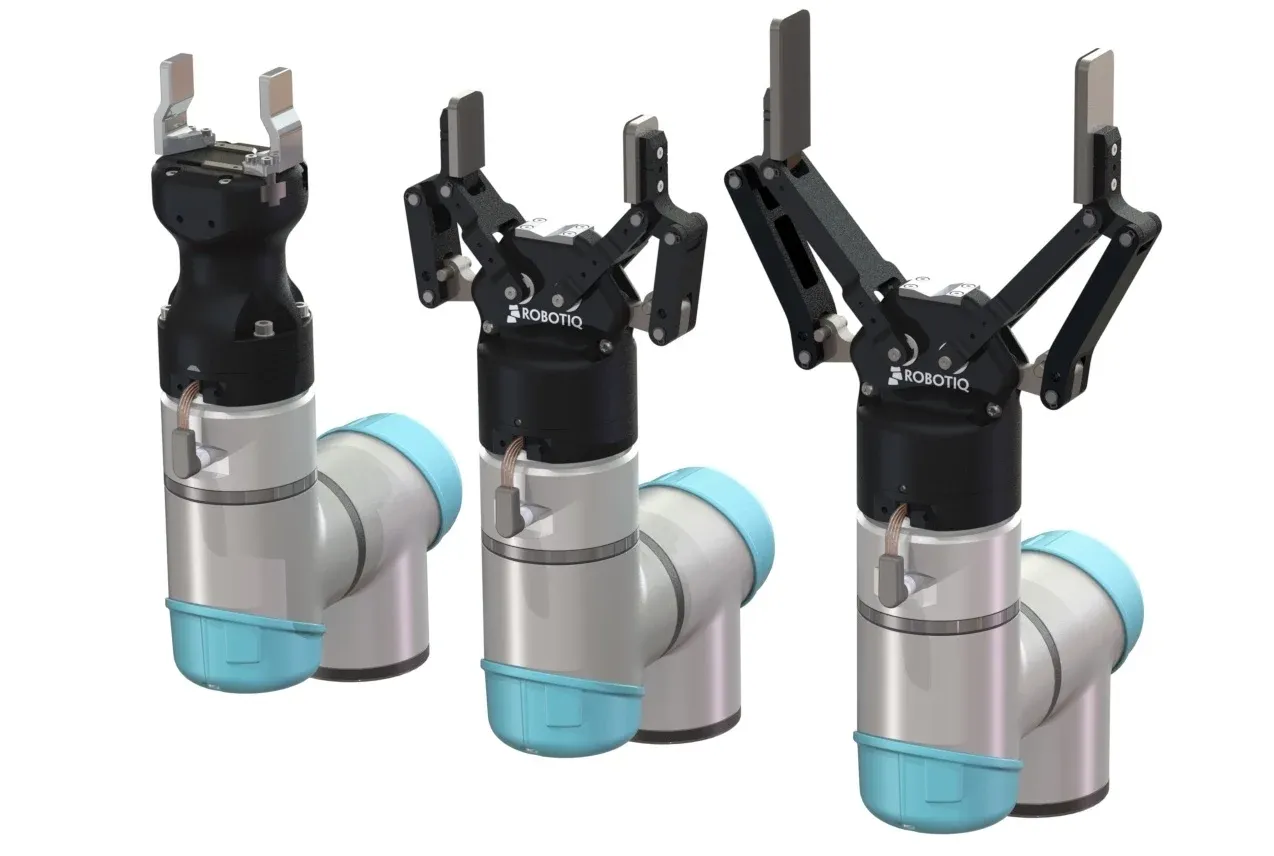
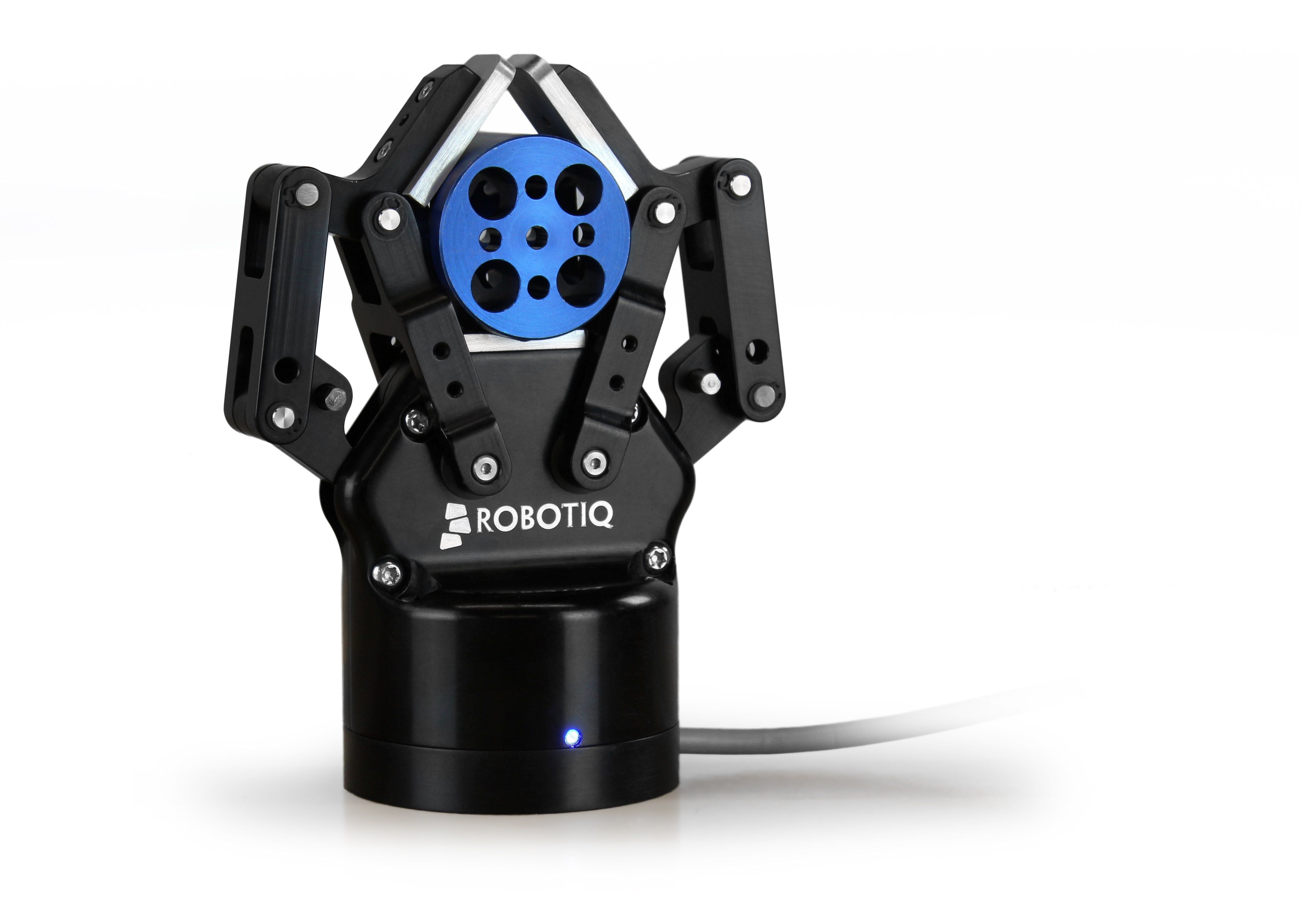
Mechanical grippers are the most traditional and commonly used type. These grippers typically consist of two or more fingers that open and close to grip an object. The fingers can be actuated using various methods, including electric motors, pneumatic actuators, or hydraulic cylinders. A variety of mechanical grippers from Robotiq are available to improve the adaptability and effectiveness of robotic applications. Here are a few noteworthy instances:
Adaptive grippers with 2F
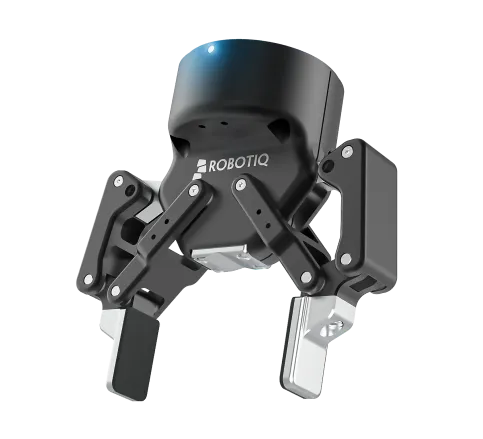
The 2F Adaptive Grippers from Robotiq are made to be both precise and flexible. Both encompassing and pinch grips are made possible by their innovative mechanical design, which offers strong and accurate handling for the best results in a range of applications.
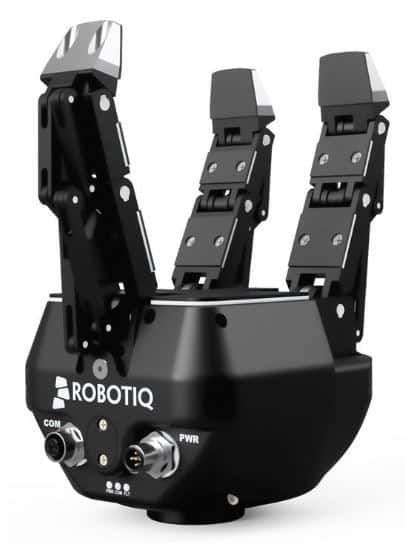
No matter the shape of the object, the 3-Finger Adaptive Robot Gripper is designed to handle it. It is appropriate for situations where several conventional grippers would be needed because of its three articulated fingers, which may change shape to fit various items. This gripper minimizes setup times and eliminates the need for several tools for operations involving handling pieces with different shapes.
– Reliable and easy to control.
– Capable of gripping a wide range of object types and sizes.
– Suitable for heavy-duty tasks.
Disadvantages:
– Limited precision for delicate tasks.
– Not ideal for handling soft or fragile objects.
Applications: Heavy lifting, packaging, and assembly lines are among the main uses for mechanical grippers.
2. Grippers with vacuums
Suction is used by vacuum grippers to hold onto items. Usually, hoses, suction cups, and a vacuum pump make up these grippers. The object is held in position by the negative pressure produced by the vacuum gripper. Vacuum grippers are very helpful when working with non-porous or flat surfaces.
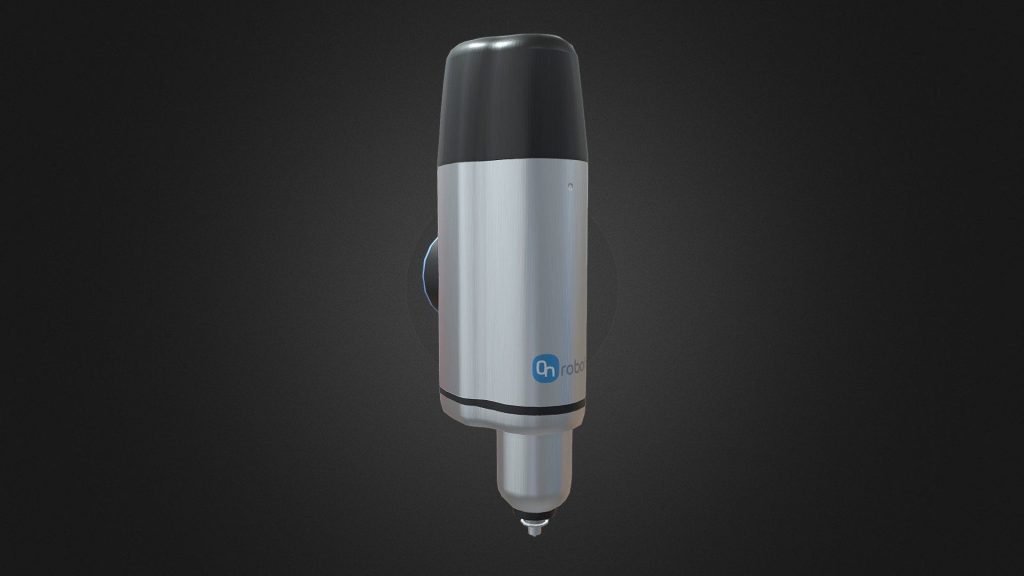
A variety of vacuum grippers from Robotiq are available to increase the adaptability and effectiveness of collaborative robots in a range of industrial settings. The PowerPick and the EPick are two noteworthy models in their collection.
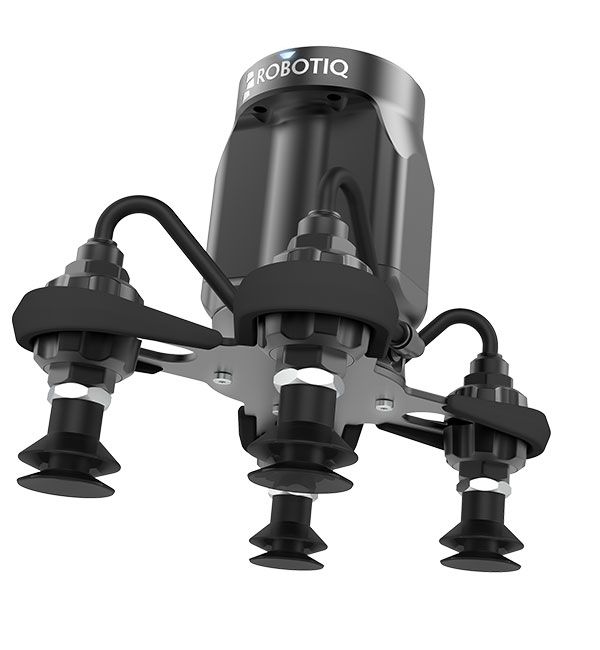
Robust, adaptable, and simple to customize, the PowerPick is designed to tackle tough palletizing jobs. Its industrial-grade pneumatic components guarantee dependability even in demanding dusty and humid situations. The EPick offers flexibility in deployment across many settings, making it perfect for applications where an external air supply is either prohibitive or unavailable.
Advantages:
– Perfect for non-porous, smooth, or level surfaces.
– non-contact grasping technique, which lowers the possibility of breaking fragile objects.
– able to manage a wide range of object shapes.
Disadvantages:
– Restricted to non-porous, smooth surfaces.
– It can need an air compressor or steady power source.
Applications: Glass, metal sheets, and packaging materials are among the materials handled by vacuum grippers.
3. Soft Grippers
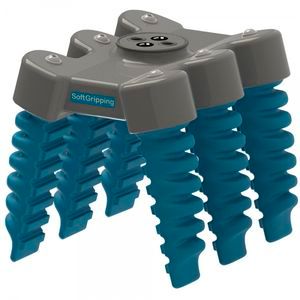
Soft grippers can adapt to the shape of the object they are holding because they are composed of flexible materials. For delicate or oddly shaped objects, these grippers are perfect. Soft grippers can handle items that need to be handled gently and are driven by motors or air.
Soft grippers are a versatile solution for handling delicate and irregularly shaped objects with ease. A prime example of a soft gripper in action is from SoftGripping, a company that specializes in providing innovative soft gripping solutions.
Advantages:
– Great for fragile and delicate items.
– Adaptable and versatile, capable of managing a range of shapes.
– Ideal for light-weight objects.
Disadvantages:
– might not be precise enough for some applications.
usually less payload capacity than vacuum or mechanical grippers.
Applications: Soft grippers are employed in agriculture, electronics assembly, and food handling.
Conclusion
Selecting the ideal gripper for your robotic system is a difficult task that calls for thorough evaluation of several variables, including as the material and shape of the objects being handled, the necessary payload capacity, the surrounding environment, and the necessary speed and accuracy. You can guarantee the effectiveness and dependability of your robotic system by fully comprehending the needs of your application and the capabilities of different gripper kinds.
Although vacuum, soft, and mechanical grippers are some of the most widely used options, it’s crucial to evaluate each gripper’s capabilities to guarantee the best performance for your particular use case. Whether you are handling fragile goods or large industrial equipment, the correct gripper will improve your automation process and support the success of your company.