

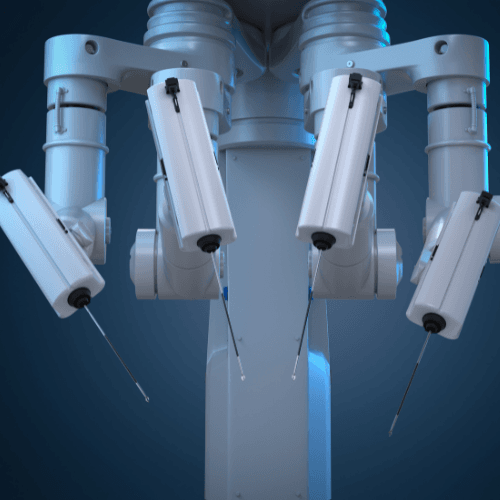
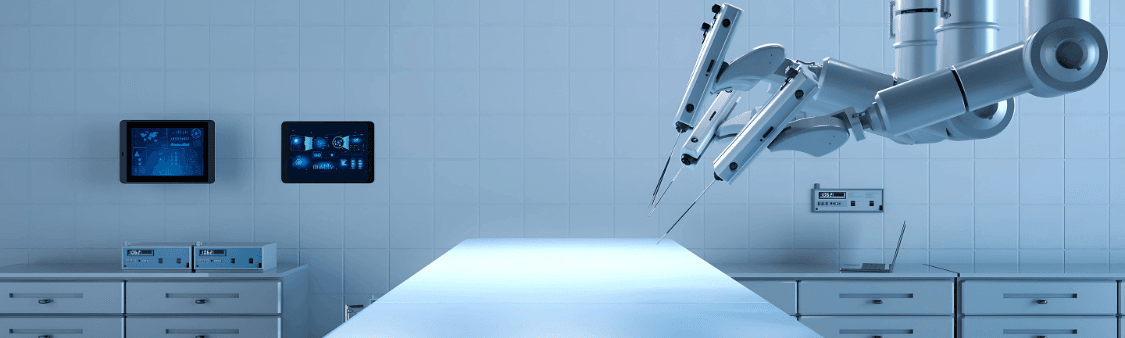
Cobots provide flexibility, adaptability, and cost-effectiveness in contrast to conventional industrial robots, which need safety cages and function autonomously. This article examines the reasons for the growing use of collaborative robots by medical equipment makers, as well as the advantages they provide and practical uses that highlight their usefulness.
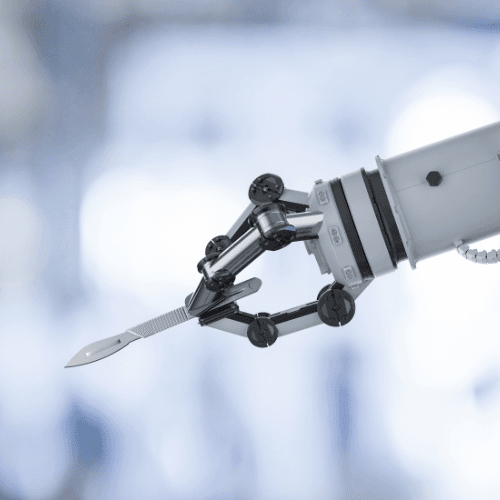
Automation’s Role in Medical Device Production
In the highly regulated field of medical device production, accuracy, reliability, and adherence to strict quality standards are essential. Manufacturers encounter several obstacles that call for automation as the need for medical equipment rises because of increased chronic illnesses, an aging population, and technological improvements.
Key Challenges in Medical Device Manufacturing
1. A shortage of labor
It is challenging for manufacturers to satisfy production expectations in the medical device business due to a lack of competent workers. Recruiting and keeping skilled workers to manage complex production processes is getting harder.
2. Tight Quality Requirements
Strict regulations are enforced on the manufacturing of medical devices by regulatory agencies including the FDA and ISO. Extremely accurate production procedures that reduce human error are necessary to guarantee uniformity, traceability, and adherence to these criteria.
3. Exorbitant production expenses
In the production of medical devices, manual labor is costly, and mistakes made by people can result in expensive product failures or recalls. For manufacturers, lowering operating costs without sacrificing quality is a major problem.
4. Difficult Assembly Procedures
Complex assembly procedures that call for accuracy and careful handling are frequently involved in medical equipment. Maintaining patient safety and product efficacy requires that these procedures be accurate.
5. Scalability is required
Manufacturers must effectively expand production while upholding stringent quality control as the demand for medical equipment increases. Conventional production techniques could find it difficult to meet this demand.
These issues can be resolved by automation, especially with the help of collaborative robots (cobots), which:
Reducing Reliance on Human Labor: Because cobots can carry out monotonous activities, there is less need for trained people and labor scarcity.
Improving Accuracy and Consistency: By preserving high levels of accuracy and traceability, automated systems guarantee adherence to regulatory standards.
Reducing manufacturing Costs: Automation helps cut manufacturing costs and avoid costly recalls by reducing mistakes and increasing productivity.
Simplifying Complex Assembly: Highly precise handling of sensitive jobs by advanced robots enhances assembly procedures and product quality.
Collaborative Robots’ Advantages for Medical Device Manufacturing
1. Increased Accuracy and Reliable
Advanced vision systems, force sensing, and AI-driven programming are features of Cobots’ designs that enable them to accurately complete complex assembly jobs. In contrast to human laborers who could become weary, cobots guarantee production uniformity, which lowers variation in the finished product.
2. Increased Safety for Workers
To shield employees from any risks, traditional industrial robots need physical boundaries. In contrast, cobots include built-in safety measures including emergency stop capabilities, speed modifications, and force-limiting technologies. Because of this, they are perfect for settings where people and machines work together.
3. More Adaptability & Flexibility
The manufacture of medical devices frequently entails customization and frequent product revisions. Cobots have less downtime and may be readily reprogrammed to perform new activities. Because of this adaptability, producers may effectively create a large range of medical gadgets.
4. A decrease in manufacturing expenses
Using cobots to automate labor-intensive and repetitive operations lowers the need for manual labor and results in considerable cost savings. Cobots further enhance manufacturing yields and reduce material waste, which lowers costs.
5. Scalability and Faster Time-to-Market
Cobots enable producers to swiftly grow production because of their capacity for continuous operation and sophisticated job handling. This is especially important during periods of high demand, like the COVID-19 pandemic, when there was a sharp increase in demand for ventilators and diagnostic kits.
6. Quality Control and Regulatory Compliance
By guaranteeing process repeatability and precise data recording, Cobots improve compliance. They may be combined with software programs that record each stage of the production process, assisting businesses in more effectively fulfilling legal obligations.
7. Reduced Human Inaccuracy
Errors may happen to even the most experienced human operators. When it comes to repeated jobs like applying adhesives, putting together complex parts, and conducting inspections, cobots remove human mistakes.
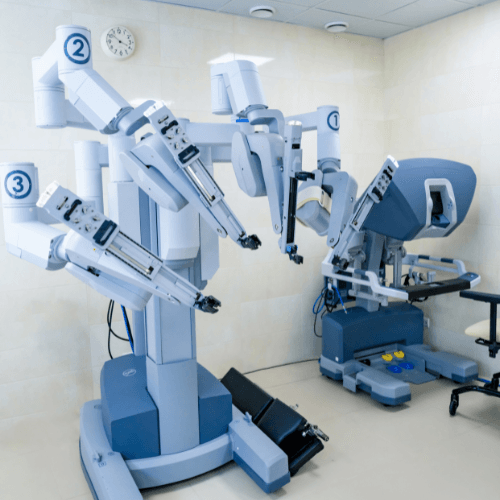
Applications of Collaborative Robots in Medical Device Manufacturing
Because they increase accuracy, consistency, and efficiency, collaborative robots, or cobots, are revolutionizing the production of medical devices. For sensitive operations where precision is crucial, they are perfect since they can collaborate with human operators. Key uses of cobots in this sector include the following
1. Medical Device Assembling
Catheters, stents, and pacemakers are examples of medical equipment that need careful assembling procedures. To minimize errors and guarantee product uniformity, Cobots are excellent at doing these jobs precisely. In the production of medical devices, their capacity to manage delicate components with consistent force control makes them a priceless asset.
2. Testing and Quality Inspection
Cobots with sophisticated vision systems are able to perform functional checks, measure components precisely, and check medical equipment for flaws. This enhances patient safety and regulatory compliance by guaranteeing that only superior goods make it to market. Additionally, automated inspection procedures speed up production and lower human error.
3. Packaging and Material Handling
Cobots simplify logistics in the production setting, from handling delicate parts to packaging completed goods. By ensuring that medical equipment are handled safely and without infection, they lower the dangers involved with physical intervention. Additionally, automated packaging systems increase manufacturing lines’ scalability and efficiency.
4. Cleaning and Sterilization Procedures
Sterile conditions must be maintained throughout the fabrication of medical devices. Cobots can effectively complete cleaning and sterilizing activities, reducing the possibility of contamination. They can perform accurate material handling in regulated settings, chemical cleaning, and UV sterilization.
5. Sample handling and lab automation
In the biotechnology and pharmaceutical industries, cobots are essential for automating labs. They help with the preparation of specimens for analysis, handling biological materials, and conducting tests. Scientists and lab personnel may concentrate on high-value research and innovation by using cobots to automate monotonous chores.
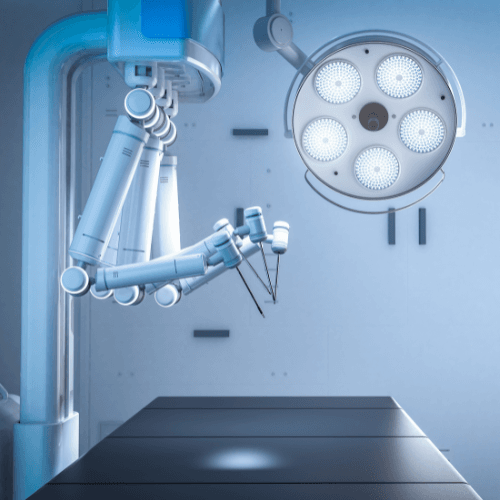
Case Studies: Practical Application of Cobots in the Production of Medical Devices
Case Study 1: Automating the Assembly of Surgical Instruments
Cobots were used into a top medical device manufacturer’s production line to construct surgical tools. By increasing accuracy, cutting down on cycle times, and minimizing human interaction with sterile parts, the cobots ensured hygienic requirements were met.
Case Study 2: Implant Inspection Assisted by Vision
Cobots equipped with vision systems were used by an orthopedic implant firm to check implants for flaws. This improved the quality assurance procedure and cut the mistake rate by 90%.
Case Study 3: Automating Diagnostic Kit Packaging
A diagnostics producer used cobots to effectively package test kits during the COVID-19 outbreak. This made it possible for them to satisfy the spike in demand without sacrificing precision or security.
The Future of Cobots in Medical Device Manufacturing
Thanks to developments in robotics, AI, and machine learning , the use of collaborative robots, or cobots, in the production of medical devices is expected to grow. These developments will increase automation , efficiency, and precision, further solidifying cobots’ position as an industrial need. Here are some significant upcoming developments
1. Intelligent AI-Powered Cobots
With the help of sophisticated AI capabilities, future cobots will be able to do complicated jobs with little assistance from humans and make modifications in real time. Cobots will be able to continually enhance their performance thanks to machine learning algorithms, guaranteeing increased precision and versatility in the assembly and inspection of medical devices.
2.Industry 4.0 and Internet of Things integration
Cobots will play a crucial role in smart manufacturing ecosystems that are linked to Industry 4.0 and the Internet of Things (IoT). As a result, manufacturers will be able to improve production processes and reduce downtime, improving data analytics, predictive maintenance, and overall efficiency.
3. Cobots in miniature for micro-manufacturing
The need for precision micro-manufacturing will increase as medical gadgets continue to get smaller. To ensure consistency and quality in the manufacture of small medical components like micro-catheters and devices based on nanotechnology, compact, highly precise cobots will be developed to tackle complex assembly jobs.
4. Growing Utilization in Customized Healthcare
Customized medical equipment, such as implants and prostheses made for each patient, are becoming more and more necessary as personalized care gains popularity. Cobots will be essential to automate the creation of these customized medical solutions, increasing productivity and cutting lead times without sacrificing quality requirements.
The manufacture of medical devices is undergoing a transformation because of the growing use of collaborative robots, which increase accuracy, safety, and cost-effectiveness while guaranteeing adherence to strict regulations. Cobots will become increasingly more important as technology develops because they will let manufacturers innovate, scale their operations, and satisfy the expanding needs of the healthcare industry. Investing in collaborative robot technology is not a choice for medical device makers hoping to maintain their competitiveness in a market that is changing quickly; it is a need for future success.