


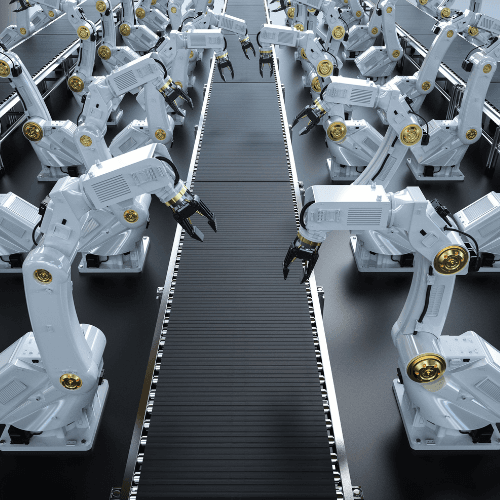
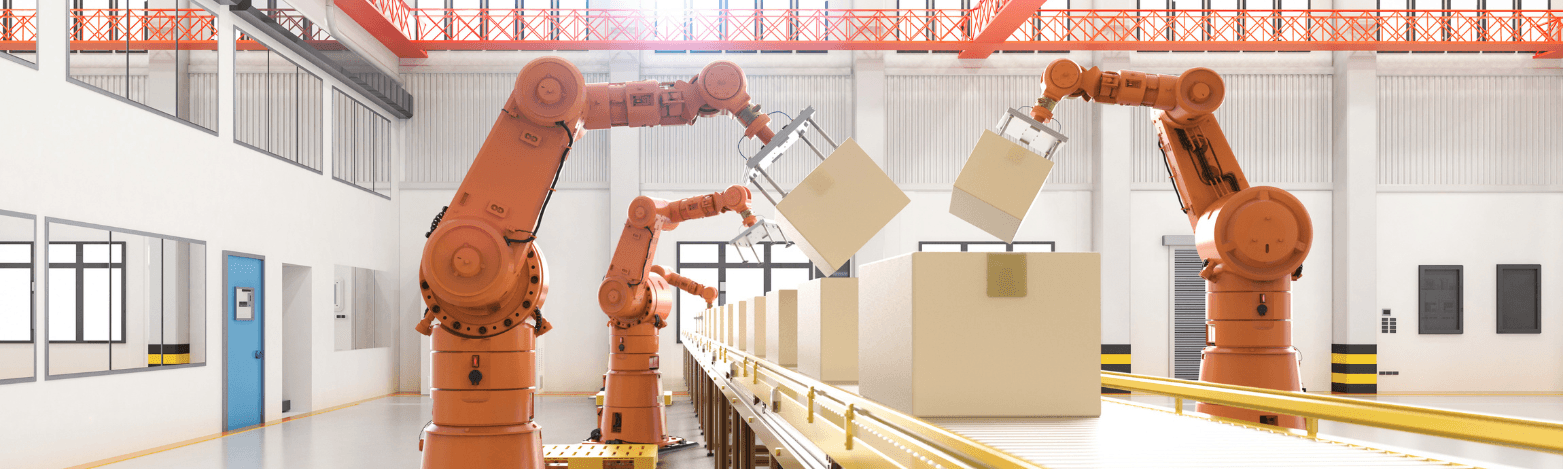

According to a report by McKinsey & Company, the global industrial robotics market is poised for dynamic growth. The report identifies several qualitative factors that are driving this growth, including dramatic developments in technology and new applications as well as global trends of rising labour costs, increasing labour turnover and shortages, and decreasing equipment costs and global competition. The report also identifies key options for unleashing the market’s full growth potential, including developing standards for interoperability, promoting robotics-related upskilling and retraining at scale, and bringing robotics to small and medium-sized companies.
Types of Industrial Robots From Assembly Lines to Smart Factories
Industrial robots are used in a wide range of applications, from welding and painting to assembly and packaging. There are several types of industrial robots available on the market, each with its unique capabilities and strengths. Here’s a brief overview of some of the most common types of industrial robots
1. Articulated Robots: These robots have a flexible movement and can be quite powerful, capable of lifting heavy objects. They are most commonly used for tasks like picking and placing, sorting, assembling, welding, and finishing.
2. Cartesian Robots: These robots move in straight lines along three axes and are ideal for tasks that require high precision and repeatability, such as drilling, milling, and cutting.
3. SCARA Robots: These robots have a horizontal arm that can move in a circular motion and are ideal for tasks that require high speed and precision, such as assembly and packaging.
4. Delta Robots: These robots have a unique design that allows them to move very quickly and are ideal for tasks that require high speed and precision, such as pick-and-place operations.
5. Gantry Robots: These robots have a large work envelope and are ideal for tasks that require high payloads and long reach, such as material handling and palletizing.
6. Cylindrical Robots: These robots have a cylindrical work envelope and are ideal for tasks that require high speed and precision, such as assembly and packaging.
7. Collaborative Robots (Cobots): These robots are designed to work safely alongside humans and are ideal for tasks that require human-robot collaboration, such as assembly, packaging, and inspection.
Advanced Sensor Technologies Enhancing Precision and Safety in Industrial Robotics
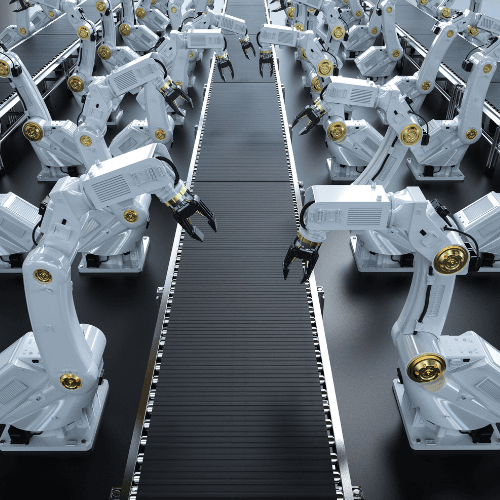
Advanced Sensor Technologies are revolutionizing the field of industrial robotics by enhancing precision and safety. These sensors are designed to capture data from the environment, robot, and/or user, and play a crucial role in increasing the safety, autonomy, and adaptability of robots.
Magnetic sensors contribute to self-diagnostics and fault detection, improving system reliability. Vision sensors provide visual perception capabilities, enabling robots to analyze and interpret visual information for complex tasks.
In addition, smart sensors are an integral part of the Fourth Industrial Revolution and are widely used to add safety measures to human-robot interaction applications. With the advancement of machine learning methods in resource-constrained environments, smart sensor systems have become increasingly powerful.
Programming Industrial Robots Bridging the Gap Between Man and Machine
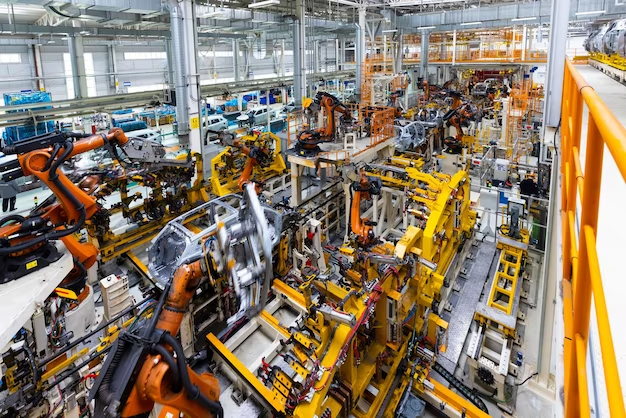
Programming industrial robots is a complex task that requires a deep understanding of the underlying hardware and software. Industrial robots are designed to perform repetitive tasks with high precision and accuracy, and they are widely used in manufacturing, assembly, and other industries. In recent years, there has been a growing interest in bridging the gap between man and machine, and this has led to the development of new programming techniques and tools.
In addition, machine learning and deep learning approaches may play an important role in data analysis, interpretation, and fusion1. Currently, machine learning methods are being used to improve the performance of industrial robots, and this has led to the development of new programming techniques and tools.
Industry 4.0 and the Rise of Smart Manufacturing Integrating Robotics into the Digital Landscape
The integration of robotics into the digital landscape is a key component of Industry 4.0. Robots are increasingly used in manufacturing for tasks ranging from repetitive assembly to complex quality control. The development of mobile robots capable of navigating complex environments and working in teams to complete tasks is a hallmark of Industry 4.0. The use of robots in manufacturing not only reduces labor costs but also enhances precision and consistency. The integration of robotics into the digital landscape has enabled manufacturers to optimize their operations, reduce costs, and improve product quality.
conclusion
Industrial robots, which provide unmatched accuracy, efficiency, and adaptability, have emerged as a key component of contemporary manufacturing and production processes. These robots are changing industries all over the world by accurately performing complicated procedures and automating monotonous jobs. By taking on risky duties, they not only increase output and save operating expenses, but they also enhance worker safety. Industrial robots are become increasingly sophisticated and versatile as machine learning, robotics, and artificial intelligence continue to progress. They may now collaborate with people in group settings, which increases productivity and creativity even more.
Businesses hoping to stay competitive in a world that is changing quickly must invest in industrial robots; it is no longer a luxury. Industry use of this technology can spur innovation, streamline procedures,












